




Language: English
-
Assessment of HIV/AIDS Services in IDP Camps, Borno State, Nigeria
May 2015 — FHI 360 conducted a rapid assessment in 14 camps for internally displace persons in Borno State, Nigeria, to identify needs for HIV/AIDS services. The results of the assessment showed that there are more than 92,000 displaced persons in the camp. Numerous organizations provide services such as shelter, educational services, psychosocial services, health…
-
ZORDAR Project: Promotion of Zinc and ORS for Reduction of Diarrhea and Averting its Recurrence in Madhya Pradesh, India, End of Project Report
June 2016 — This end of project report traces the evolution, achievements and lessons of the Zinc and ORS to Reduce Diarrhea and Avert Its Recurrence (ZORDAR) project. The goal of the project, which was funded by the Clinton Health Access Initiative (CHAI), was to reduce childhood diarrhea in Madhya Pradesh, India, by promoting oral…
-
HIV Prevention, Care and Treatment Services in Prisons of North-Eastern States of India
September 2016 — This brochure summarizes the background, goals, strategies and expected outcomes of a program to improve HIV services for prisoners in northeast India. The program is part of Project Sunrise.
-
Project Sunrise in Eight North East States of India
February 2016 — This brochure summarizes the background, goals, strategies and expected outcomes of Project Sunrise in northeast India. In eight states of this region, the project builds institutional and human capacity to improve and scale up the quality of HIV services for people who inject drugs.
-
North Dakota Workforce Development Needs Assessment and Gap Analysis
January 2017 — This report includes a needs assessment and gap analysis of the skills and qualifications needed for workforce training in four industries within North Dakota: energy, health care, information technology and manufacturing. It also presents recommendations for improvements for the state university system’s workforce programs. FHI 360 serves as the key research organization…
-
Contraceptive Technology Innovation Initiative (fact sheet)
November 2016 — Funded by the Bill & Melinda Gates Foundation, the Contraceptive Technology Innovation (CTI) Initiative aims to develop innovative mid- to long-acting contraceptives that are of high quality and are acceptable and affordable to women in need in low-resource settings. This fact sheet summarizes the research agenda currently being implemented under this five-year…
-
Improving Outcomes for North Dakota Students and Educators — Succeed 2020 by the Numbers 2015-2016
October 2016 — Since 2012, the Hess Corporation has made a substantial investment to improve college and career readiness in North Dakota. This report provides a snapshot of the impact of Succeed 2020 on students, educators, school leadership, businesses and the community for the time period of July 1, 2015 to June 30, 2016. It…
-
SCALE+ System-wide Collaborative Action for Livelihoods and Environment
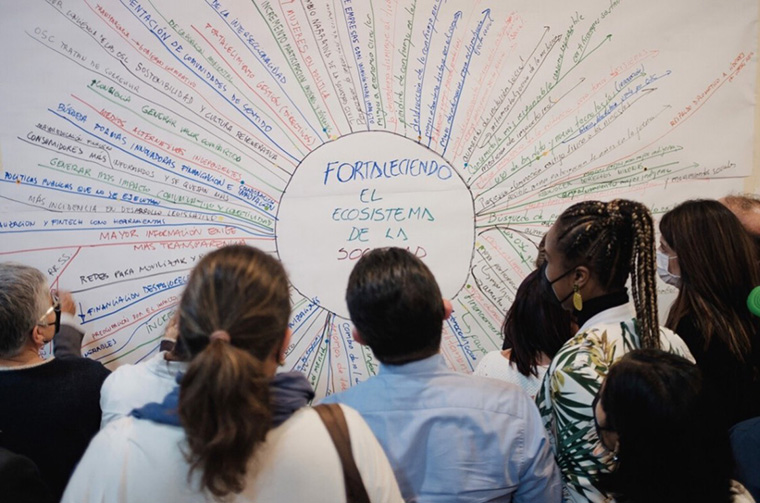
This systems methodology helps project managers approach development challenges with multiple perspectives and with stakeholders from multiple sectors, to bring about broad and sustained collective impact. Three fundamental SCALE+ principles are: applying a systems lens, building social capital and facilitating locally driven development.