








Resource Type: Fact sheet
-
Quality Improvement Stories: Improving the Referral System for HIV Clients in the Livingstone and Kazungula Districts of Zambia
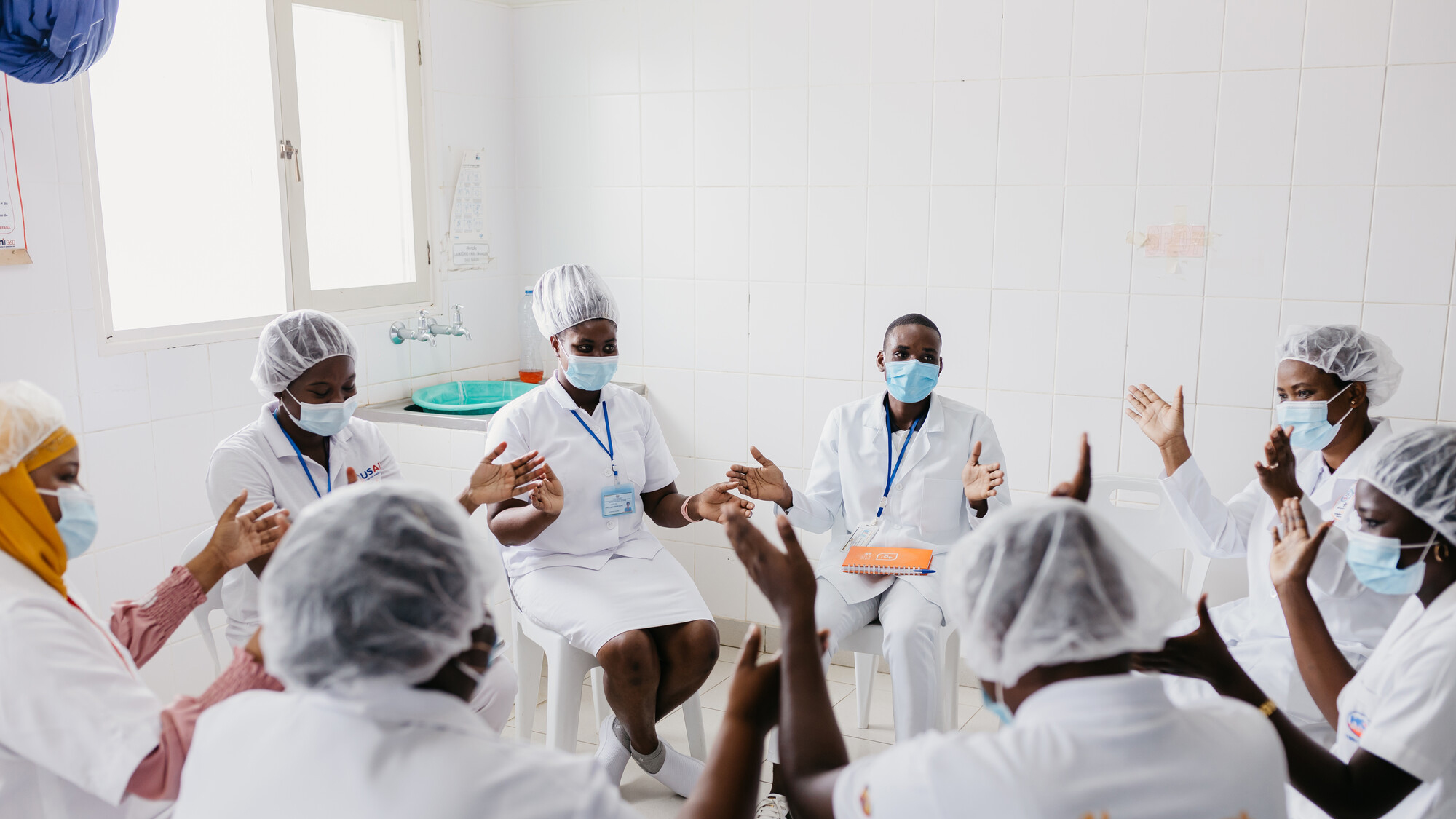
October 2012 — Under the Corridors of Hope HIV/AIDS Prevention Initiative (COH III), funded by the U.S. Agency for International Development and the U.S. President’s Emergency Plan for AIDS Relief, FHI 360 helps strengthen the continuum of HIV care by improving services at wellness centers where patients with HIV are referred for additional services. As the…
-
Estrategias de Intervencion que dan Resultado para los Jovenes
2002 — Youth Issues Papers are in-depth reviews of critical topics regarding youth reproductive health and HIV/AIDS prevention. They include an analysis of the issue, a literature review, case studies, lessons learned and ideas about criteria for best practices. This paper reports on programs that have helped young people in developing countries practice healthier behaviors.
-
Eliminate Dengue Program Brochure 2010
October 2010 — Dengue fever is a mosquito-borne viral disease that occurs in more than 100 tropical and subtropical countries worldwide. The Eliminate Dengue project is an international collaboration, pioneered by an Australian-led research team, that has the potential to provide a real solution to reduce the global burden of dengue fever. Our brochure provides a…
-
Building Novel Clinical Research Capacity in Resource-Limited Settings: Lessons Learned at Three Mozambique Sites
2012 — There are striking disparities in clinical research capabilities worldwide, particularly across regions of sub-Saharan Africa, where disease burden is high. Establishment of novel, indigenous research capabilities is difficult, and evaluations of capacity-building efforts remain scarce. We share our lessons learned from establishing three new clinical research sites in Mozambique.
-
Behavior Change: A Summary of Four Major Theories
1996 — This document presents and explains four of the most commonly cited theories used in HIV/AIDS prevention on how behavior change is believed to occur.
-
Preventing Unintended Pregnancies and HIV
September 2012 — The dramatic expansion of HIV prevention and treatment services has significantly reduced the incidence of HIV among children and improved maternal health. These achievements contribute directly to the health-related and gender-related Millennium Development Goals (MDGs) 3, 4, 5 and 6. Stronger efforts to address the family planning rights and needs of women living…
-
Laboratory Strengthening (fact sheet)
June 2012 — Laboratories are crucial to scientific research and public health worldwide. High-quality laboratories are essential for countries to accurately measure disease prevalence, for health systems to provide accurate diagnoses and for clinicians to guide appropriate treatment. FHI 360 is a global leader in laboratory strengthening, enabling laboratories in some of the most resource-limited settings…
-
Isoniazid Preventive Therapy (IPT) for the Prevention of Tuberculosis in People Living with HIV/AIDS (fact sheet)
September 2011 — Providing isoniazid to prevent tuberculosis among people living with HIV is a proven, internationally recommended strategy that has been effectively implemented in low-resource settings. This document is part of a series of briefs for health program managers interested in implementing evidence-based programs. With a special emphasis on underutilized interventions, this series presents evidence on…