
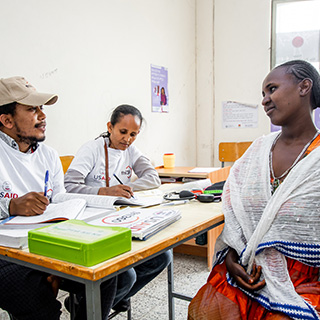


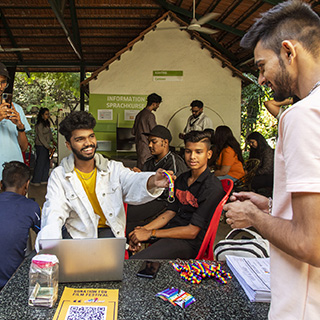
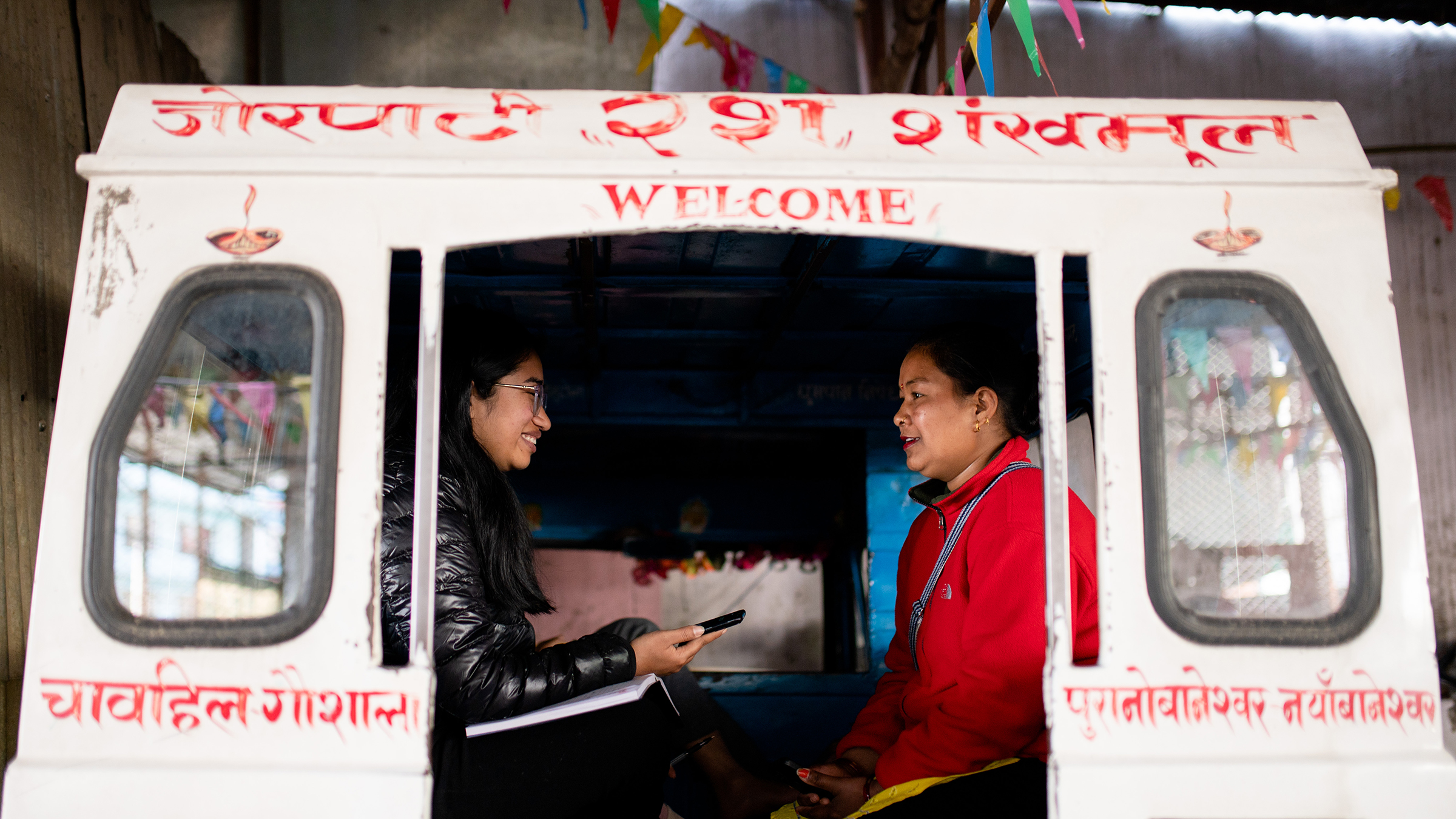
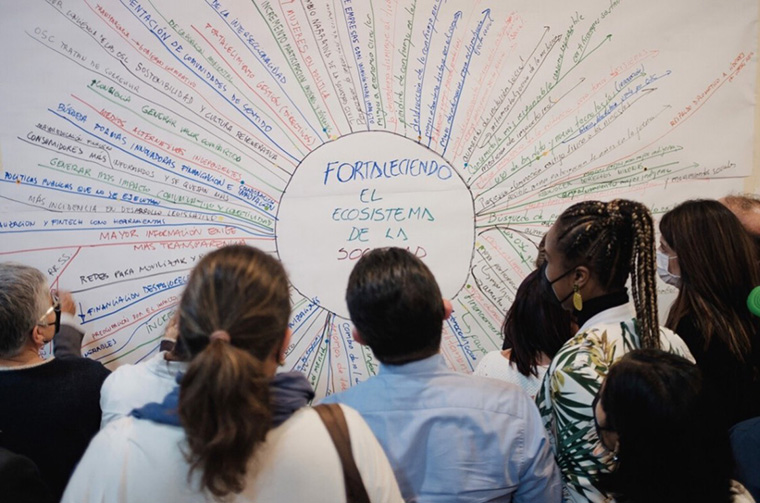

The MADANI project is an initiative funded by the U.S. Agency for International Development (USAID) that works across 32 districts and cities in Indonesia to strengthen government accountability and enhance the capacity of community organizations to achieve social change. MADANI has used a collaborative governance approach to bring citizens together to identify issues affecting their well-being and livelihoods, such as solid waste management and maternal and child health. To help develop and implement solutions to selected issues, MADANI provides grants and technical assistance to local community organizations and works with the community organizations to lead the implementation of innovative solutions.
MADANI’s grantees address issues at the district level on maternal and child health, village funds, religious tolerance, local entrepreneurship, environmental issues around waste management, administrative services, and spatial mapping. For example, to address issues of managing solid waste, MADANI brought together community organizations, local government officials, businesses, higher education staff, and community leaders in four districts to hold public deliberations. The community organizations participating in the MADANI project from Palopo district developed a recycling solution using black soldier flies, which can be used as a biowaste treatment, leading the city to win a national sanitation award under the sustainability category and strengthening local organizations’ capacity to undertake waste management.
MADANI’s activities have resulted in more and strengthened partnerships between local governments and community organizations. Local governments now regularly include community organizations in government planning processes and consult with community organizations for technical advice on key aspects of policy development and implementation.