
Skip to content
FHI 360
  • Languages
  • Low bandwidth
  • High bandwidth
  • Search
  • Who we are
        • Who we are
          • About us
          • Leadership
          • Ethics and safeguarding
          • Impact and financial reports
          • Contact us
        • About us

          Impact and financial reports

  • What we do
        • What we do
          • Economic opportunity
          • Health


        • How we do it
          • Research in action
          • Humanitarian response
          • Digital innovation and AI
        • Explore our expertise
        • Economic opportunity

          Health

  • Where we work
        • Where we work
          • Asia Pacific
          • Central Africa
          • East Africa
          • West Africa
          • Southern Africa
          • Middle East and North Africa
          • Europe and Central Asia
          • Latin America and the Caribbean
          • United States
        • Around the world

          In the United States

  • Work with us
        • Work with us
          • Join our team
          • Local partners
          • Government and multilateral funders
          • Foundations and corporations
          • Academic and research partners
          • Small businesses and vendors
          • CEO position specification
        • Join our team

          Local partners

          Government and multilateral funders

          Foundations and corporations

          Academic and research partners

          Small businesses and vendors

  • News
        • News
          • Newsroom
        • Get the latest news
        • Newsroom

  • Stories
        • Stories & blog
          • Stories
          • Videos (YouTube)
          • Blog
        • Explore our storytelling
        • Our storytelling

          Blog

  • Resources
        • Resources
          • Resource library
        • Resource library

Home | Articles | Our 2024 in 12 photos
December 18, 2024

Our 2024 in 12 photos

Every day, FHI 360 staff around the globe are working to advance locally led solutions to some of the world’s biggest challenges. Together with individuals, governments, businesses and communities, we’re working toward a world where everyone, everywhere, has access to the opportunities they need to lead full and healthy lives.

Here are some of our favorite photos of this work in action in 2024. The stories behind them are ones of innovation, partnership and resilience. Together, they bring our work to life and show how we are achieving lasting change.
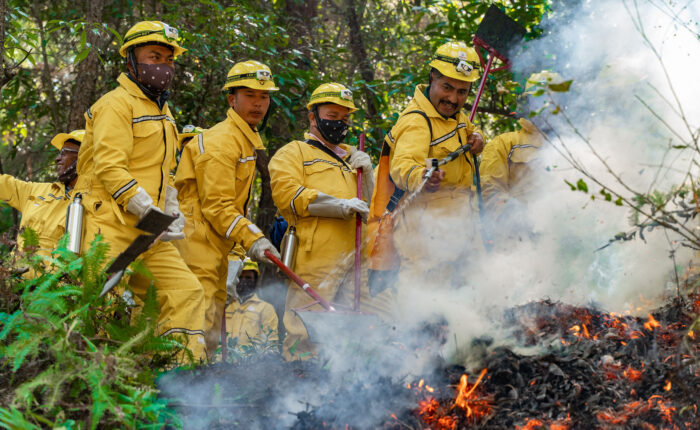
Participants in a forest-fire-control training session learn wildfire mitigation and management skills in Mahalaxmi municipality in Nepal’s Lalitpur region.
Participants in a forest-fire-control training session learn wildfire mitigation and management skills in Mahalaxmi municipality in Nepal’s Lalitpur region. Each year, wildfires consume 40,000 hectares of forest in Nepal, which greatly affects air quality and human health in the Kathmandu Valley. Here, municipal police officers, municipal representatives and members of community forest-user groups attend a hands-on training about wildfire management. Sessions are run by USAID Clean Air, which is implemented by FHI 360, in collaboration with the National Disaster Risk Reduction and Management Authority.

Photo credit: Dipendra Bhandari for FHI 360

man and woman practicing sustainable farming practices to 100 potato and barley producers in Toca, Boyacá
Staff from the Strengthening Together Activity (STA), which is funded by USAID, and USAID/Colombia visited the Food Innovation Hub, home to the Center of Excellence for Regenerative Agriculture — one of the Challenge Grants awarded by STA to foster collaborative initiatives.

The Challenge Grant supports a pilot project to train and transfer knowledge on sustainable farming practices to 100 potato and barley producers in Toca, Boyacá. The visit included a tour of a demonstration farm, which enables women, young people, and local farmers to adopt sustainable and regenerative agricultural practices through field schools and technological tools.

Representatives from PepsiCo, Microsoft, Bayer, Bavaria, Centro Internacional de Agricultura Tropical, and Fundación Planeta Rural also attended, sharing their contributions and roles in this high-impact initiative.

Photo credit: Juan Sebastián Molina García/FHI 360
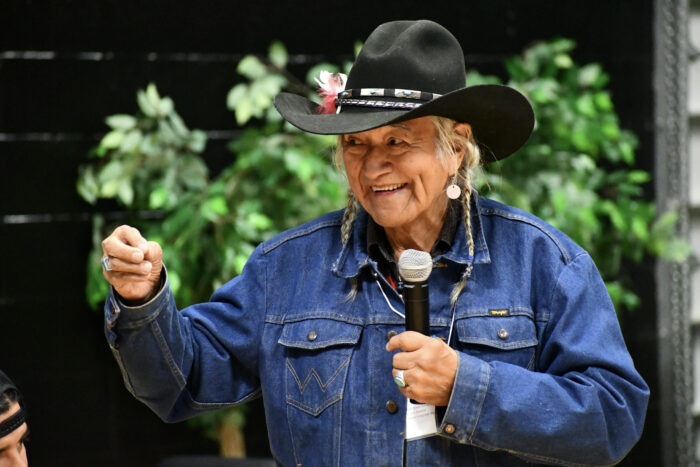
Elder Stephen Small Salmon speaks on a panel on immersion schools at the 2024 Montana Early Childhood Tribal Language Summit in Pablo, Montana. Panelists discussed the main components and resources needed to start a Native language immersion school and how to ensure program sustainability. They also answered questions from the audience.

Across the U.S., less than 2% of American Indian and Alaska Native children enrolled in Head Start and Early Start programs speak their native languages at home. To help preserve and revitalize Indigenous languages, FHI 360 brings together tribal members, educators, Native language and culture advocates, and individuals working in support of Native children and their families. At tribal language summits and conferences, these groups discuss educational challenges, solutions and best practices for grounding young children in their Native languages and cultures.

Photo credit: Jen Murphy for FHI 360
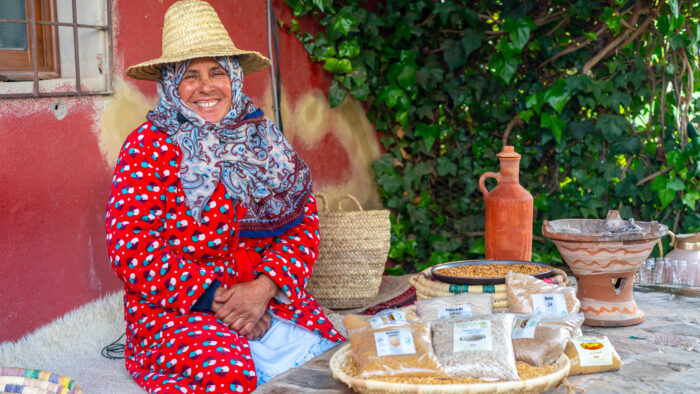
Fatima El Mamouni sits among the organic ingredients used to preserve the traditional methods of food preparation in her village in Morocco. With her daughters and other women in the community, El Mamouni started the Aforal Al Atlas Cooperative for Agri-food to create opportunities for financial independence. Through a year-long training under the Morocco Inclusive Socioeconomic Development in Beni Mellal-Khénifra (ISED-BMK) project, which is funded by USAID and implemented by FHI 360, El Mamouni gained skills in financial management, marketing, and social media. These tools helped the cooperative improve packaging and expand their customer base nationwide. By helping El Mamouni’s community thrive through entrepreneurship, FHI 360 is promoting economic opportunity and addressing global challenges such as inequality and sustainable development.

Photo credit: Jihane Boumejd for FHI 360
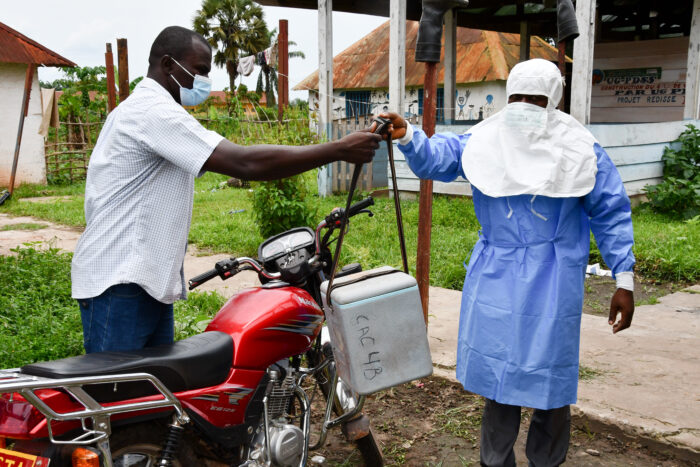
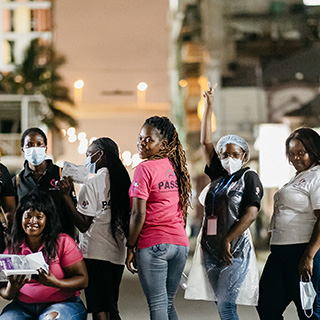
In Équateur province in the Democratic Republic of the Congo (DRC), Philippe Bwanga (right) hands a suspected mpox sample to Theophile Bobwango, who will take it by motorcycle to be tested.

In response to the mpox epidemic across the DRC, FHI 360 staff are transporting samples for testing, training practitioners, and procuring and distributing personal protective equipment through the Meeting Targets and Maintaining Epidemic Control (EpiC) project, which is funded by USAID. The DRC is more affected by mpox than any other African country, and better and faster diagnostics are critical in controlling the epidemic.

Photo credit: Photo Yvon for FHI 360
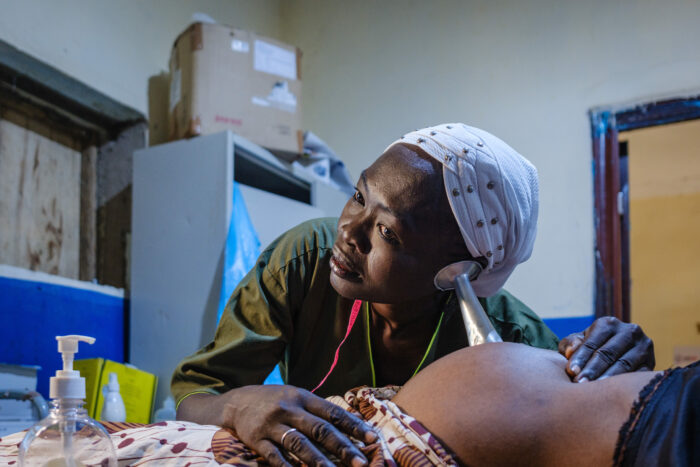
In a hospital in Borno state, Nigeria, Batool Alhaji, a community health worker, conducts a prenatal exam. Alhaji spent seven days on the road fleeing from the armed opposition group who captured her hometown. After fleeing, she learned about FHI 360’s presence in her town and decided to return, once insurgents left, to become a volunteer through the Strengthening Humanitarian Response and Building Community Resilience (NE-CORE) program, funded by USAID’s Bureau for Humanitarian Assistance. For over seven years, Alhaji has helped provide sexual and reproductive health services to women, addressing a critical need that women have struggled to access. Her efforts have enabled her to collaborate with her husband to build a house, start a livestock business, and enroll their children in school.

Photo credit: Taiwo Aina for FHI 360

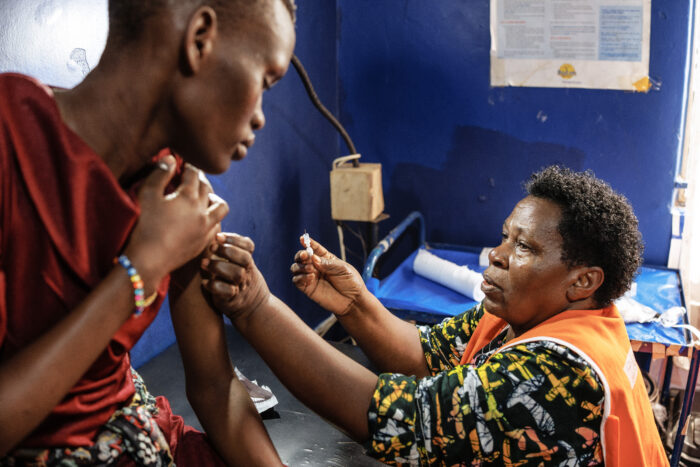
At a maternity clinic in Kampala, Uganda, Elizabeth Namubiru, the in-charge, shows Hildah, a young mother, how to self-administer Sayana® Press (subcutaneous depot medroxyprogesterone acetate, or DMPA-SC), an injectable contraceptive which can prevent pregnancy for three months.

Namubiru received training from FHI 360’s Uganda Maternal and Child Health and Nutrition Activity (USAID MCHN). FHI 360 scientists have found that women who self-inject DMPA-SC — whether by themselves at home or with the help of a friend or family member — have significantly higher rates of continuation than those who receive DMPA-SC from a provider.

Photo credit: Jjumba Martin for FHI 360

At an annual peacebuilding workshop, Shenali Perera from Sri Lanka reunites with a fellow peacebuilder and friend from Myanmar.

Identity-based violence and hate speech are on the rise in South and Southeast Asia, yet individuals working on these issues often do so in isolation or lack support needed to magnify their impact. Through Networks for Peace, which is funded by USAID, FHI 360 brings together diverse actors to advance understanding and peaceful coexistence to mitigate growing polarization of ethnic and religious identities across the region. Project partners convene in-person annually to work together and learn from one another, becoming allies and supporting one another in the challenging work that they do to promote inclusive peace and religious harmony.

Photo credit: Peerapong Wonglimsamut, Carphouse Media, for FHI 360

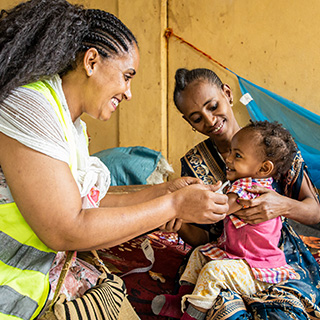
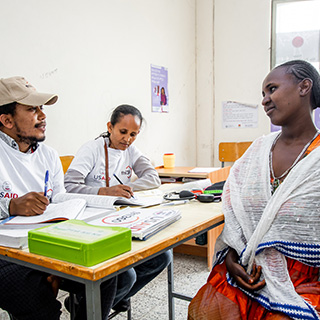
FHI 360 volunteer Banchi Tadesse conducts a mid-upper arm circumference (MUAC) test for the 1-year-old daughter of Birye Debesay at a camp for internally displaced people in Ethiopia’s Tigray region. The two-year conflict in Tigray between 2020 and 2022 left millions of people without secure access to food
and increased the number of undernourished children. In the first two months after instituting the testing practice, FHI 360’s team identified and referred for treatment more than two dozen cases of child undernutrition.

Through the Integrated Services for Humanitarian Implementation – Northern Ethiopia project (ISHI-NE), which is funded by USAID, FHI 360 works to reduce morbidity and mortality and improve the well-being of people displaced and affected by the conflict, providing services focused on health, nutrition, protection, and water, sanitation and hygiene (WASH).

Photo credit: Genaye Eshetu for FHI 360
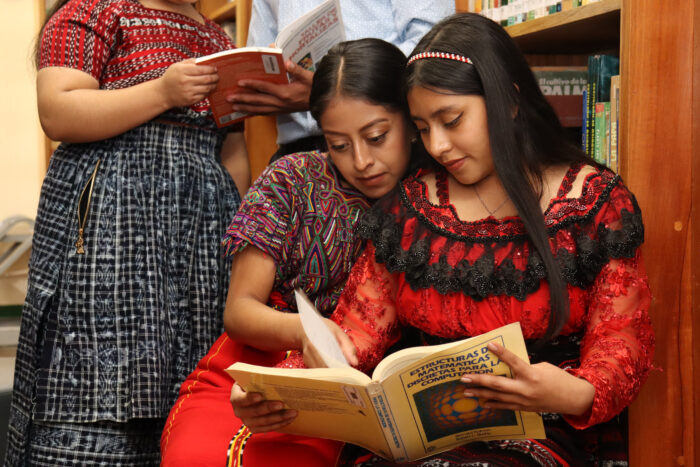
Universidad del Valle de Guatemala students Sandy Mallery (left) and Stephany Vail read a book in a library. Through scholarships provided by the Realizing Equitable Access, Retention and Completion in Higher Education (REACH) project, which is funded by USAID, they are each working toward higher education technical degrees at the university’s Altiplano Campus in Sololá, Guatemala. Through REACH, FHI 360 removes barriers to higher education and helps young people shape their own futures.

Photo credit: Henry Cojtín for FHI 360
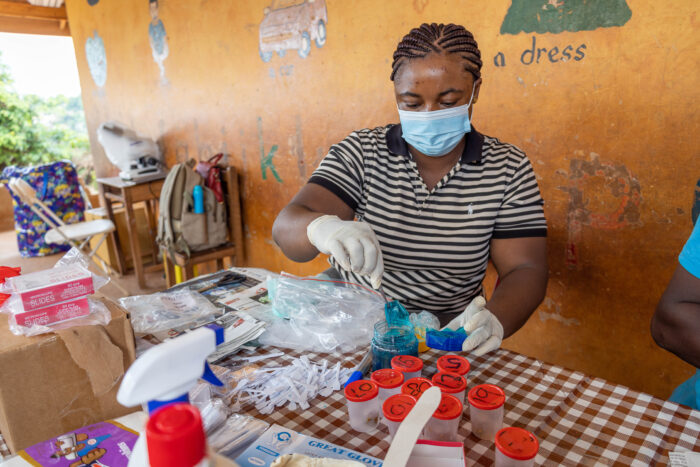
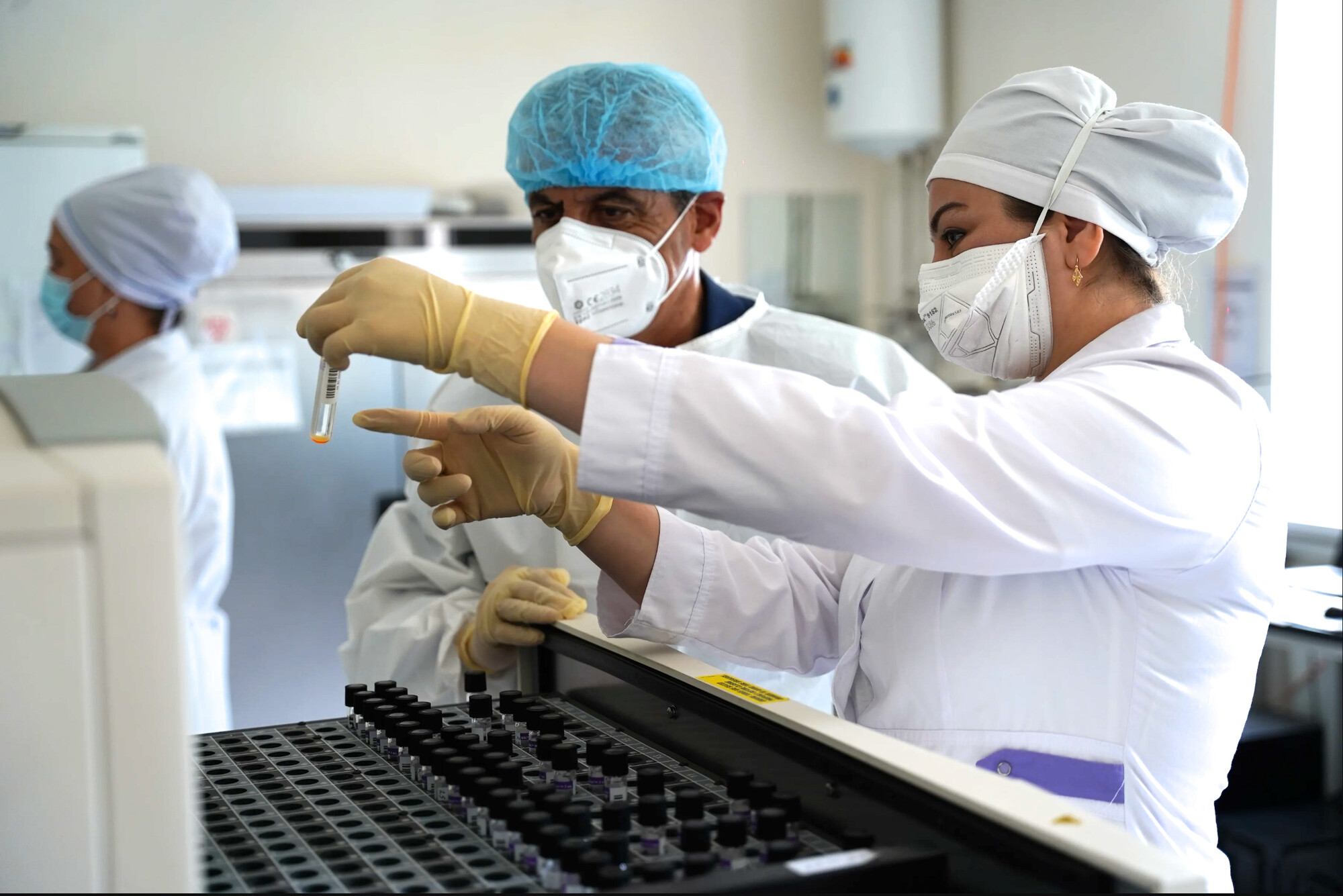
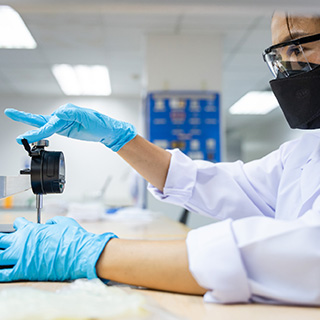
Laboratory Technician Elizabeth Asamuah prepares stool slides for testing in Bekwai, Ghana, during a schistosomiasis impact assessment as part the Act to End Neglected Tropical Diseases (NTDs)| West (Act | West) program, funded by USAID and implemented by FHI 360 in 11 African countries. Through this program, FHI 360 focuses on reducing the threat and mitigating the effects of NTDs — a diverse group of diseases, including schistosomiasis, that affect more than 1 billion people worldwide.

Photo credit: Jason Amoo for FHI 360

At Susan Moore Elementary School in Blount County, Alabama, teacher Denise Lybrand encourages a student, Jacob, during an enrichment activity that involves transporting marshmallows with a large spoon.

Blount County Schools is part of the District Summer Learning Network program, a nationwide project led by FHI 360 and funded by the Wallace Foundation to help U.S. education leaders redesign summer programs so they effectively nurture students’ social, emotional and mental health needs while preparing them for academic success. DSLN has worked with more than 100 school districts across the country serving more than 2 million students, with a focus on those from historically marginalized communities.

Photo credit: Bita Honarvar for FHI 360
Share article
Back to top

Related articles

News
New AI chatbot aims to boost teacher pedagogical support
May 11, 2026
News
Why more employers are turning to apprenticeships — and seeing results
April 24, 2026
News
Investing in hope: How Nigerian women are building economic opportunities
April 16, 2026

On this page

FHI 360

We are a nonprofit organization that mobilizes research, resources and relationships so that people everywhere can access the opportunities they need to lead full, healthy lives.

  • Partner with us
  • Business opportunities
  • Contract mechanisms
  • Small business
  • Our FHI 360 network
  • Events
  • Employee access
  • Contact us
  • Press
  • Privacy notice
  • Ethics and safeguarding

FHI 360 Headquarters
359 Blackwell Street, Suite 200
Durham, NC 27701 USA
1.919.544.7040

Washington, D.C., Office
2101 L St NW, Suite 700
Washington, DC 20037 USA
1.202.884.8000

Anti-trafficking statement

Connect

Sign up for our mailing list and receive the latest updates from FHI 360 straight to your inbox!

  • LinkedIn
  • Facebook
  • X
  • Youtube
  • Instagram

FHI 360 is the registered trade name of Family Health International.

©2026 FHI 360

We are using cookies to give you the best experience on our website.

You can find out more about which cookies we are using or switch them off in .

FHI 360
Powered by  GDPR Cookie Compliance
Privacy overview

This website uses cookies so that we can provide you with the best user experience possible. Cookie information is stored in your browser and performs functions such as recognising you when you return to our website and helping our team to understand which sections of the website you find most interesting and useful.

Essential cookies

Essential cookies should be enabled at all times so that we can save your preferences for cookie settings. However, they can be enabled or disabled using the button below.

Non-essential cookies

This website uses Google Analytics to collect anonymous information such as the number of visitors to the site, and the most popular pages.

Keeping this cookie enabled helps us to improve our website.