


Breastfeeding is a powerful, cost-effective defense against childhood malnutrition, laying the foundation for lifelong health. But exclusive breastfeeding rates in Cambodia have dropped from 74% in 2010 to just 51% in 2022. Limited awareness of the importance of breastfeeding; insufficient support before, during and after childbirth; inconsistent adherence to clinical and care standards; and promotion of commercial milk formula products have fueled the decline.
Children under 5 in Cambodia face higher-than-average rates of wasting and stunting for the Asia region. Poverty, inconsistent access to nutritious food, and limited water, sanitation and hygiene services and supplies can lead to malnutrition, which can cause lifelong deficits.
One part of the solution: providing high-quality breastfeeding and nutrition counseling for postpartum mothers just after they’ve given birth.
“Breastfeeding success can be heavily influenced by what happens in the health care system when a mother gives birth,” says Sedtha Chin, senior program manager at Alive & Thrive East Asia Pacific. “That’s why we’re working on the role of the health provider to put mother and child on a good trajectory.”
Sustainable health system changes fuel a nourishing future
The global nutrition initiative Alive & Thrive, managed by FHI 360 and co-funded by the Government of Ireland, works to improve the nutritional status of mothers and their children. In Cambodia, Laos and Viet Nam, it focuses on the “furthest behind” — including mothers and babies from cesarean births, small and sick newborns, ethnic minority communities, and those affected by extreme weather — groups among the most vulnerable to poor nutrition and adverse health outcomes.
In 2025, the Royal Government of Cambodia recognized 12 hospitals as Centers of Excellence for Breastfeeding (CoE) after the facilities spent two years strengthening breastfeeding-friendly services. Nearly half serve communities with ethnic minorities and high malnutrition rates. Alive & Thrive, along with its partners Helen Keller International and the National Maternal and Child Health Center, works with these hospitals to strengthen early essential newborn care and nutrition support to reach the furthest behind.
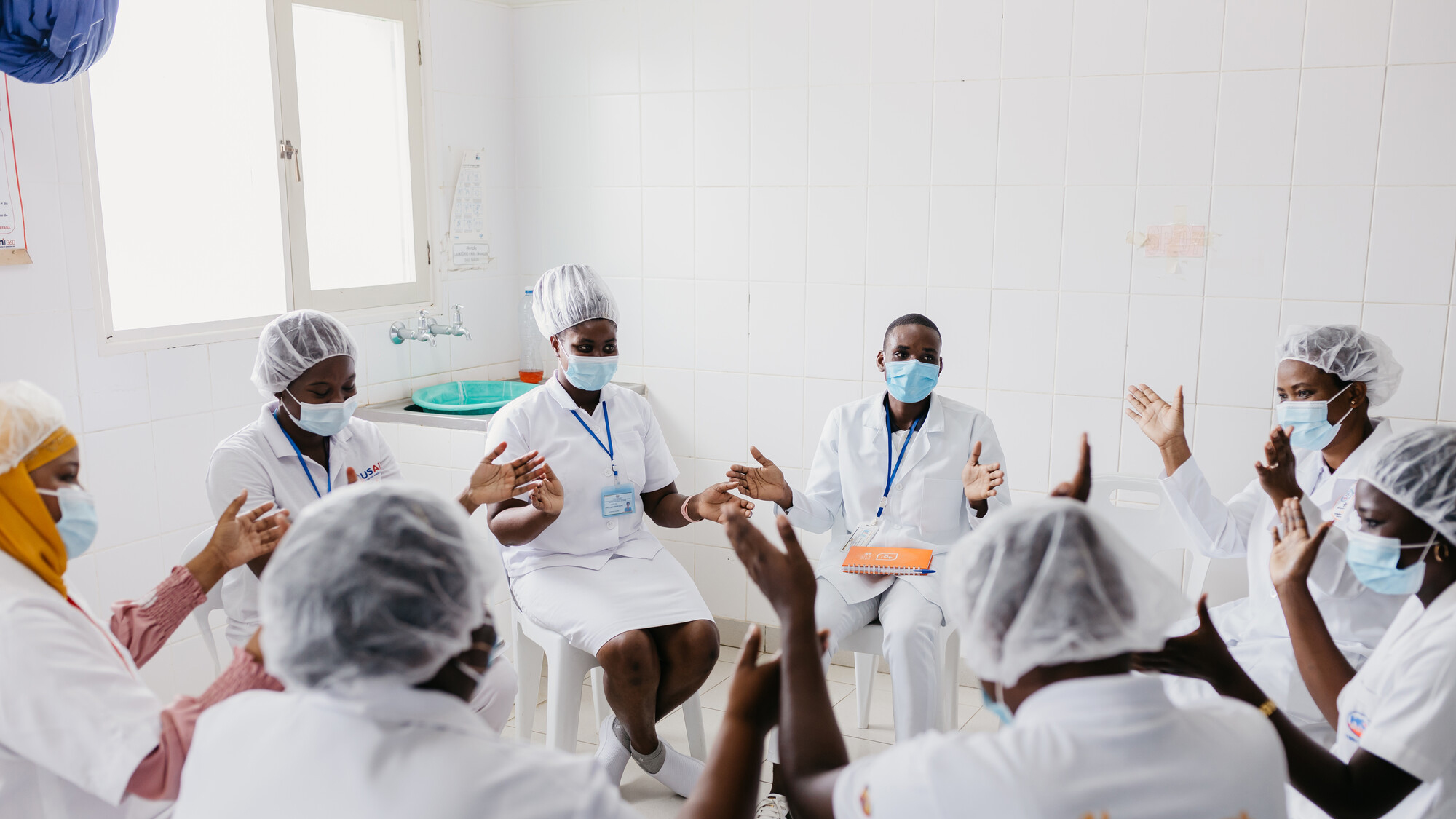
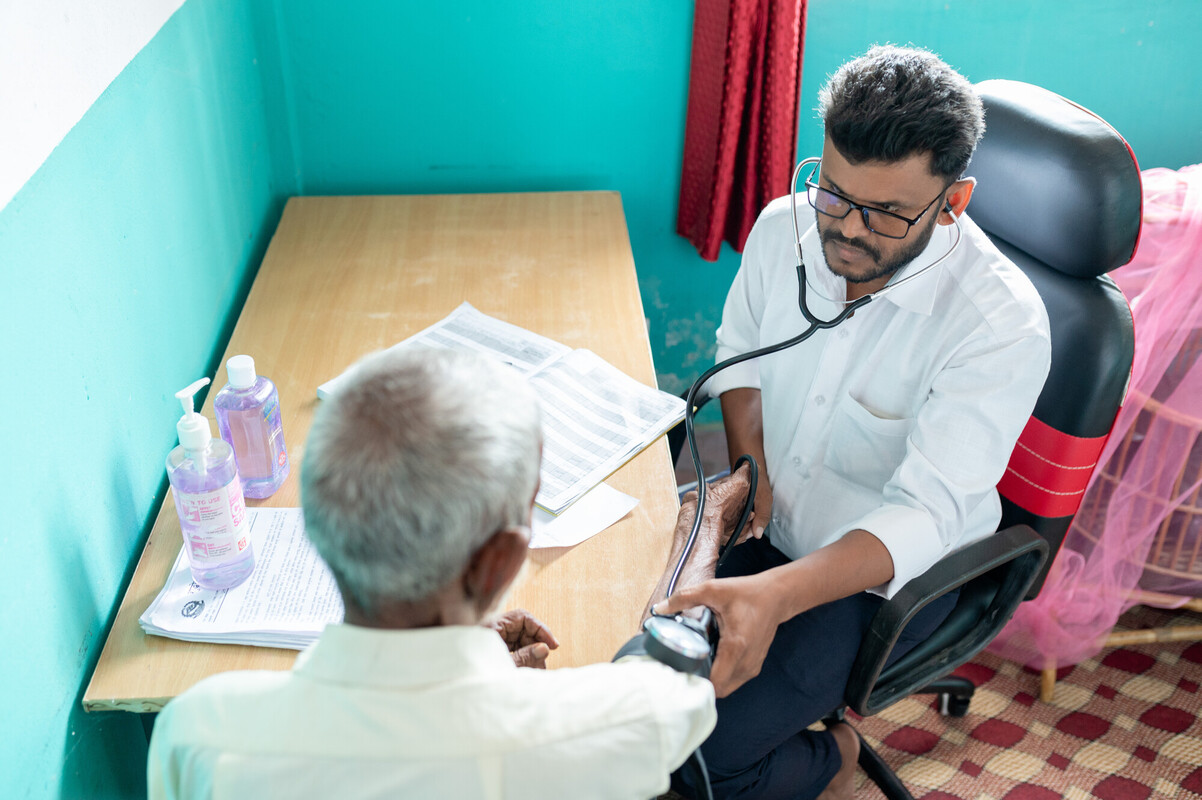
A mandatory component of the CoE initiative: training health staff on breastfeeding counseling to improve the uptake of optimal breastfeeding behaviors by mothers. Health staff counsel mothers on topics including breastfeeding positions, feeding cues, milk expression and nutrition.
The counseling works. “After mothers start feeding their babies with breast milk, we hardly see cases of malnutrition in children who are less than two years old,” says Dr. Kong. And now, he says, “Mothers in rural areas have more understanding than before.”
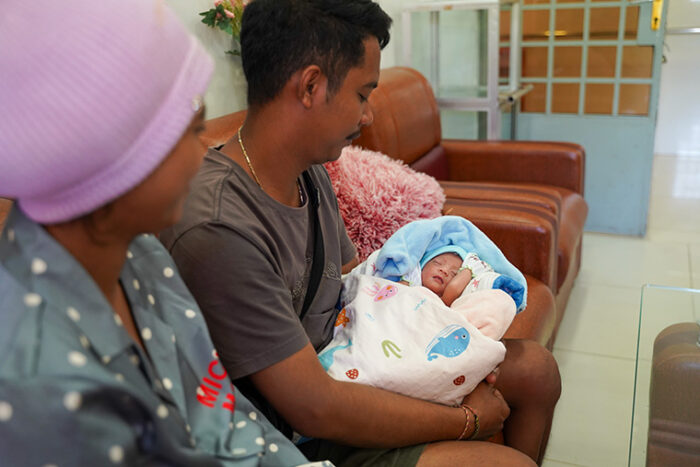
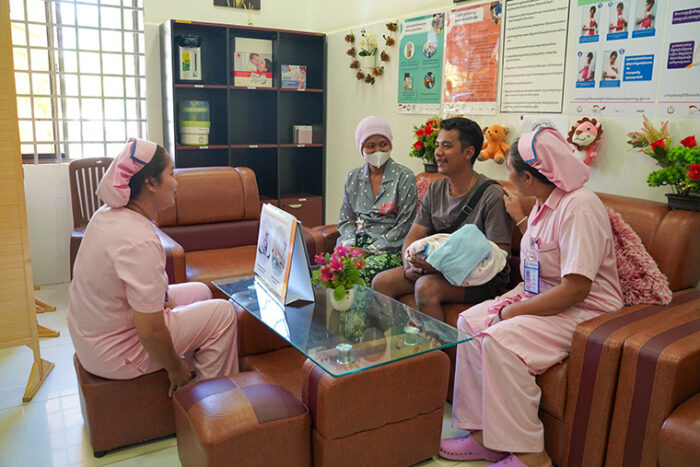
“They taught me a lot,” says mother Chhem, who was supported by the program. “How to take care of the baby after childbirth, about breastfeeding and skin-to-skin contact. I feel happy and motivated when the baby gets breast milk.”
Health staff and patients like Chhem benefit from the digital Birthing Experience Monitoring Tool. The tool captures feedback from mothers in maternity wards, providing an objective measure of service quality and improvement over time. It also helps identify violations to the International Code of Marketing of Breast-Milk Substitutes. By July 2025, more than 27,000 mothers in Cambodia, Laos and Viet Nam had shared feedback through the tool.
Reaching the furthest behind in remote communities
Among the country’s poorest areas, with high rates of child malnutrition, is Stung Treng province in northeastern Cambodia. Before partnering with Alive & Thrive, Stung Treng Provincial Hospital didn’t counsel patients about breastfeeding. Now, midwives counsel mothers each morning.
Chin Sreynak, deputy chief of the nursing care unit, shares that “before, [mothers] came here without the intention to breastfeed.” Now with the focus on improved nutrition counseling, all mothers intend to breastfeed.
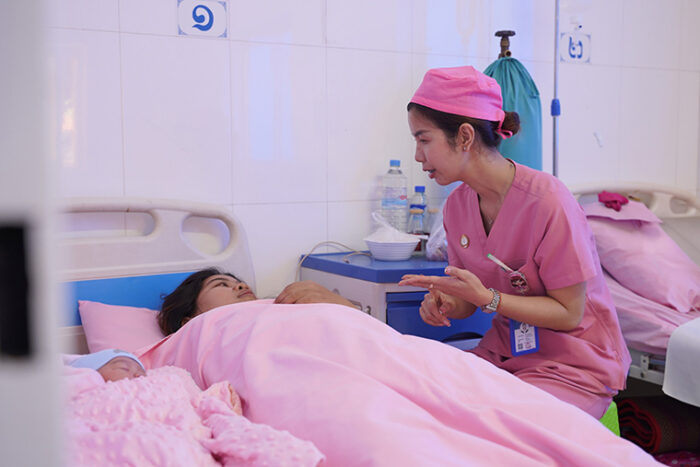
Krorn Tola gave birth to her second and third children at Stung Treng — before the hospital initiated breastfeeding-friendly practices and after.
With her third baby, she noticed staff were more attentive. Skin-to-skin contact with her newborn lasted more than two hours — longer than before.
This time, Krorn learned how to express milk. Now, even after she returns to work farming, her baby will continue receiving breast milk.
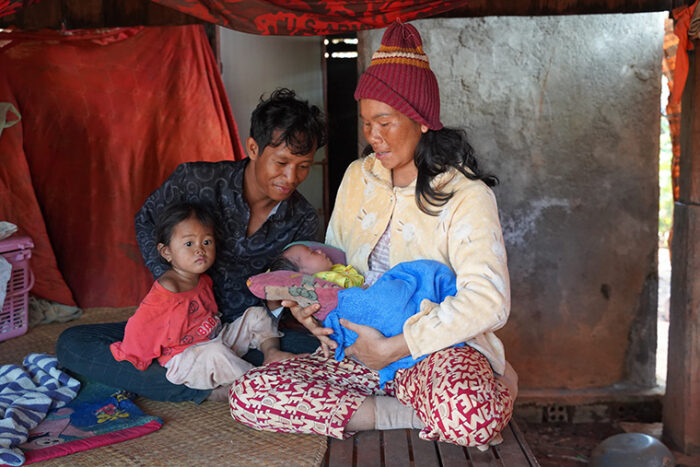
Ms. Krorn Tola
1990 (35-year-old)
Address: Sre Krasang Commune

Ms. Krorn Tola
1990 (35-year-old)
Address: Sre Krasang Commune
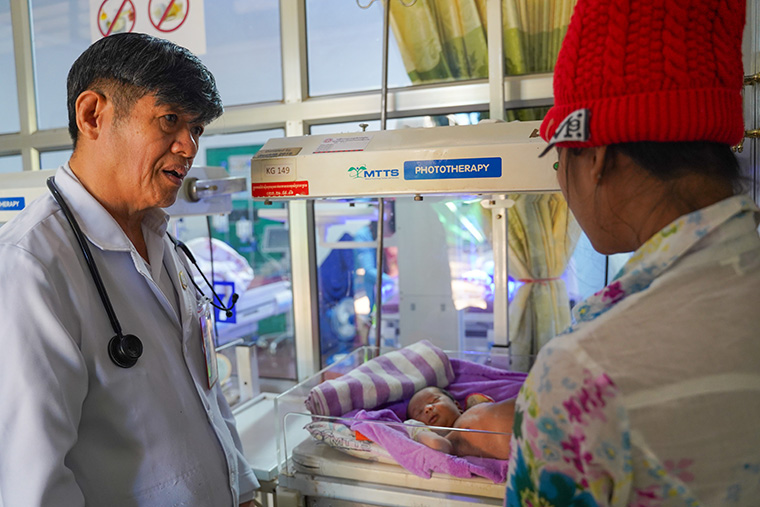
At Stung Treng, vulnerable newborns get the care they need. Eang Chantha had her fourth child there (she previously lost two children, one to severe malnutrition).
Breastfeeding “is good for my child and saves a lot of money,” she says. “Even though I have the money [for formula], I [will] still feed my child with breast milk.”
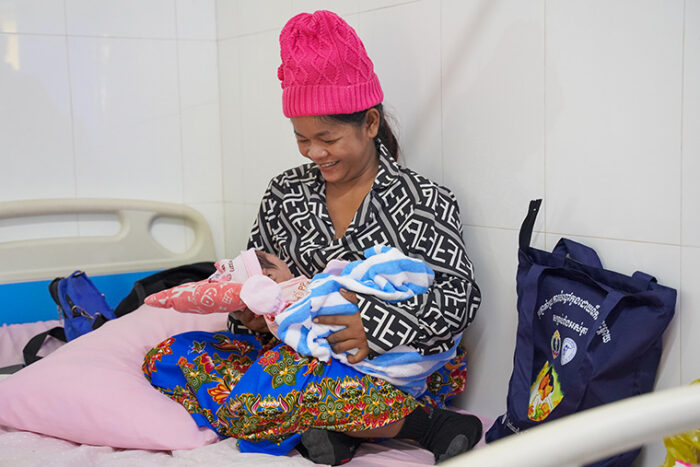
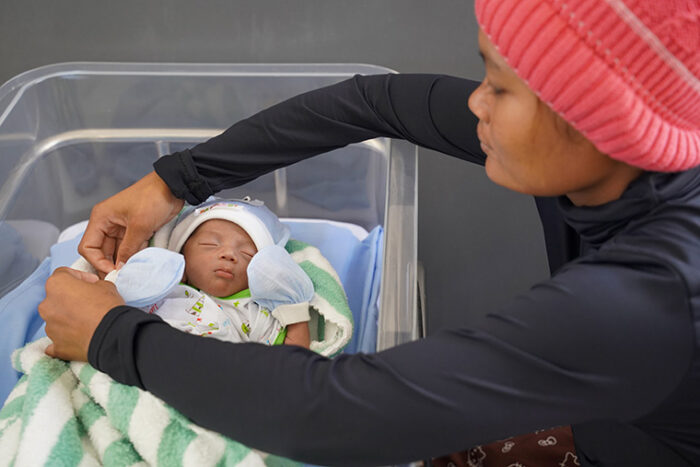
Chheang Sreynat, a rice farmer living 100 kilometers from the hospital, had her first baby at seven months gestation. At first, he was fed formula. With the support of health staff, Chheang switched to breastfeeding him after just a couple of days.

Ms. Chheang Sreynat
2005 (20-year-old)
Ms. Chheang Sreynat
2005 (20-year-old)
Before, Chheang knew nothing about breastfeeding. After receiving counseling about why and how to breastfeed, she plans to nurse her son until he is 2.
Now, she says, “I am confident enough to breastfeed my baby.”