








Across the U.S., employers are facing a widening skills gap and an urgent need to build strong, mission-driven teams. The National Skills Coalition reports that 52% of jobs require training after high school, but 43% of Americans lack access to the training they need to fill in-demand jobs.
Registered apprenticeships offer a powerful, cost-effective solution that strengthens organizations today while preparing the workforce of tomorrow. FHI 360’s Institute for Work and Learning (IWL) designs apprenticeships in the expanding human services field — including youth services, mental health counseling and community health work — that combine training instruction, mentorship and on-the-job learning. The apprenticeships help employers build skilled talent pipelines, strengthen job retention and develop strong leaders. They benefit existing staff through upskilling and professional development.
“Our staff often come to us because they like working with kids, but they don’t necessarily know the nuts and bolts of how to serve kids in the most effective, professional way possible,” says Germain Castellanos, CEO of the Boys & Girls Club of Lake County, IL. “We decided [apprenticeships] would be a good fit for our staff.”
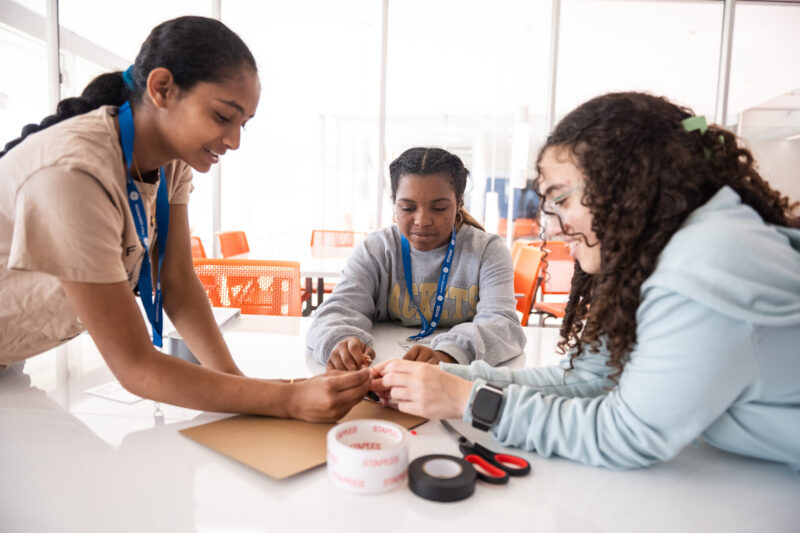
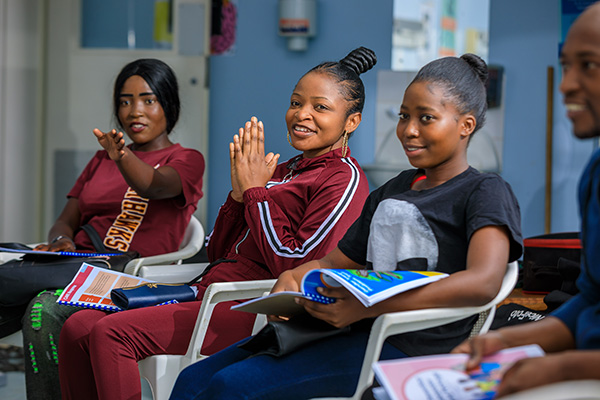
For Germain and Director of Operations JP Arangure, apprenticeship has become an essential strategy for developing staff and improving organizational outcomes. After partnering with the Lake County Workforce Board and FHI 360, they enrolled eight people in the Youth Development Practitioner Apprenticeship in 2024 and another five in 2025.
Designed by FHI 360, the program provides an earn-while-you-learn pathway that equips youth-serving professionals with the case management skills, coaching strategies, and mentoring approaches they need to further their careers.
Apprenticeships take emerging leaders to the next level
For JP, who supervises and mentors the apprentices, the results have been easy to see. Apprentices can apply new tools, approaches and skills — like leading a team and coaching staff — directly to their daily work. Because the learning is hands-on, connected to real scenarios, and supported by NIWL’s experienced facilitators, apprentices quickly gain confidence and competence.
“My apprenticeship impacted the way I am able to work with my peers as well as the youth,” says C’era Young, who completed her apprenticeship between 2023 and 2025. “I have used a lot of what I’ve learned during the apprenticeship to help coach up a lot of my peers and share knowledge from my personal work experiences and the apprenticeship specifically.”
C’era grew so significantly as a leader that the Boys & Girls Club of Lake County created a new senior management role for her. “After the program, she had a better structure to her site,” says Germain. “We saw that growth in people [like C’era] who were on the cusp of the next level of leadership.”
“Our staff often come to us because they like working with kids, but they don’t necessarily know the nuts and bolts of how to serve kids in the most effective, professional way possible”
— Germain Castellanos
Employee growth boosts organizational capacity
For employers, retention is one of the greatest advantages. “This apprenticeship is the highest level of investment we can make in our employees,” says Germain.
Apprenticeships also create positive change across entire organizations. “There’s a trickle-down effect,” JP says. Even staff who weren’t enrolled begin adopting the language, coaching approaches, and management strategies that apprentices bring back to their teams.
The result? “We’ve seen the growth — in communication skills, time management, patience, people skills,” says JP. “We’ve even seen that boost in morale.”
The unique structure of apprenticeship sets it apart from other professional development opportunities. “You can’t have apprenticeship without mentorship. You can’t just hand someone a workbook and expect these results,” Germain notes. “The team at FHI 360 guiding us through the process, guiding the apprentices, is what made the difference.”
For employers searching for ways to strengthen their workforce, support emerging leaders, and build long-term organizational capacity, apprenticeships offer a proven path forward. As JP puts it: “Seeing how it’s benefitting the organization as a whole is really incredible.”
And for apprentices like C’era, the effects are long-lasting. “My apprenticeship experience has increased my own understanding of what I do every day,” says C’era. “It has helped me keep my ‘why’ at the front of my mind, and because of that, I am much more intentional at work. Whether it is with the youth, my team, or families, I am always trying to understand different perspectives, needs, and experiences of everyone I come into contact with.”
To learn how your organization can become an apprenticeship partner, visit NIWL’s Apprenticeships page.
NIWL’s Registered Apprenticeships are supported by the Employment Training Administration of the U.S. Department of Labor as part of an ABA2 grant award totaling $8 million with 0% financed from non-governmental sources.