
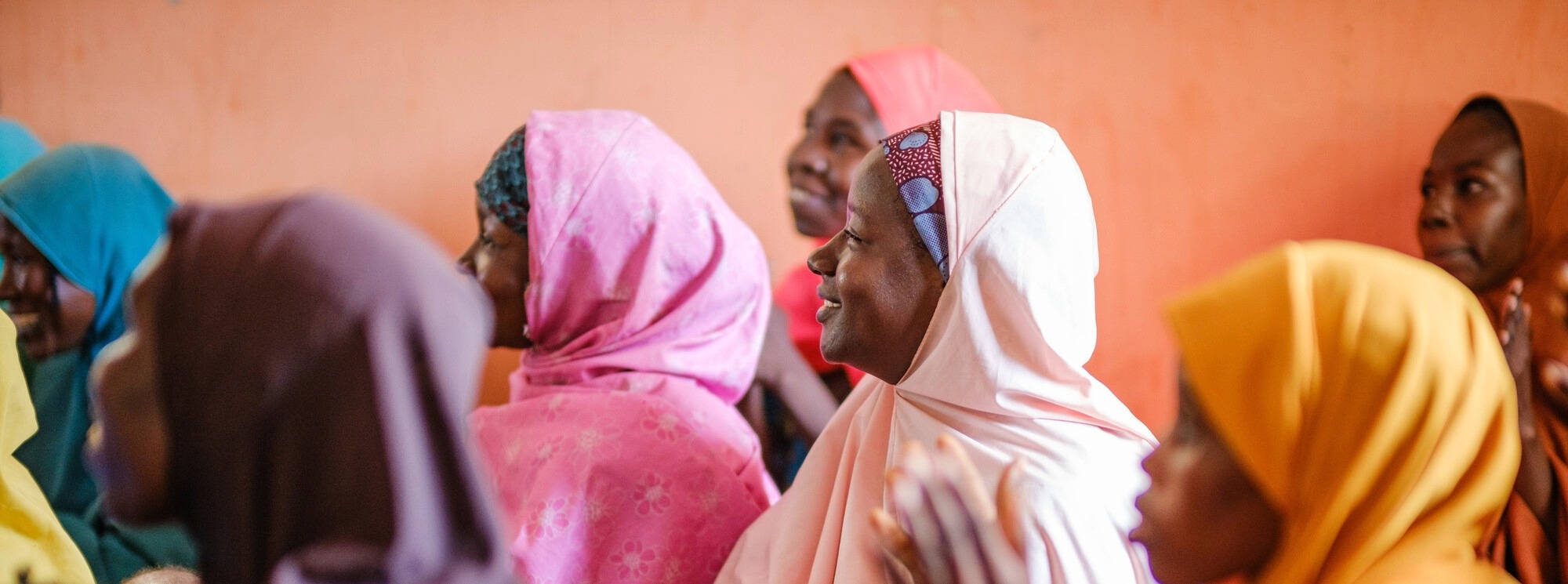
When women have access economic opportunities, everyone benefits. Children of economically empowered mothers are more likely to attend school and eat nutritious meals, boosting their lifelong wellbeing. Societies are better off, too, as women’s participation in the workforce strengthens economies and reduces poverty.
That’s why FHI 360’s NE-CORE project, funded by the U.S. Department of State, is connecting women living in a conflict-affected area of northeastern Nigeria with opportunities to earn income.
More than 3.5 million people in Nigeria are internally displaced — accounting for 3% of forcibly displaced people worldwide. Conflict and displacement have increased economic stress for many.
“Livelihoods have long been a challenge for many women in Ngala, Borno State,” says FHI 360 Assistant Technical Officer Grace Asher. “Years of insecurity have only deepened the struggle. That’s why the FHI 360 protection team designed strategies to help women and girls acquire the skills they need to meet their immediate needs while also building a more resilient future.”
Building skills to generate income
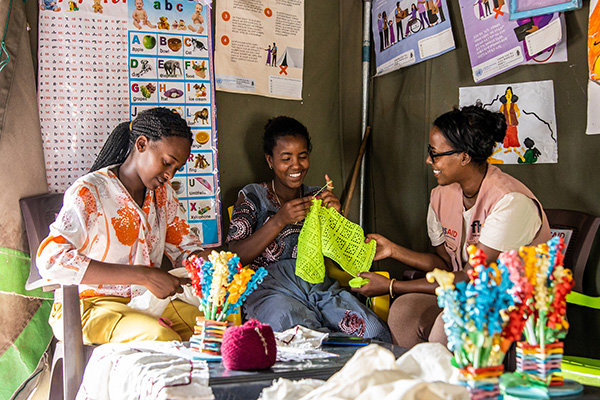
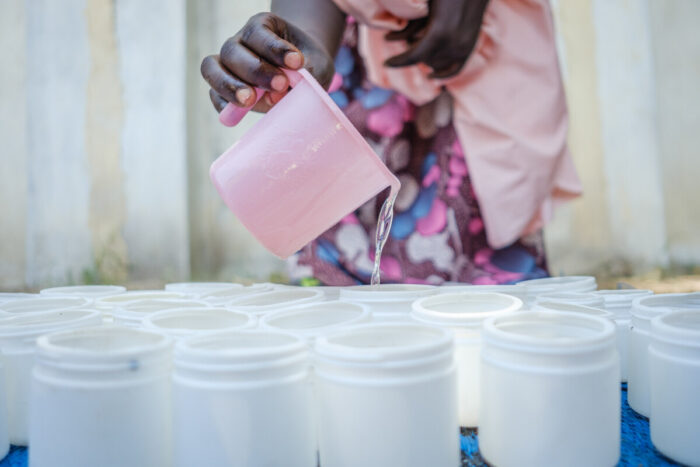
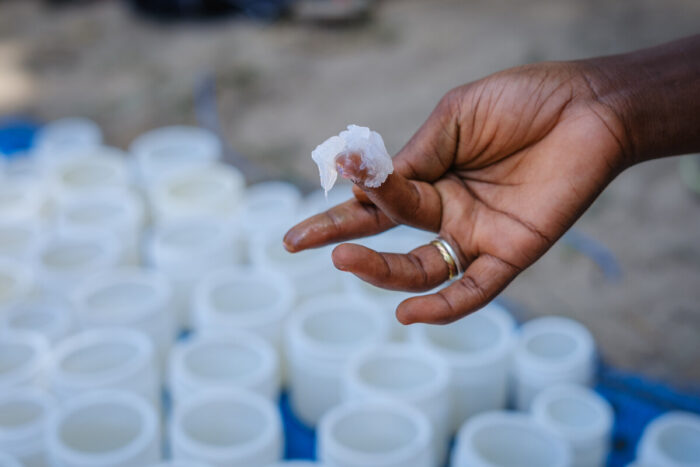
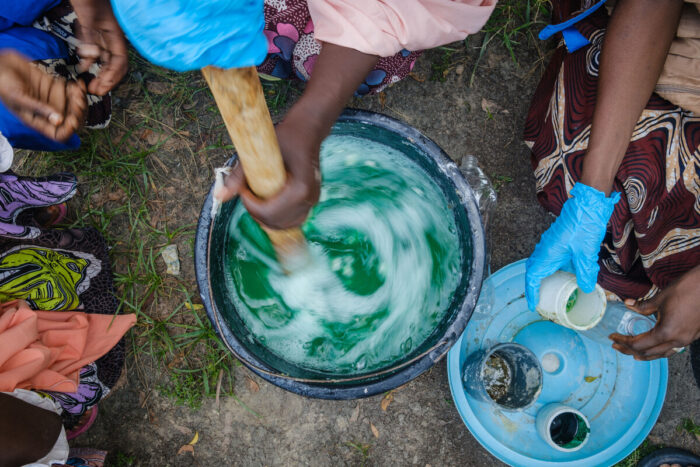
At the center run by FHI 360, women and girls learn income-generating skills like tailoring, knitting, and making products like fans, soap and petroleum jelly. To ensure support reaches those most in need, FHI 360’s protection team collaborates with partner organizations to identify and enroll participants who include survivors of violence, women heading households on their own and adolescent mothers.
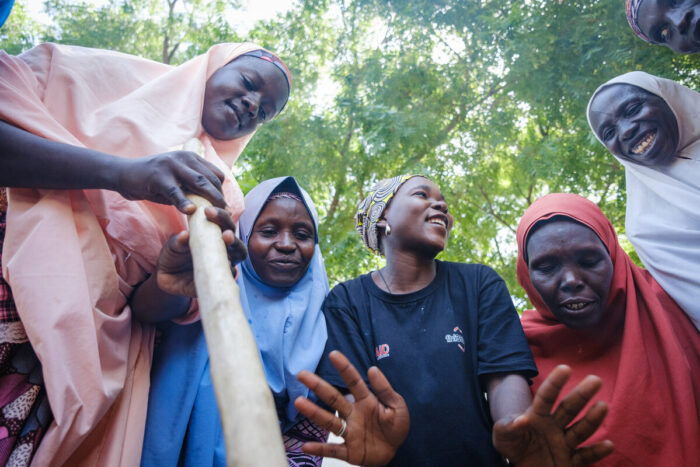
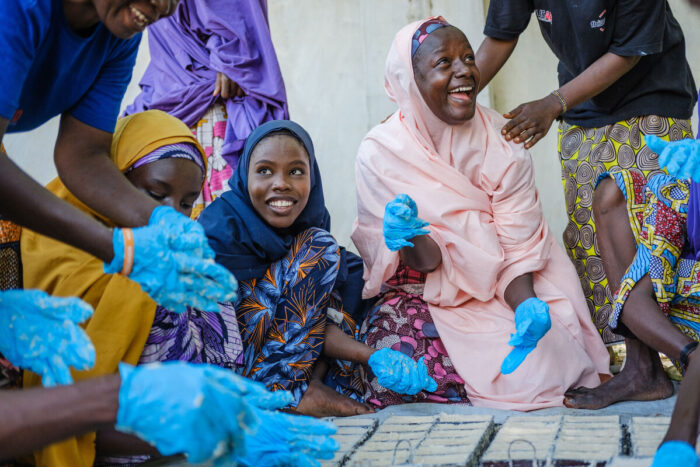
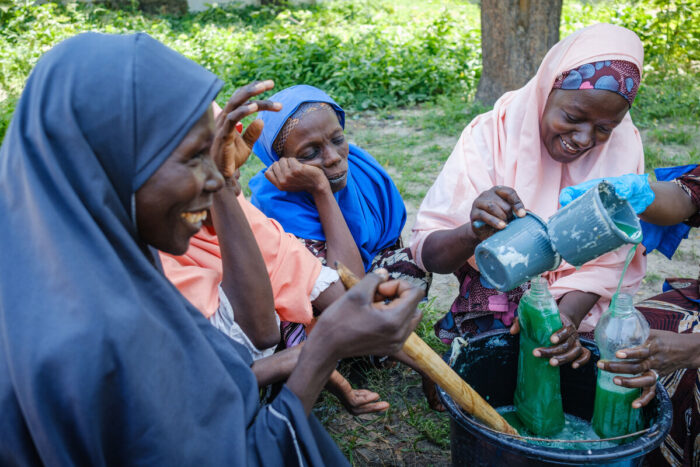
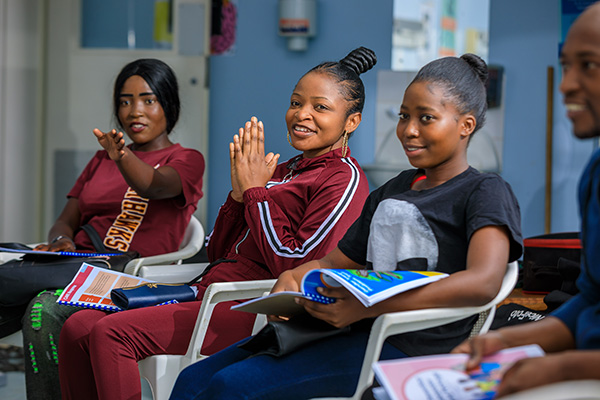
The FHI 360 team encourages the women to identify profitable skills that they enjoy. “We help them see that this is more than just a training; it is an opportunity to create meaning in their lives,” says Grace. There have been about 50 participants in total, organized into groups of 10.
For Yessa, who is in her early thirties, the experience has been life changing. She and her family were displaced by conflict in 2014. When they returned to their home in 2022, they discovered that it had burned down. Left with nowhere to live and unable to farm due to ongoing conflict and insecurity, Yessa’s family, which includes five children, moved into a camp for internally displaced people.
“The lack of money caused frequent fights between my husband and me,” Yessa says. “Whenever I asked for something, he would say he didn’t have it. This always led to arguments.”
At the camp, FHI 360 community protection volunteers connected Yessa to the center for women and girls, which “became like my second home,” Yessa says. “I learned not only soapmaking but also other life skills. Within three weeks of attending, I could produce soap on my own.”
Saving together
When Yessa’s group sold its first batch of soap, the participants shared their earnings equally. Saving collectively to achieve individual dreams became central to their community. They began practicing adashe, a local tradition of participating in savings cooperatives, giving them hands-on experience in managing and growing their resources themselves.
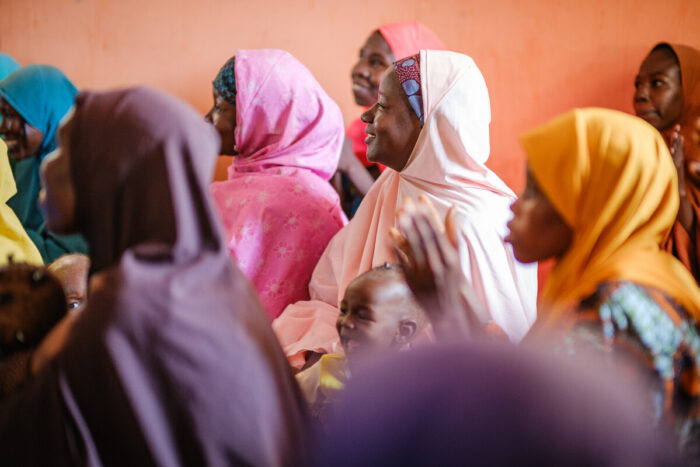
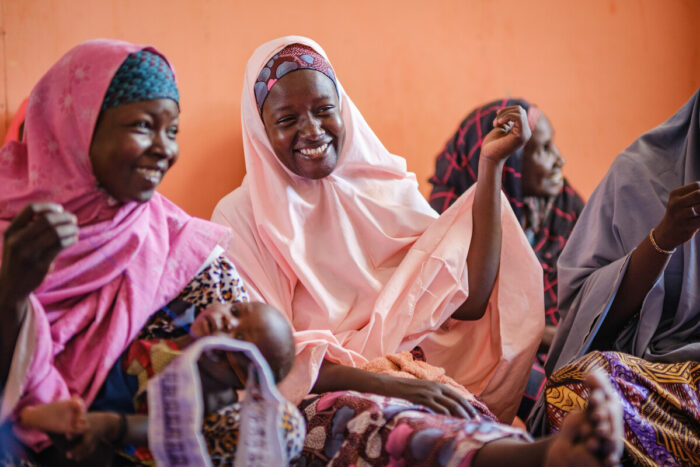
The women-run adashe groups foster a sense of belonging and purpose. Each woman regularly contributes a small portion of her income and, in return, receives a lump sum at intervals to invest in her business goals.
“FHI 360’s job is to mentor them and provide guidance,” explains Grace. “We show them how to make contributions, how to share the money fairly and how to use it to strengthen their businesses.”
FHI 360 supports the groups in establishing standard operating procedures to ensure they run smoothly, but the leadership sits with the women themselves. This balance of guidance and local ownership helps make the initiative effective.
Yessa used her share to start a livestock business, beginning with one goat and expanding to add more goats and chickens. “Unlike before, when I depended entirely on my husband, I now earn my own income,” she says.
The workshops Yessa attended gave her skills and confidence to think differently about money. “I don’t just spend the money,” Yessa explains. “I invest it. I buy food items and sell them to community members.”
FHI 360 also reaches men in the camp through “husband schools.” Men learn what it means to protect women and girls and how to stand with them as partners. They are encouraged to share household responsibilities like cooking, cleaning and caring for children, so that women have support to pursue opportunities of their own.
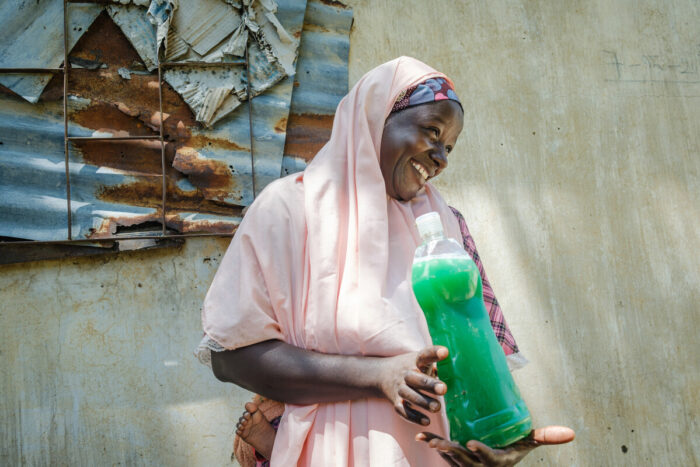
Economic opportunity activities like the soapmaking workshops and savings groups are “a win-win,” says FHI 360 Senior Technical Officer Ruth Shalli, benefiting not only the women, but also their families and the wider community.
Research shows that when women earn an income, they invest most of it in their children’s education, health and nutrition. That’s what FHI 360’s team is witnessing.
“The women often use their income to buy groceries for their families,” Ruth explains. “Most of the income comes back to support the household.” For Yessa and others, this shift means more than financial independence; it means putting food on the table and strengthening their families’ resilience.
All photos are credited to Taiwo Aina for FHI 360.
Learn more about FHI 360’s work to advance economic opportunity here.