Skip to content
FHI 360
  • Languages
  • Low bandwidth
  • High bandwidth
  • Search
  • Who we are
        • Who we are
          • About us
          • Leadership
          • Ethics and safeguarding
          • Impact and financial reports
          • Contact us
        • About us

          Impact and financial reports

  • What we do
        • What we do
          • Economic opportunity
          • Health


        • How we do it
          • Research in action
          • Humanitarian response
          • Digital innovation and AI
        • Explore our expertise
        • Economic opportunity

          Health

  • Where we work
        • Where we work
          • Asia Pacific
          • Central Africa
          • East Africa
          • West Africa
          • Southern Africa
          • Middle East and North Africa
          • Europe and Central Asia
          • Latin America and the Caribbean
          • United States
        • Around the world

          In the United States

  • Work with us
        • Work with us
          • Join our team
          • Local partners
          • Government and multilateral funders
          • Foundations and corporations
          • Academic and research partners
          • Small businesses and vendors
          • CEO position specification
        • Join our team

          Local partners

          Government and multilateral funders

          Foundations and corporations

          Academic and research partners

          Small businesses and vendors

  • News
        • News
          • Newsroom
        • Get the latest news
        • Newsroom

  • Stories
        • Stories & blog
          • Stories
          • Videos (YouTube)
          • Blog
        • Explore our storytelling
        • Our storytelling

          Blog

  • Resources
        • Resources
          • Resource library
        • Resource library

Home | Articles | Beating the odds: How a high school program transforms Trenton students’ futures
October 22, 2024

Beating the odds: How a high school program transforms Trenton students’ futures

When Nayeishka Gonzalez began her freshman year at Trenton Central High School, she felt lost. “I would just go straight to class, go home and do nothing,” she says.

A teenage girl wearing a blue polo shirt sits at a desk in a classroom and looks at the camera.
Nayeishka Gonzalez, a BTE student, participates in a series of mock interviews at Trenton Central High School, a BTE site.

This changed when she joined Bridge to Employment (BTE), a college and career readiness program, during her sophomore year.

Gonzalez, the oldest of six kids, lives in Trenton, New Jersey. Over 26% of Trenton’s population lives in poverty — more than twice that of the national average — and 89% of people 25 and older do not have a bachelor’s degree. This made Trenton an ideal location for BTE.

The program has a track record of success: 100% of BTE participants who complete the program graduate from high school, and 88% of eligible BTE participants enroll in an institution of post-secondary education.

FHI 360 provides strategic planning, technical assistance and resources for program implementers, student activities, a global BTE community, and sustainability planning — the last of which has been essential for BTE Trenton, which has self-sustained for four years beyond its pilot funding.

For over 20 years, FHI 360 has done this work in partnership with the Johnson & Johnson (J&J) Foundation to inspire young people to stay in school, pursue higher education and feel empowered to create their own paths forward.

Two students wearing matching blue polo shirts walk down a colorfully-painted hallway.
A bright and airy hallway in a high school, with high school students walking to and from classes. A sign saying "Trenton Central High School, home of the Tornadoes" is hanging from the second floor balcony.
BTE students Gonzalez and Kayson Brooks take a walk around Trenton Central High School, a BTE site.

Connecting students to hands-on, minds-on learning

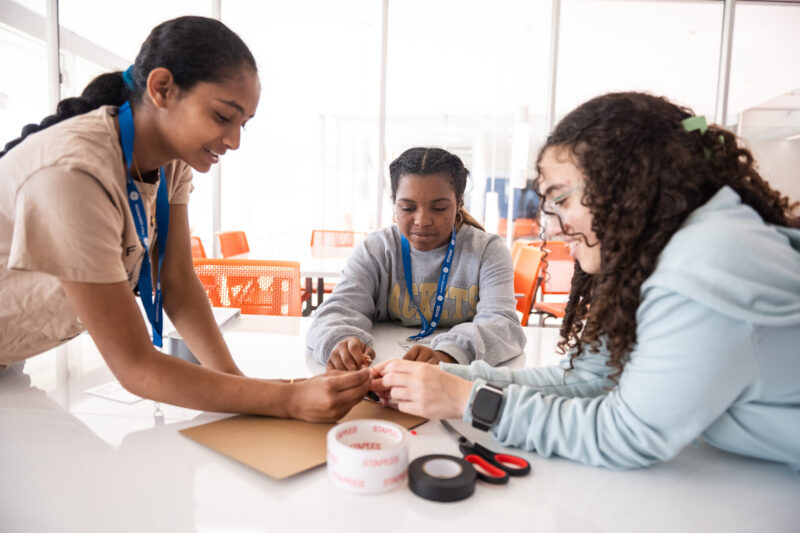
Every week, Gonzalez and other BTE Trenton students participate in hands-on and minds-on learning that they can apply both inside and outside the classroom. These activities range from participating in mock interviews to designing and constructing a prosthetic hand.

“It’s not really about designing the most efficient hand,” says Gabrielle Smith, a student at The College of New Jersey (TCNJ) and a Bonner Scholar (a student volunteer who serves as a mentor in BTE classrooms). “It’s more about teaching them teamwork skills and teaching them the scientific process and about trial and error.” 
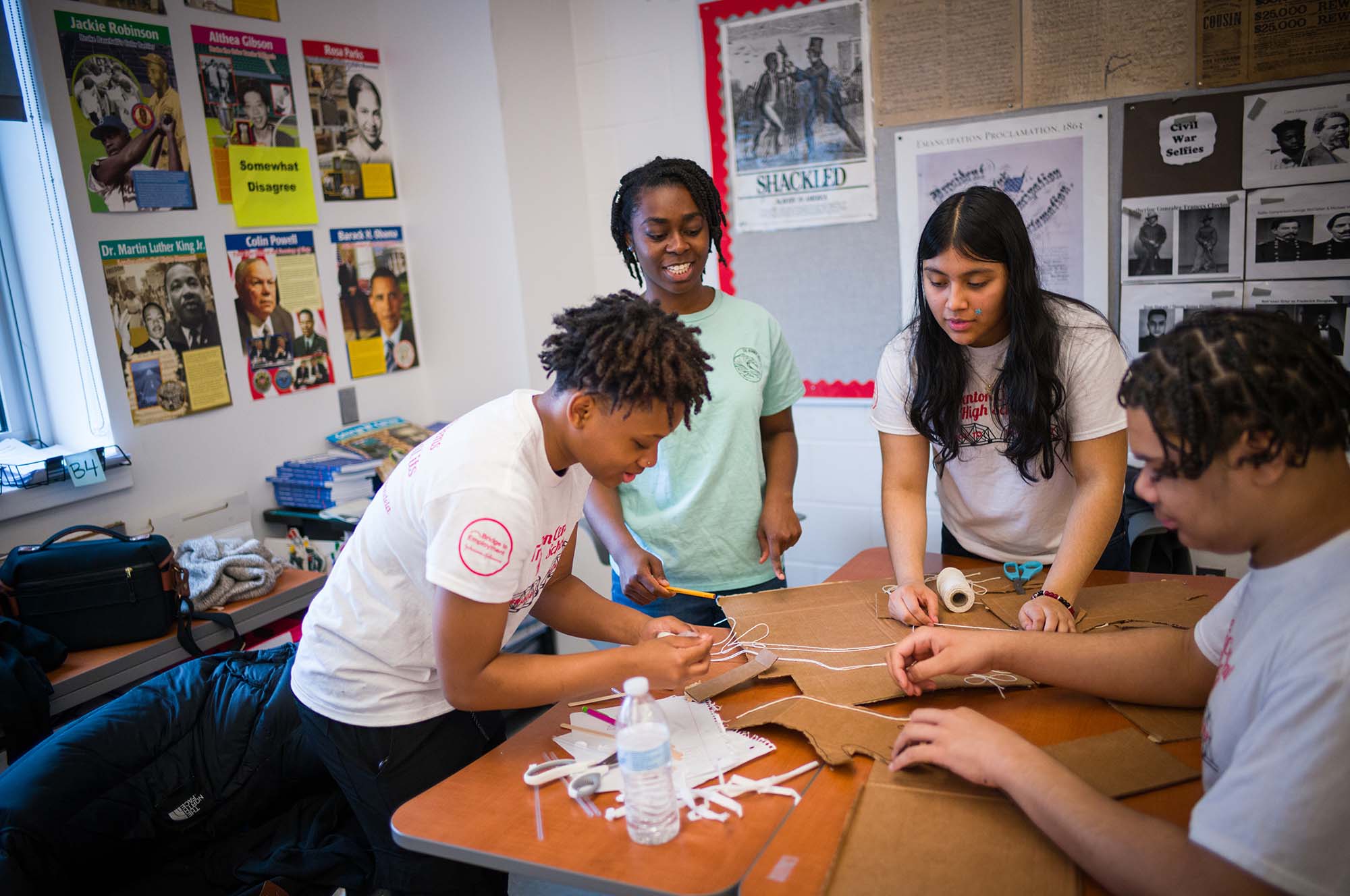
4 students are seen working on a project with cardboard, string and tape.
A group of 3 students work on a prosthetic hand for a project. The hand is made from a cardboard cutout, and string is attached to each finger, which they can pull to manipulate the fingers.
Bonner Scholars and BTE students construct prosthetic hands during a scholar workshop at Trenton Central High School, a BTE site.

The students have a say in these activities and often provide feedback. 

“Gathering feedback is really important,” says Smith. “If [the students] are not engaged in the workshops, they’re not going to gain a lot from them.”

Gonzalez feels the workshops benefit her future — and her siblings’ futures, too.

“I come from a first-gen family. First [person] graduating [high school], first graduating college — so I don’t have that knowledge, and neither do my parents,” she says. “Everything I’m learning here is useful to me and will be useful to my siblings as well.”

Connecting students to role models

BTE Trenton relies on a team of role models to motivate and inspire the students. Bonner Scholars, J&J employees and academic coaches connect students to academic enrichment programs, tutoring, summer internships and job shadowing opportunities.

Smith feels she’s in a unique position as a TCNJ student and Bonner Scholar. “I’m closer in age to them. It’s easier for me to relate to them,” she says. “I could help try and provide resources to students that might not otherwise have access to them.”

One of these resources is college preparation. When it’s time for a student to apply to college, BTE Trenton role models help students navigate the application process. 

Gonzalez’s BTE Trenton role models are encouraging. “Sometimes when you’re feeling down on yourself or you’re like, ‘Oh, I can’t do this,’ they’ll be there and they’ll help you out and be like, ‘Hey, you can do this,’” she says.

A teenage girl with curly hair in a ponytail wearing a blue polo shirt listens intently to an instructor. Two other teenage girls are seen in the background.
A woman in a plaid skirt and beige sweater sits on top of a desk speaking to 5 students who are sitting or standing around her.
Gonzalez and other BTE students participate in a series of mock interviews with J&J employees, including NuRocha Williams (in beige, on right).

While BTE Trenton is a rewarding experience for the students, it’s also meaningful for the role models.

“My students have been teaching me Spanish. Sixty-seven percent of our students come from bilingual households,” says Nicole Dent, a teacher lead at Trenton Central High School. “A couple of our students will some days only speak to me in Spanish. My Spanish is getting better slowly.”

Taken through a window peering into an office, we see a teacher sitting at a desk talking to students.
Dent, Trenton Central High School teacher lead, meets with a student.

NuRocha Williams, a global and strategic insights manager at J&J and a BTE Trenton role model, enjoys “being able to engage with teenagers and see the world through their eyes. I feel like I learn a lot, and it brings me a lot of energy.”

From the classroom to the community

BTE also has a lasting impact on the students’ families and communities, and Dent has seen students go through the program and return as volunteers.

“[BTE Trenton has] been something much bigger than just what happens here at the high school. This program has had a huge ripple effect in the community with our families and our students,” she says. “What doesn’t often get told [about Trenton] is the success stories. And I think BTE is one of those success stories.”

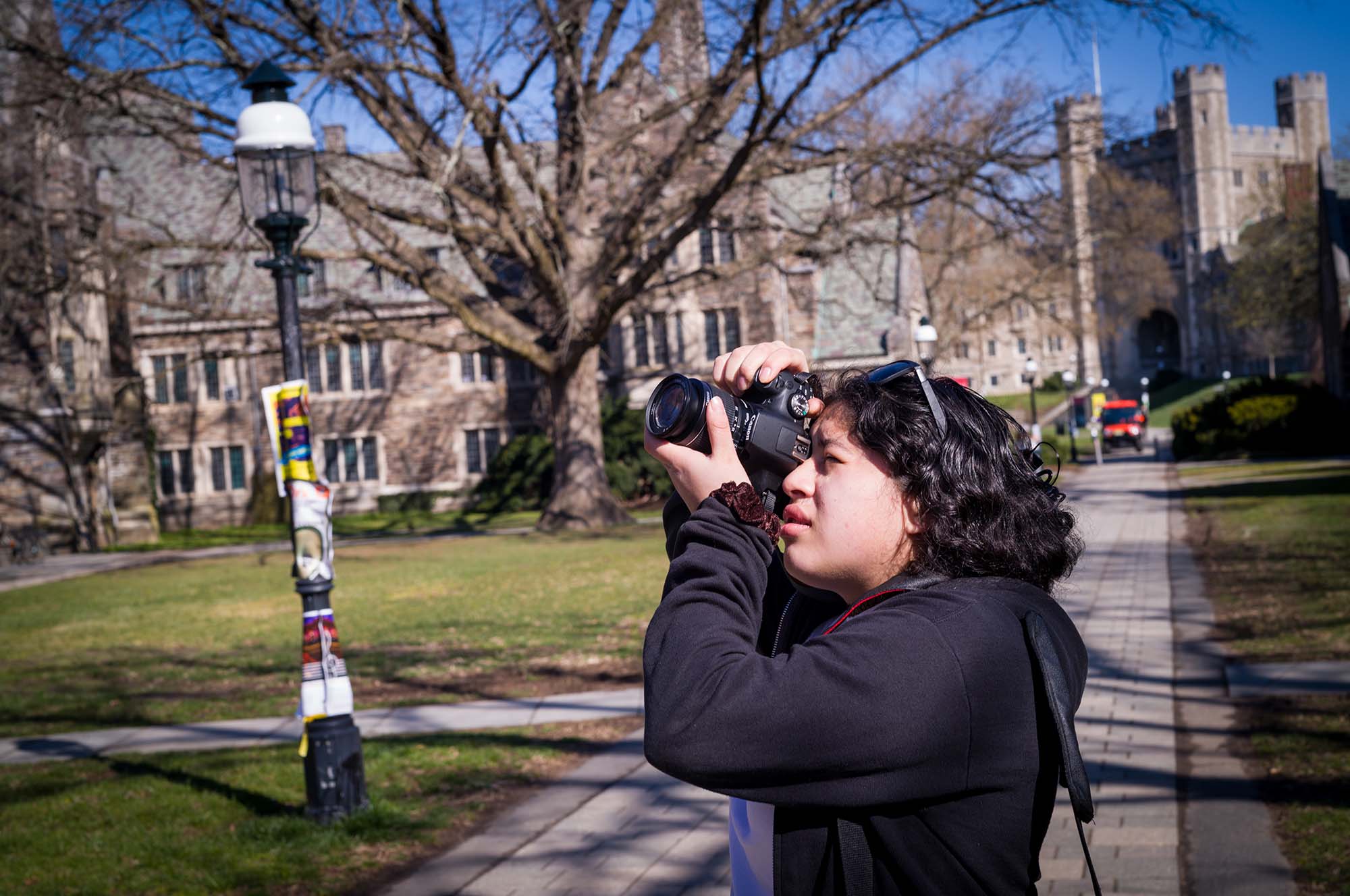
A group of teenagers and high school personnel listens to a college student giving them a tour of the campus. They're looking at the outside of an ivy-covered stone building.
A teenager  uses a DSLR camera to take a photo. She's standing in a courtyard surrounded by old academic buildings.
A group of 12 students in a large open room practice a choreographed danced.
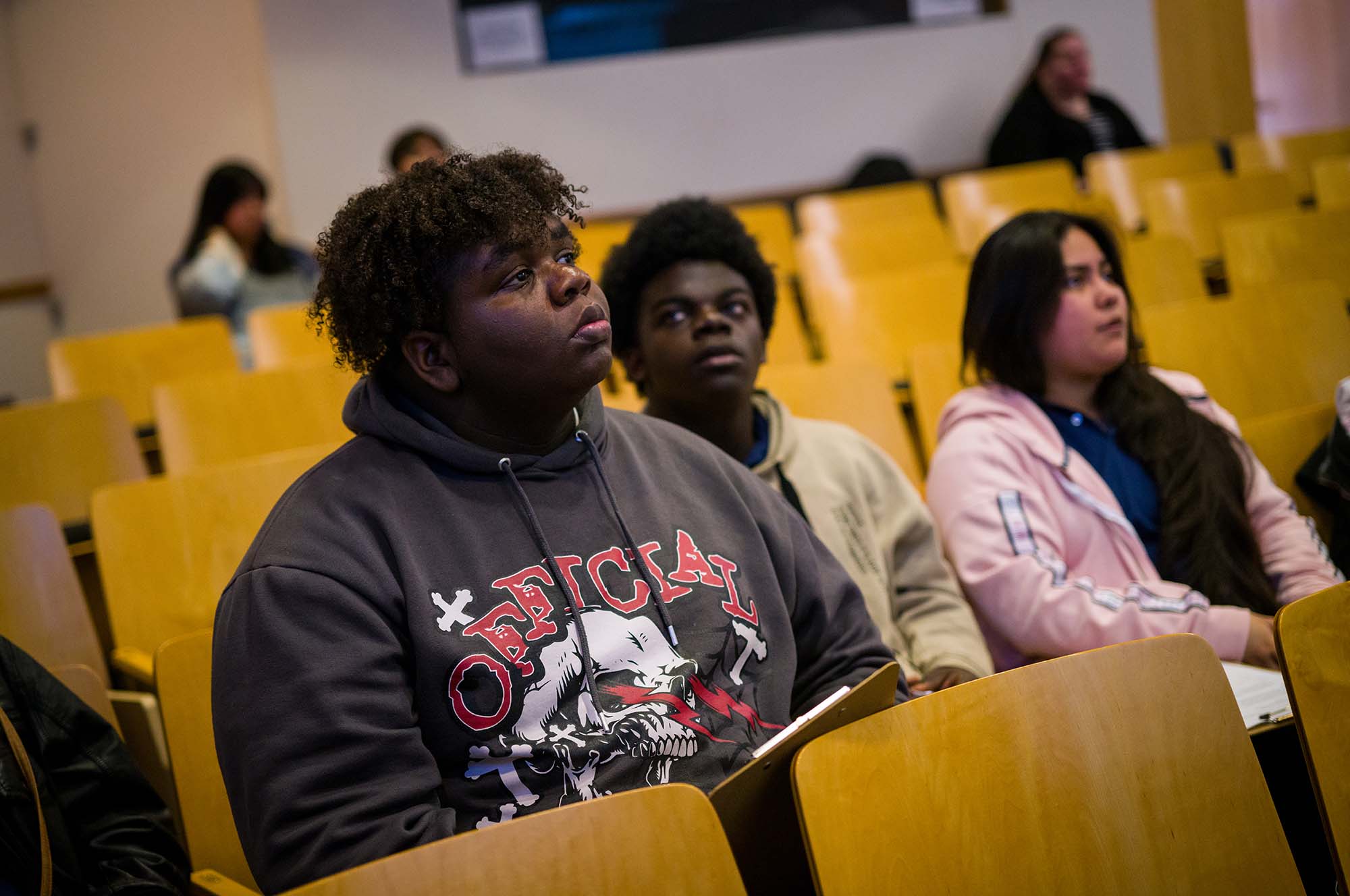
A student in a graphic sweatshirt sits in an auditorium seat and listens intently. More students are seating around him.
A group of 3 teenager girls carry books and walk outside while chatting.
Bonner Scholars and BTE students attend a field trip to Princeton University.

A bright future

Because of BTE Trenton, Gonzalez is feeling hopeful about her future. After high school, she wants to pursue a degree in law or a dual degree in law and psychology.

She is in good company. Over 91% of BTE graduates are planning on education beyond secondary school; about the same percentage feel more college and career ready than they did prior to participating in the program.

“As a BTE student I’ve learned that there’s not only one career path that you have to take,” says Gonzalez. “There’s so many things that you can do and there’s so many opportunities. All you have to do is look for it and work hard.”


All photos are credited to Edwin Torres for FHI 360.

Share article
Back to top

Related articles

News
FHI 360’s rapid response to the Ebola virus in the DRC
June 12, 2026
News
New AI chatbot aims to boost teacher pedagogical support
May 11, 2026
News
Why more employers are turning to apprenticeships — and seeing results
April 24, 2026

On this page

FHI 360

We are a nonprofit organization that mobilizes research, resources and relationships so that people everywhere can access the opportunities they need to lead full, healthy lives.

  • Partner with us
  • Business opportunities
  • Contract mechanisms
  • Small business
  • Our FHI 360 network
  • Events
  • Employee access
  • Contact us
  • Press
  • Privacy notice
  • Ethics and safeguarding

FHI 360 Headquarters
359 Blackwell Street, Suite 200
Durham, NC 27701 USA
1.919.544.7040

Washington, D.C., Office
2101 L St NW, Suite 700
Washington, DC 20037 USA
1.202.884.8000

Anti-trafficking statement

Connect

Sign up for our mailing list and receive the latest updates from FHI 360 straight to your inbox!

  • LinkedIn
  • Facebook
  • X
  • Youtube
  • Instagram

FHI 360 is the registered trade name of Family Health International.

©2026 FHI 360

We are using cookies to give you the best experience on our website.

You can find out more about which cookies we are using or switch them off in .

FHI 360
Powered by  GDPR Cookie Compliance
Privacy overview

This website uses cookies so that we can provide you with the best user experience possible. Cookie information is stored in your browser and performs functions such as recognising you when you return to our website and helping our team to understand which sections of the website you find most interesting and useful.

Essential cookies

Essential cookies should be enabled at all times so that we can save your preferences for cookie settings. However, they can be enabled or disabled using the button below.

Non-essential cookies

This website uses Google Analytics to collect anonymous information such as the number of visitors to the site, and the most popular pages.

Keeping this cookie enabled helps us to improve our website.