
A defining danger of Ebola is that the virus remains highly infectious even after a person has died. For families, the days following the death of a loved one are important for carrying out burial traditions that honor their family member. For frontline workers, this period presents a critical moment in stopping the virus from spreading.
The practice of safe and dignified burial (SDB) was developed for this impossible moment: to protect communities from Ebola while still honoring the deceased.
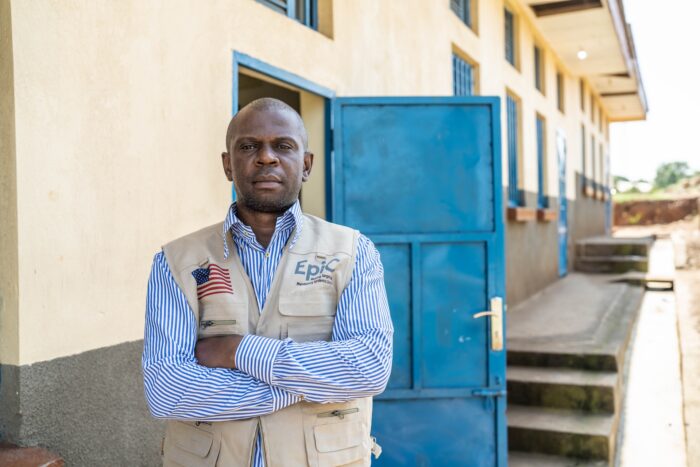
Marien Mubwa, a community engagement officer with FHI 360 in Bunia, Democratic Republic of the Congo (DRC), first learned about safe and dignified burials in 2019 from an FHI 360 colleague who had implemented them in Liberia during the 2013-2015 Ebola outbreak in West Africa — the most widespread ever recorded. During this outbreak, response teams adapted their burial procedures to more intentionally incorporate traditions with added safety measures.
“We interrupt the contamination between the dead body and the living ones,” says Mubwa. “Once we succeed in safe and dignified burial, it’s the beginning of the end of the outbreak.”
“Once we succeed in safe and dignified burial, it’s the beginning of the end of the outbreak.”
– Marien Mubwa
Mubwa is part of a team responding to the current outbreak of the Bundibugyo virus, a type of Ebola virus, in DRC through the Meeting Targets and Maintaining Epidemic Control (EpiC) project, funded by the U.S. Government. He has been a part of four Ebola outbreaks — each one reinforcing the same lesson: stopping Ebola starts with establishing trust between communities and response teams.
Protecting safety and dignity
Safe burial practices are highly effective at reducing transmission of the virus from the deceased to the living. But getting buy-in from family and community members can be challenging because certain sacred traditions — such as washing the body and wrapping it in cloth — must be avoided.
“Imagine losing a family member and being told that traditional funeral practices may place others at risk,” says Joyce Kakesa, FHI 360 country representative for the DRC.
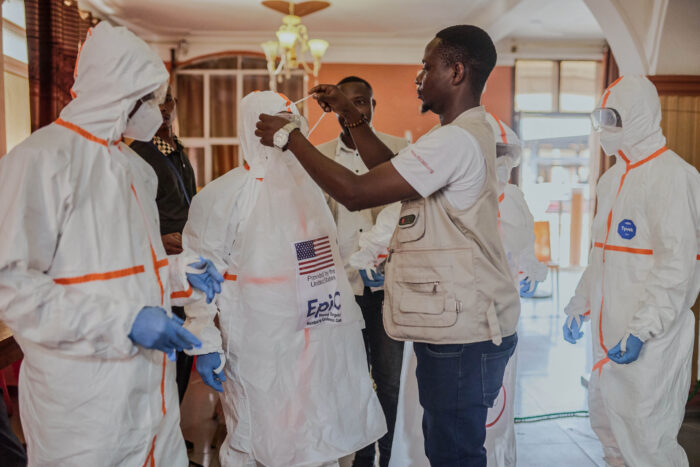
With a safe and dignified burial, a body is placed in a heavy-duty, impermeable body bag. Everything the body touches is sterilized with chlorine spray, and burial personnel are dressed in full personal protective equipment to prevent contact with the virus.
Mubwa explains that these safety measures don’t prevent people from performing prayers or rites before they bury the dead body. “We do everything possible so that the burials are dignified,” he says.
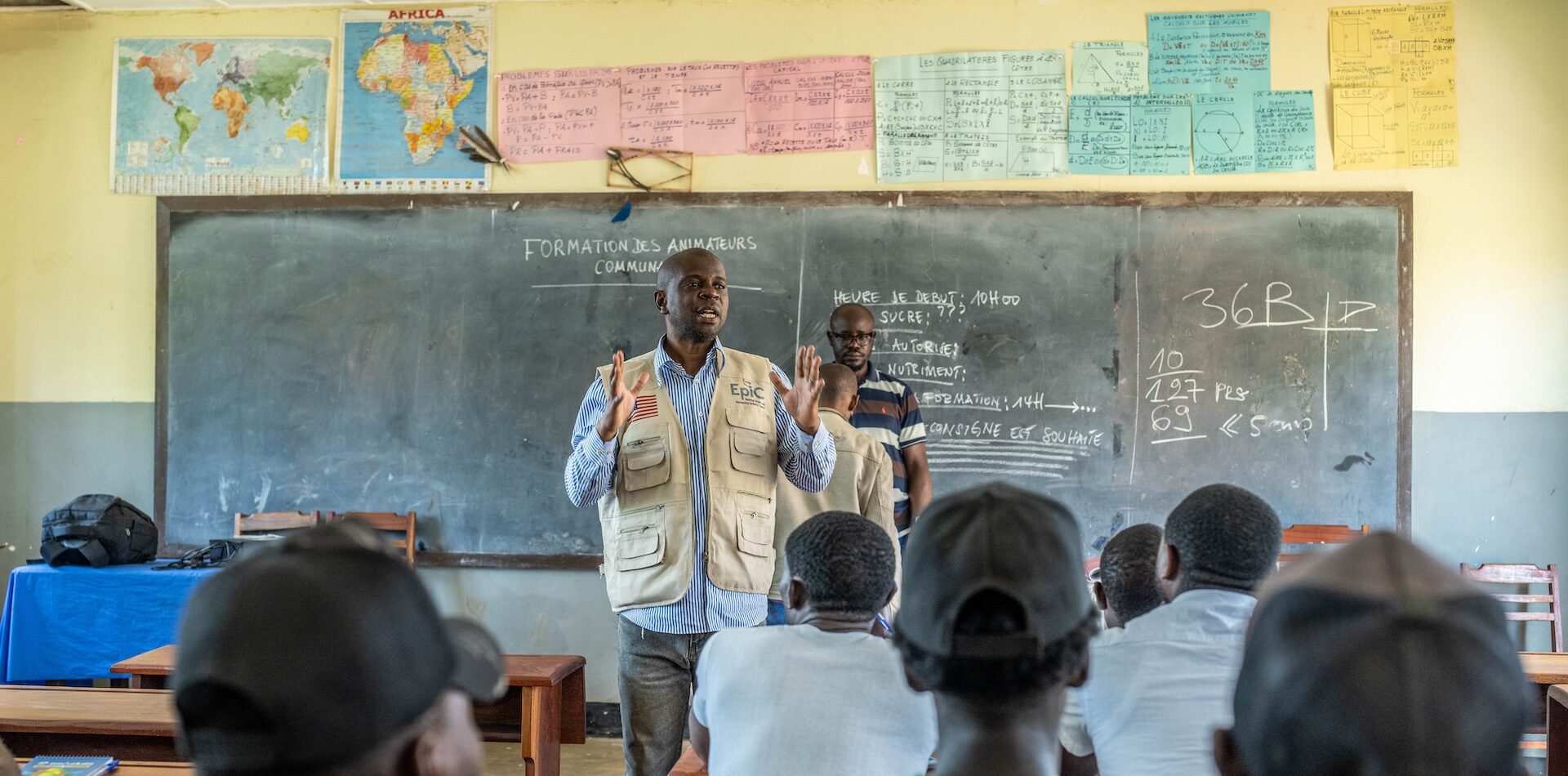
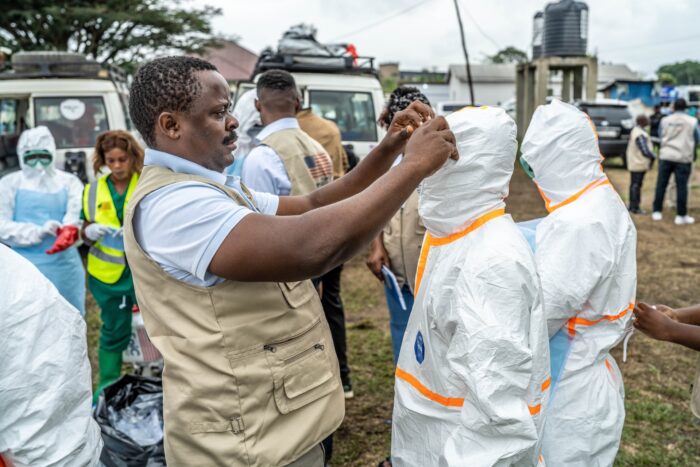
Since the Bundibugyo virus outbreak was declared in May, EpiC team members like Mubwa have been preparing communities for SBD burials and training local teams to pass along reliable information.
Leaders, such as customary chiefs and group chiefs, uniquely select SDB team members so that the teams reflect the community it serves and can honor specific burial traditions while keeping people safe.
“Communities we are helping are not passive recipients of the response,” says Kakesa. “They’re essential partners in it.”
Addressing rumors to build acceptance
Building relationships with local leaders helps keep response teams safe, too. Rumors about Ebola and safe and dignified burial teams are common and present challenges.
“We have seen how fears can spread faster than the virus itself,” says Kakesa. “Trust is just as important as science in controlling this outbreak.”
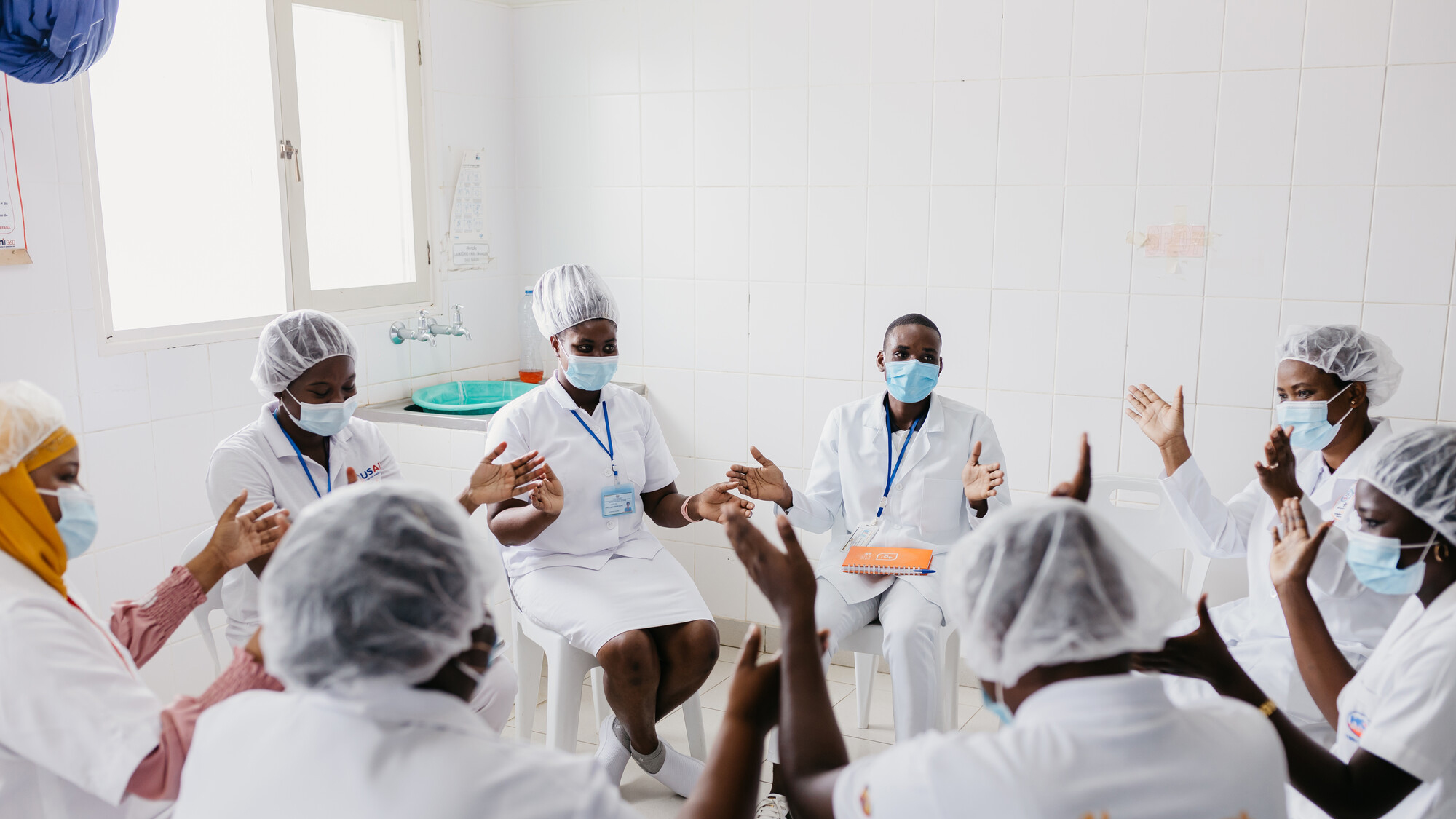
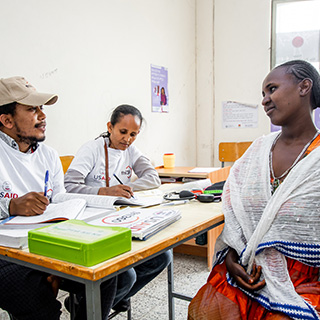
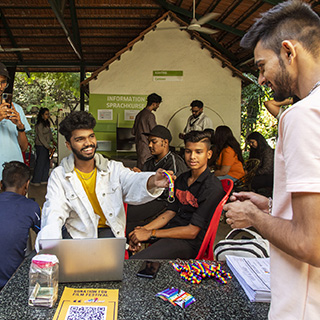
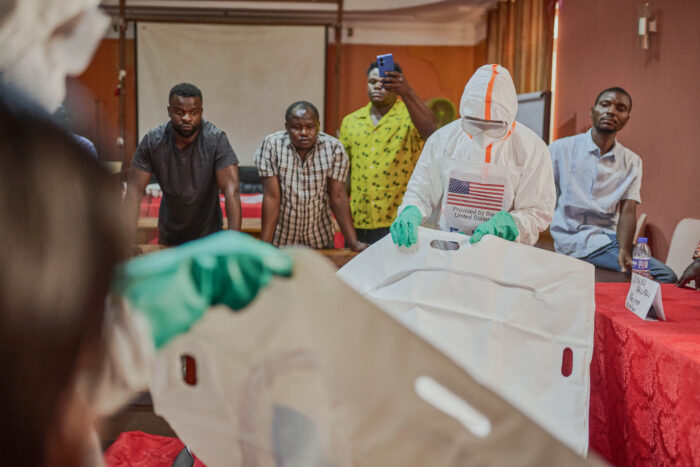
SBD teams work closely with community engagement teams that share accurate and up-to-date information about Ebola and promote acceptance of the outbreak response activities. Each week, an estimated 7,500 people are engaged by EpiC-supported community health workers who conduct household visits and community dialogues. These activities include simulations of safe and dignified burials so that families know what to expect if a loved one passes away. Simulations help dispel rumors and build trust between teams and the community.
When a family alerts health authorities that someone has died of unknown causes, a community engagement team visits the home. They answer the family’s questions and address concerns they may have about safe and dignified burials. If the family accepts, a safe and dignified burial team is deployed.
Navigating security risks
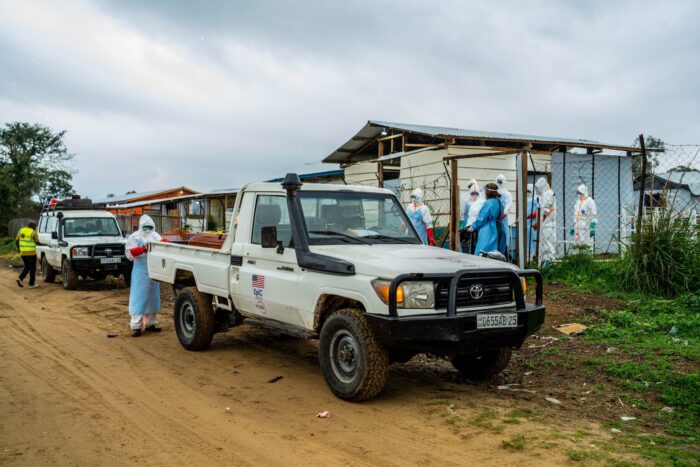
Ebola response teams follow intensive community engagement protocols, but they still must constantly assess security threats. Occasionally, FHI 360 vehicles carrying safe and dignified burial teams have been vandalized, impeding the ability of the team to safely carry out their duties.
In May, two young men burned an Ebola treatment center in Rwampara. “That was when the first cases were dying in their community. They were surprised and afraid,” says Mubwa.
He reached out to the men through mutual friends and helped them understand the danger that Ebola posed and the important work the response teams were doing. He also invited them to come to a training session for safe and dignified burial teams. They accepted and joined SDB teams after the training.
“They understood that the disease is real, Ebola is real, and that they have to change their behavior,” says Mubwa.
Response efforts are further complicated when an outbreak occurs in an area of political instability and civil unrest, which can restrict a team’s ability to train others and do their jobs.
“We are working in a conflict zone where you have armed groups,” says Mubwa. “Still, you are obliged to go in to save lives.”
Sustaining the response
The main challenge for response teams is keeping up with the scale of the outbreak. On day 100 of the current outbreak, more than 5,500 cases had been confirmed in DRC, compared to 840 confirmed cases on day 100 of the historic West Africa outbreak in 2013. The spread continues to strain human resources and supplies, as more health zones — geographic areas that ensure primary health care and referral services for a population — are impacted than in previous years.
The EpiC project has 48 safe and dignified burial teams in Ituri and North Kivu provinces that have conducted more than 3,000 safe and dignified burials since May. New teams are being trained every week, but during localized spikes in cases, a team may be faced with conducting up to seven burials in a day — a pace that is difficult yet critical to maintain.
Debriefing sessions with a psychologist from the Ministry of Health help teams process what they have experienced. “Out in the field, the team members become each other’s primary lifeline. They look out for signs of burnout in one another during debriefing sessions after difficult burials,” says Mubwa. “Ultimately, they keep going because they know if they stop, the virus wins.”
Even amid fear, loss and insecurity, the Ebola response in DRC shows what is possible when communities, health workers, governments and non-governmental organizations come together around a shared purpose: protecting life with dignity. Each safe and dignified burial is more than an infection prevention measure — it is an act of trust, compassion and solidarity. And in that solidarity lies the path toward ending this outbreak.
Frequently Asked Questions
How do safe and dignified burials help keep communities safe during Ebola outbreaks?
Safe and dignified burials help keep communities safe by preventing the transmission of the Ebola virus from the bodies of those who have died of the disease. With a safe and dignified burial, a body is placed in a heavy-duty, impermeable body bag. Everything that the body touches is sterilized with chlorine spray, and burial personnel are dressed in full personal protective equipment to prevent contact with the virus. Response teams adapt burial procedures to incorporate burial traditions that are safe.
How does FHI 360 work with communities to implement safe and dignified burials?
Through the U.S. government-funded EpiC project, FHI 360 works closely with community engagement teams that share accurate and up-to-date information about Ebola and promote acceptance of the outbreak response activities, including safe and dignified burials. Each week, an estimated 7,500 people are engaged by EpiC-supported community health workers who conduct household visits and community dialogues. FHI 360 works with local leaders to select community members for safe and dignified burial teams. FHI 360 trains and supervises these teams, which have conducted more than 3,000 safe and dignified burials since May.
How does FHI 360 train communities to respond to Ebola outbreaks?
Through the EpiC project, FHI 360 trains and supervises community-based safe and dignified burial teams and works with local leaders to identify appropriate team members. Training includes infection prevention measures, the safe handling of bodies and approaches for maintaining dignity and respecting local burial traditions.
How does FHI 360 balance cultural traditions and Ebola prevention?
FHI 360, through the EpiC project, works with communities to identify burial traditions that can continue safely while eliminating practices that could expose people to Ebola. Families can still perform appropriate prayers and rites while trained teams follow infection prevention procedures.
Why is community trust important during an Ebola outbreak?
Community trust helps Ebola response teams gain acceptance for critical prevention measures, including safe and dignified burials. FHI 360, through the EpiC project, works with local leaders and community engagement teams to provide accurate information, address rumors and help families understand what to expect from outbreak response activities.