

Skip to content
FHI 360
  • Languages
  • Low bandwidth
  • High bandwidth
  • Search
  • Who we are
        • Who we are
          • About us
          • Leadership
          • Ethics and safeguarding
          • Impact and financial reports
          • Contact us
        • About us

          Impact and financial reports

  • What we do
        • What we do
          • Economic opportunity
          • Health


        • How we do it
          • Research in action
          • Humanitarian response
          • Digital innovation and AI
        • Explore our expertise
        • Economic opportunity

          Health

  • Where we work
        • Where we work
          • Asia Pacific
          • Central Africa
          • East Africa
          • West Africa
          • Southern Africa
          • Middle East and North Africa
          • Europe and Central Asia
          • Latin America and the Caribbean
          • United States
        • Around the world

          In the United States

  • Work with us
        • Work with us
          • Join our team
          • Local partners
          • Government and multilateral funders
          • Foundations and corporations
          • Academic and research partners
          • Small businesses and vendors
          • CEO position specification
        • Join our team

          Local partners

          Government and multilateral funders

          Foundations and corporations

          Academic and research partners

          Small businesses and vendors

  • News
        • News
          • Newsroom
        • Get the latest news
        • Newsroom

  • Stories
        • Stories & blog
          • Stories
          • Videos (YouTube)
          • Blog
        • Explore our storytelling
        • Our storytelling

          Blog

  • Resources
        • Resources
          • Resource library
        • Resource library

Home | Articles | Safe and dignified burials reduce the spread of Ebola in the DRC
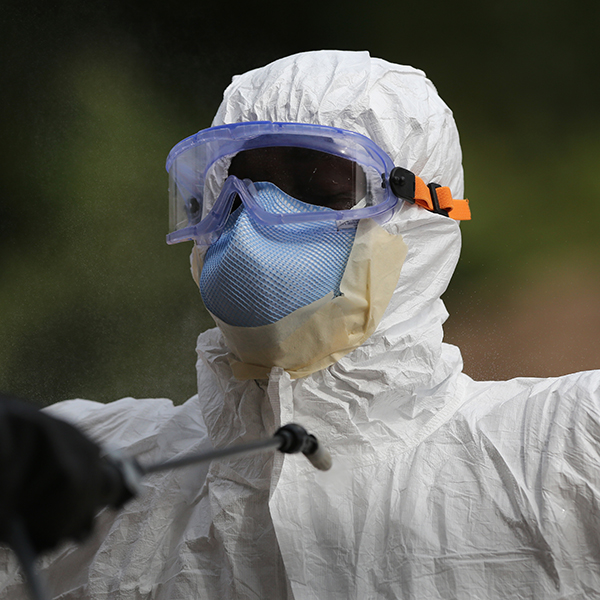
Photo credit: John Moore/Getty Images
August 16, 2019

Safe and dignified burials reduce the spread of Ebola in the DRC

In the Democratic Republic of the Congo (DRC), violence and mistrust are potent factors in the spread of Ebola virus disease (EVD). One rumor in the district of Nyakasanza alleged that burial teams were harvesting human organs from the bodies of the deceased for illegal trade. To allay fears and dispel misunderstanding, FHI 360’s crisis response team brought together community members, including local leaders, village elders, health professionals and women, to engage in an open dialogue and understand the root causes of their concerns.

During the meeting, FHI 360’s team educated the community about Ebola symptoms, prevention methods, the importance of seeking health care and the role that safe burial practices can play in curbing the spread of the disease. Afterward, the community pledged their support for Ebola-related activities, including welcoming vaccination and psychosocial teams.

With funding from the Office of U.S. Foreign Disaster Assistance, FHI 360 is working to stop the spread of EVD in hard-hit communities in North Kivu and Ituri provinces, including Butembo, which the World Health Organization calls the epicenter of this outbreak. Given the more than 1,800 deaths in the DRC and several in neighboring Uganda, there is growing concern that EVD will reach additional provinces and countries if it is not contained.

Engaging the community, earning trust

FHI 360’s two-pronged EVD response entails engaging directly with communities to increase acceptance of prevention, surveillance and burial activities as well as training local teams to conduct safe and dignified burials with family and community consent. Safe and dignified burial practices are critical to preventing the spread of EVD, particularly to other family members. Since March 2019, FHI 360 has reached nearly 8,700 people through its community engagement activities.

Personal testimonial can be a powerful communication tool to increase understanding about EVD and the need for safe burials. In Butembo, FHI 360 collaborated with one EVD survivor, a man named Kasereka, and invited him to speak at community meetings. He explained the facts about the virus, including how it is transmitted, and shared his personal experience.

“Eleven out of 17 of my family members died from Ebola,” he said. “I am among six people of my family who survived. Since I was informed at an FHI 360 community engagement meeting, I have taken a decision to speak out about EVD resistance.” He urged his audience to support and accompany Ebola response teams and to accept safe burial practices. Several participants said his firsthand account helped them to believe the virus is real.

FHI 360 has trained four burial teams in Ariwara, Bunia, Butembo/Katwa, and Komanda, and those teams have completed 418 safe and dignified burials. Additional teams are being trained in new outbreak areas. All teams follow Ministry of Health and World Health Organization safe burial protocols, which include guidelines for communicating with family members, gaining their consent and respecting religious preferences. By engaging with communities and earning the trust of families, FHI 360 is helping to reduce the spread of EVD in the DRC.

Share article
Back to top

Related articles

News
New AI chatbot aims to boost teacher pedagogical support
May 11, 2026
News
Why more employers are turning to apprenticeships — and seeing results
April 24, 2026
News
Investing in hope: How Nigerian women are building economic opportunities
April 16, 2026

On this page

FHI 360

We are a nonprofit organization that mobilizes research, resources and relationships so that people everywhere can access the opportunities they need to lead full, healthy lives.

  • Partner with us
  • Business opportunities
  • Contract mechanisms
  • Small business
  • Our FHI 360 network
  • Events
  • Employee access
  • Contact us
  • Press
  • Privacy notice
  • Ethics and safeguarding

FHI 360 Headquarters
359 Blackwell Street, Suite 200
Durham, NC 27701 USA
1.919.544.7040

Washington, D.C., Office
2101 L St NW, Suite 700
Washington, DC 20037 USA
1.202.884.8000

Anti-trafficking statement

Connect

Sign up for our mailing list and receive the latest updates from FHI 360 straight to your inbox!

  • LinkedIn
  • Facebook
  • X
  • Youtube
  • Instagram

FHI 360 is the registered trade name of Family Health International.

©2026 FHI 360

We are using cookies to give you the best experience on our website.

You can find out more about which cookies we are using or switch them off in .

FHI 360
Powered by  GDPR Cookie Compliance
Privacy overview

This website uses cookies so that we can provide you with the best user experience possible. Cookie information is stored in your browser and performs functions such as recognising you when you return to our website and helping our team to understand which sections of the website you find most interesting and useful.

Essential cookies

Essential cookies should be enabled at all times so that we can save your preferences for cookie settings. However, they can be enabled or disabled using the button below.

Non-essential cookies

This website uses Google Analytics to collect anonymous information such as the number of visitors to the site, and the most popular pages.

Keeping this cookie enabled helps us to improve our website.