





Resource Type: Guide, manual or tool
-
Evidence-Based Guidelines for Youth Peer Education
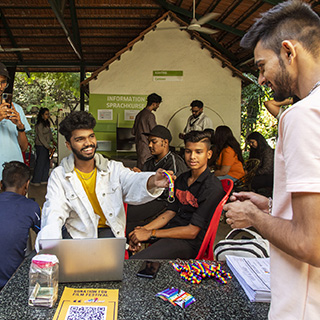
2010 — This tool offers recommendations on evidence-based, youth peer education practices and a framework for quality assurance of youth peer education programs. Developed with global experts, these guidelines offer specific tips for each phase of program implementation, explanations of the available evidence on what works and real-world examples of how the guidelines are used in…
-
Engaging Communities in Youth Reproductive Health and HIV Projects: A Guide to Participatory Assessments
2006 — This comprehensive guide outlines how to conduct participatory assessments with youth and community members for improved youth reproductive health and HIV prevention. Drawing on FHI 360’s YouthNet project’s experience in Ethiopia, Namibia and Tanzania, the guide reviews youth participation, guidelines for training community participants and suggestions for adapting the methods and tools for use…
-
An Annotated Guide to Technical Resources for Community Involvement in Youth Reproductive Health and HIV Prevention Programs
2006 — This compilation of resources includes documents, manuals and toolkits that provide advice, approaches and tools for involving community members, including youth, in reproductive health and HIV prevention programs. In the online version of the guide, the URLs for the resources are active links. Because URLs and materials on websites sometimes change, the online version…
-
Toolkit for the OSEP TA & D Network on How to Evaluate Dissemination: A Component of the Dissemination Initiative
April 2012 — For projects in the Technical Assistance and Dissemination (TA & D) Network, dissemination is about transferring information and resources, building knowledge and skills and enhancing capacities within the special education and disability communities they serve. This toolkit provides the network — funded by the Office of Special Education Programs (OSEP) at the U.S.…
-
Guidelines and Standards for Counseling High-Risk Groups in Clinic Settings
2009 — Support for this document was provided by Avahan, the India AIDS Initiative of the Bill & Melinda Gates Foundation.
-
Family Case Management: Family-Centered Care Training for Care-Providers of Children and Families Living With and Affected by HIV
2009 — This training curriculum aims to enhance the capacity of community workers to manage, prioritize and care for children and families infected and affected by HIV/AIDS. Developed under the Balasahyoga program in partnership with the Clinton Foundation and CARE, this curriculum provides a quick reference to the principles and processes of effective family case management.…
-
SAMARTH Monograph: Documentation of the Five-Year USAID-Supported HIV/AIDS Technical Assistance to Government and Civil Societies
2012 — This monograph shares FHI 360’s work and lessons learned in the Strengthen Abilities to Manage and Respond Effectively to HIV and AIDS in India (SAMARTH) technical assistance project. It describes FHI 360’s experience with building the capacity of the National AIDS Control Organization, State AIDS Control Societies and civil society organizations; designing and rolling out…
-
Family Case Management: A Handbook for Family Case Managers
2012 — Produced under the Balasahyoga project, this handbook shares FHI 360’s experience with the family case management approach, which considers the family as a unit of intervention and does not treat the child in isolation. It details roles and responsibilities of family case managers in providing need-based support in five domains of care — health,…
-
Trainer’s Guide: Training in Basic Counseling Methods for Family Case Managers
2012 — This manual, produced under the Balasahyoga project, compiles FHI 360’s experience in home-based counseling of families and others who provide care for children affected by HIV/AIDS. The guide can be used to orient outreach workers, facility staff and the staff of nongovernmental organizations to the conceptual and practical dimensions of counseling children and their…
-
Data Triangulation for HIV Prevention Program Evaluation in Low and Concentrated Epidemics
June 2010 — One purpose of this guide is to explore how HIV surveillance can be used in the process of evaluating HIV prevention programs in low and concentrated epidemics, using the Asian context as an example. A second purpose is to measure progress toward the goal of reducing HIV transmission.