








Language: English
-
Use of and Unmet Need for Injectable Contraception
June 2009 — Increased demand for injectable contraceptives and overburdened health systems have led several countries to explore non-clinic-based mechanisms for providing this method. In an effort to inform future policies and programs, the World Health Organization, the U.S. Agency for International Development, and FHI 360 convened a Technical Consultation on Expanding Access to Injectable Contraception,…
-
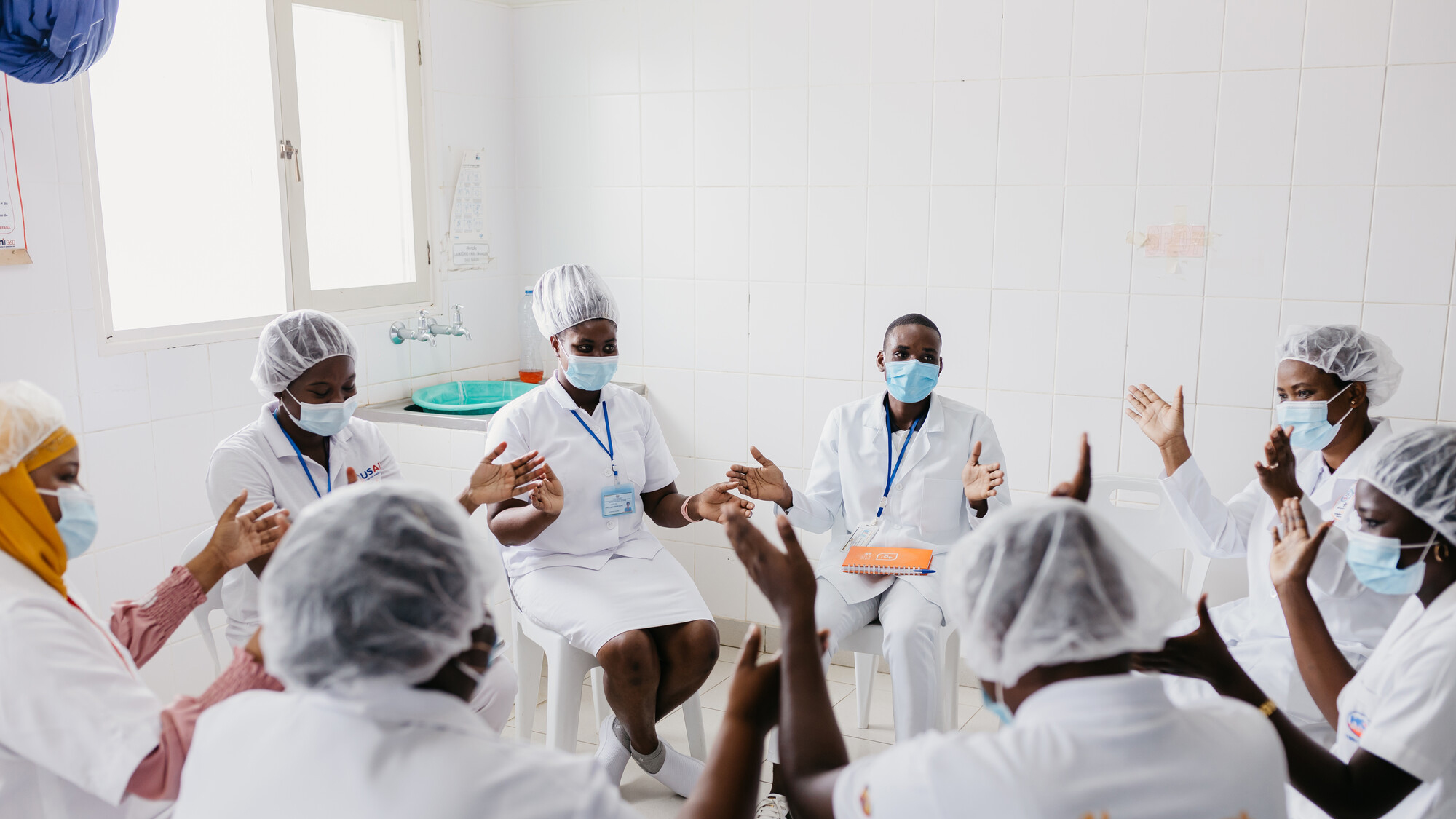
Training Manual for the Providers of Youth-Friendly Services
2008 — This training manual is designed to develop the capacity of the providers of youth-friendly services (YFS) to provide family planning and reproductive health services and information to youth through a training workshop. YFS providers should be able to respond to the needs of young people, remove their fears, respect their concerns and provide the…
-
TB CARE I: Year 2, 3rd Quarter Report
August 2012 — The global resurgence of tuberculosis (TB) over the past decades has been fueled by emerging drug resistance, co-infection with increasingly prevalent HIV and decreasing investments in public health systems. These challenges call for innovative, strategic approaches and more efficient, cost-effective programs. TB CARE I is a coalition of seven international TB control organizations,…
-
Task Sharing in Family Planning
June 2009 — This document explores the concept of task sharing. A key feature of task sharing is that health workers with less medical or paramedical training can provide some of the same services with the same quality as those with more training. While the term “task sharing” is new, the concept has been applied for…
-
Symposium to Develop a Comprehensive Strategy for IUD Repositioning
2007 — With support from the U.S. Agency for International Development through the Contraceptive and Reproductive Health Technologies Research and Utilization program, FHI 360 initiated a project to revitalize family planning, especially the intrauterine device (IUD), in Uttar Pradesh, India. FHI 360 collaborated on this effort with the Indian Ministry of Health and Family Welfare, the government…
-
Strategic Considerations for Strengthening the Linkages Between Family Planning and HIV/AIDS Policies, Programs, and Services
2009 — Many governmental and nongovernmental public health agencies are pursuing and, in some cases, scaling up programs that integrate family planning (FP) and HIV services. In response to calls from public-health decision makers for guidance on FP/HIV integration, the World Health Organization, the U.S. Agency for International Development and FHI 360 developed this publication. The…
-
Stakeholder Engagement Toolkit for HIV Prevention Trials
2012 — The Stakeholder Engagement Toolkit for HIV Prevention Trials is a guide to engaging a wide range of key stakeholders — people living with HIV, communities, policymakers, advocates, governments, religious and cultural leaders, funders, international agencies and regulatory bodies — at every stage of a clinical trial from planning to implementation and sharing results.…
-
Safety and Feasibility of Community-Based Distribution of Depo Provera in Nakasongola, Uganda
June 2005 — Throughout Africa, the popularity of depot-medroxyprogesterone acetate (commonly known as DMPA or Depo Provera) has increased dramatically in recent years. From its negligible availability 10 years ago, DMPA now dominates the method mix in dozens of countries worldwide, including Uganda. Given increases in both the contraceptive prevalence rates and population, the overall…
-
Research Ethics Training Curriculum (RETC), Second Edition
2009 — Human research ethics rest on three basic principles: respect, beneficence and justice. These principles are the foundation of all regulations or guidelines governing research ethics and transcend all geographic, cultural, economic, legal and political boundaries. Although these principles are universal, there are few tools available to help researchers learn about the development and…