Skip to content
FHI 360
  • Languages
  • Low bandwidth
  • High bandwidth
  • Search
  • Who we are
        • Who we are
          • About us
          • Leadership
          • Ethics and safeguarding
          • Impact and financial reports
          • Contact us
        • About us

          Impact and financial reports

  • What we do
        • What we do
          • Economic opportunity
          • Health


        • How we do it
          • Research in action
          • Humanitarian response
          • Digital innovation and AI
        • Explore our expertise
        • Economic opportunity

          Health

  • Where we work
        • Where we work
          • Asia Pacific
          • Central Africa
          • East Africa
          • West Africa
          • Southern Africa
          • Middle East and North Africa
          • Europe and Central Asia
          • Latin America and the Caribbean
          • United States
        • Around the world

          In the United States

  • Work with us
        • Work with us
          • Join our team
          • Local partners
          • Government and multilateral funders
          • Foundations and corporations
          • Academic and research partners
          • Small businesses and vendors
          • CEO position specification
        • Join our team

          Local partners

          Government and multilateral funders

          Foundations and corporations

          Academic and research partners

          Small businesses and vendors

  • News
        • News
          • Newsroom
        • Get the latest news
        • Newsroom

  • Stories
        • Stories & blog
          • Stories
          • Videos (YouTube)
          • Blog
        • Explore our storytelling
        • Our storytelling

          Blog

  • Resources
        • Resources
          • Resource library
        • Resource library

Home | Expertise | HIV | Orphans and vulnerable children (OVC)

Orphans and vulnerable children (OVC)

HIV and AIDS and their socioeconomic effects cause significant risks and vulnerabilities for children and adolescents, including orphanhood and HIV acquisition.

In 2023, an estimated 14.1 million children under age 18 had lost one or both parents due to AIDS. In the same year, an estimated 1.4 million children ages 0–14 were living with HIV, and only 57% of them were on HIV treatment.

UNAIDS notes that although improvements in reducing new HIV infections is greatest among children, progress has stalled in recent years.

For more than two decades, FHI 360 has worked in partnership with PEPFAR, USAID and local organizations to implement community-based, family-centered and child-focused programs to support orphans and vulnerable children (OVC) in Africa and the Caribbean. In Africa, FHI 360 has implemented more than 25 OVC programs since 1997.
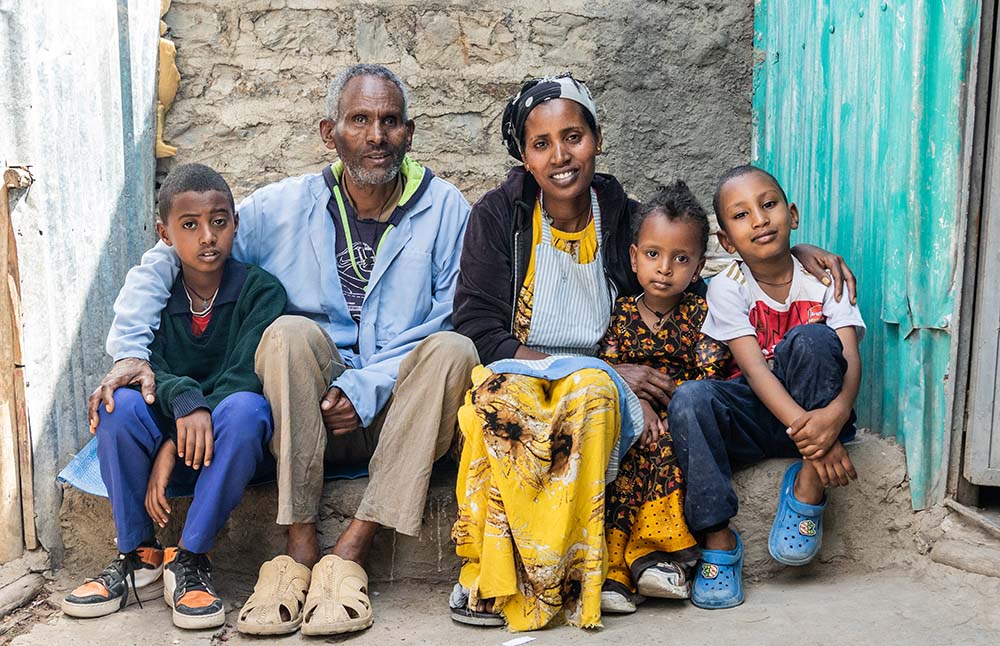
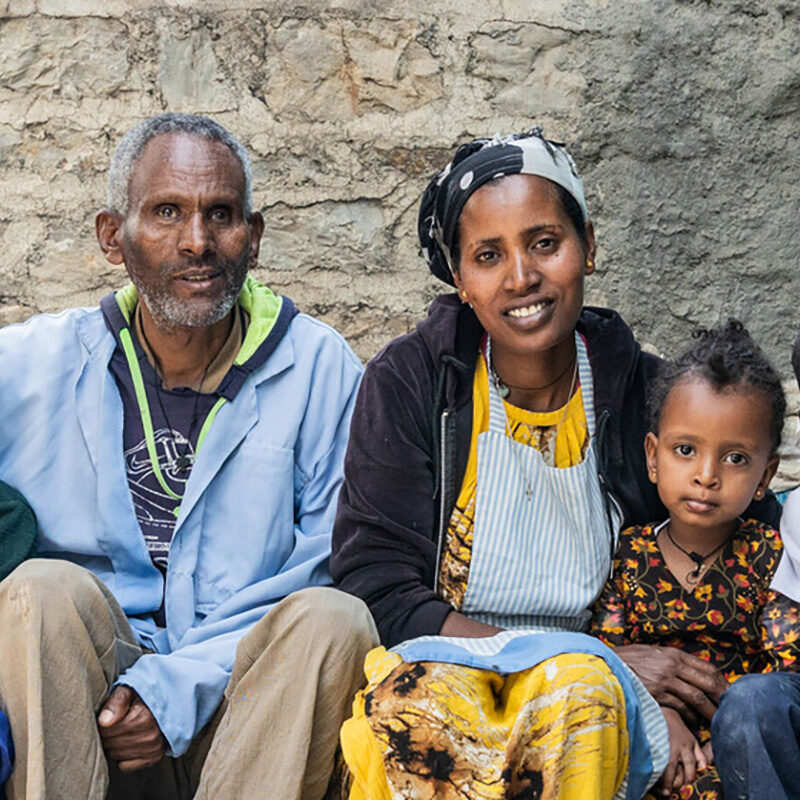
Two parents sit on a step surrounded by their 3 young children.
Yirga (center left) and Birhan (center right) sit with their children (left to right): Saymon, 13, Kiyana, 4, and Yemane, 6, outside their home in Mekele, Ethiopia. Birhan and Yirga are both living with HIV and were reconnected to their antiretroviral therapy following the conflict in their region. Photo credit: Genaye Eshetu for FHI 360

We provide comprehensive, family-centered services to highly vulnerable children, including infants who have been exposed to HIV, children who are living with HIV, children whose caregivers are living with HIV or are deceased due to AIDS (are orphans), and children experiencing a combination of these risk factors and their families. We use case management to improve health, education, protection and socioeconomic outcomes as well as strengthen child and family resilience.

FHI 360’s work, in collaboration with HIV clinical partners, contributes to improved access to HIV testing and improved care and treatment outcomes for children and adolescents living with HIV. Through this work, we contribute to the achievement of the Joint United Nations Programme on HIV/AIDS (UNAIDS) 95-95-95 goals and PEPFAR’s goal of an AIDS-free generation.

Through our OVC programs, FHI 360 also supports the implementation of evidence-based interventions in high-HIV burden communities to prevent sexual violence and HIV acquisition among adolescent boys and girls who are most at risk.

FHI 360 also provides technical assistance and support to local community organizations to strengthen their technical and organizational capacity to implement care and support activities for OVC. We also help local government organizations strengthen their capacity to coordinate and lead local OVC responses.
Featured video

Mother, survivor, entrepreneur: How HIV services helped a family thrive amid crisis

Birhan, who is living with HIV, lost access to her lifesaving medicine during the war in Ethiopia’s Tigray region. An FHI 360 partner played a critical role in helping her, her husband and others regain access.
View on YouTube

Featured stories and resources

  • Story

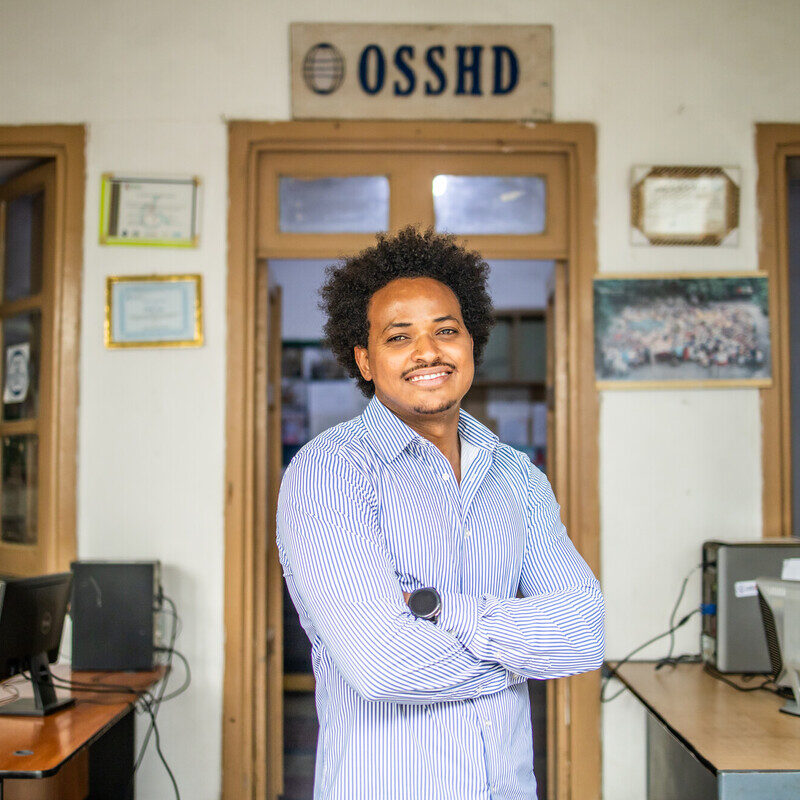
    How a local partner ensured HIV treatment continuity amid Tigray’s war

    November 25, 2024
    man smiling in office with arms crossed.
  • Story

    Birhan’s story: Support for living with HIV during a crisis

    November 25, 2024
    Family of 5 sit with their children outside their home in Ethiopia’s Tigray region.
  • Resource

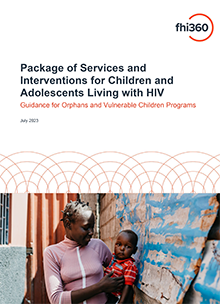
    Resource package for children and adolescents living with HIV

  • Page

    Children, adolescents and young people

Featured projects

  • Project

    USAID Caring for Vulnerable Children (CVC) activity

  • Project

    COVida – Together for Children

Share expertise
Back to top

On this page

FHI 360

We are a nonprofit organization that mobilizes research, resources and relationships so that people everywhere can access the opportunities they need to lead full, healthy lives.

  • Partner with us
  • Business opportunities
  • Contract mechanisms
  • Small business
  • Our FHI 360 network
  • Events
  • Employee access
  • Contact us
  • Press
  • Privacy notice
  • Ethics and safeguarding

FHI 360 Headquarters
359 Blackwell Street, Suite 200
Durham, NC 27701 USA
1.919.544.7040

Washington, D.C., Office
2101 L St NW, Suite 700
Washington, DC 20037 USA
1.202.884.8000

Anti-trafficking statement

Connect

Sign up for our mailing list and receive the latest updates from FHI 360 straight to your inbox!

  • LinkedIn
  • Facebook
  • X
  • Youtube
  • Instagram

FHI 360 is the registered trade name of Family Health International.

©2026 FHI 360

We are using cookies to give you the best experience on our website.

You can find out more about which cookies we are using or switch them off in .

FHI 360
Powered by  GDPR Cookie Compliance
Privacy overview

This website uses cookies so that we can provide you with the best user experience possible. Cookie information is stored in your browser and performs functions such as recognising you when you return to our website and helping our team to understand which sections of the website you find most interesting and useful.

Essential cookies

Essential cookies should be enabled at all times so that we can save your preferences for cookie settings. However, they can be enabled or disabled using the button below.

Non-essential cookies

This website uses Google Analytics to collect anonymous information such as the number of visitors to the site, and the most popular pages.

Keeping this cookie enabled helps us to improve our website.