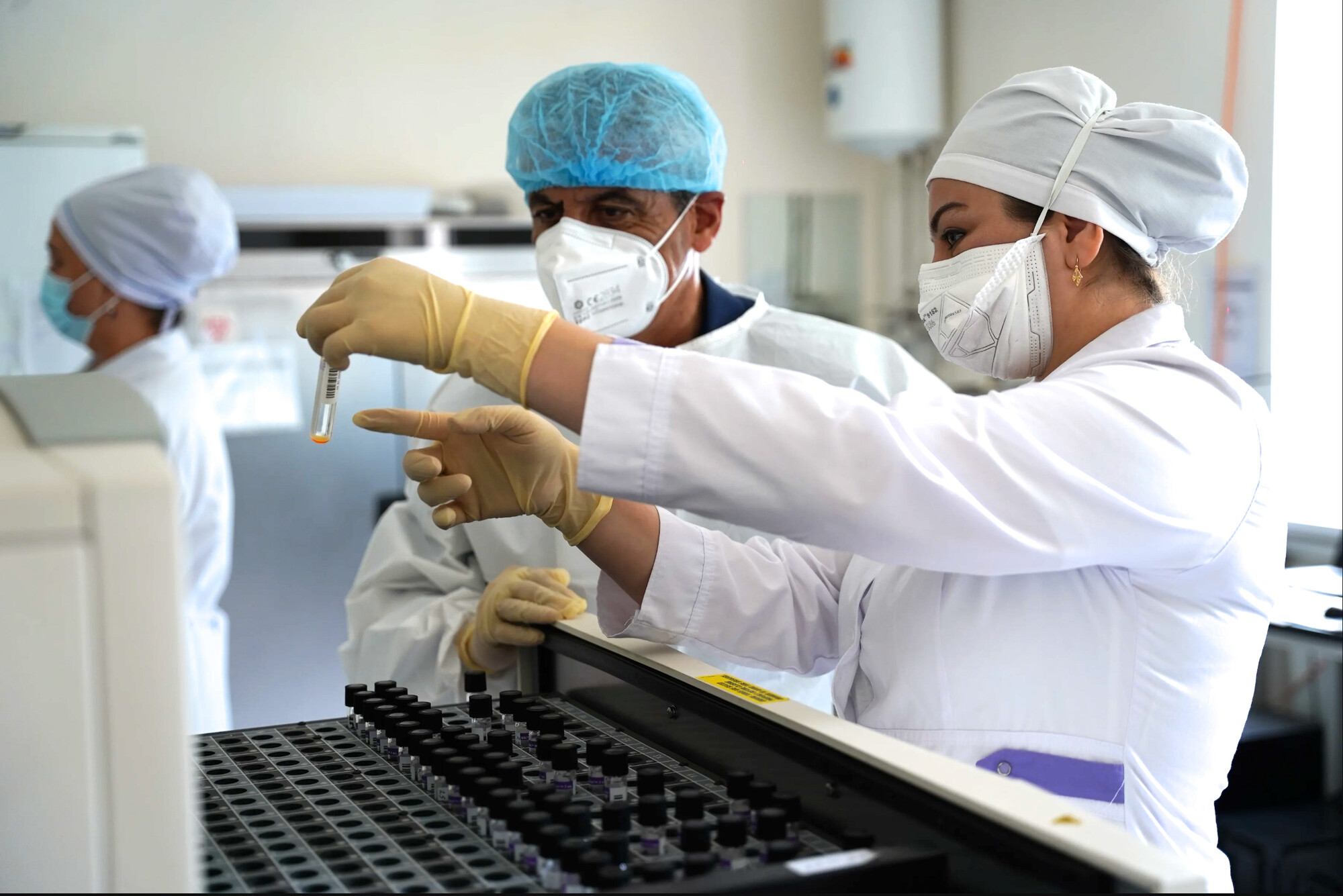
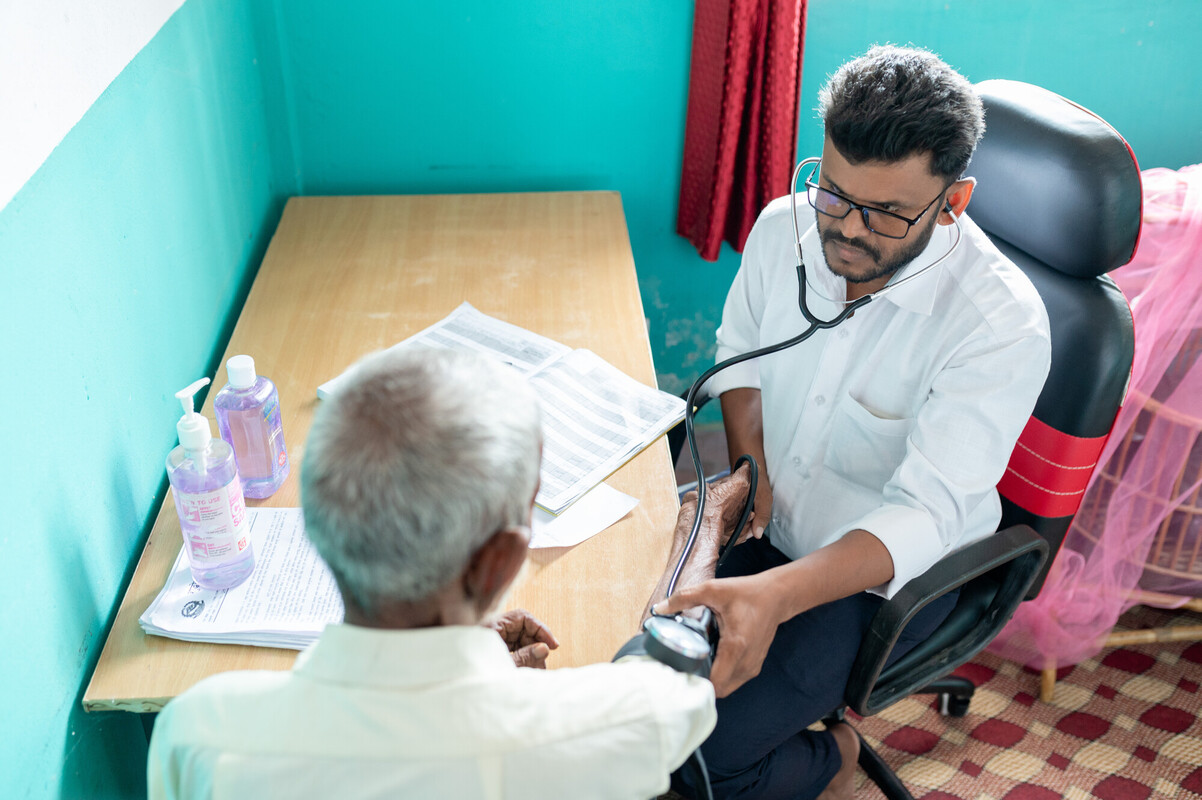



Medical oxygen is a lifesaving, essential medicine. Access to it is vital for treating patients at all levels of the health system, during both routine and emergency care. The COVID-19 pandemic caused surges in demand for oxygen, resulting in critical shortages, especially in low- and middle-income countries. Even in the absence of a pandemic, health care facilities need medical oxygen to treat newborns, children with severe pneumonia, people with chronic and infectious conditions, and patients requiring surgery.
Despite its lifesaving importance, medical oxygen is complex to safely produce, transport, store and administer to patients. Ensuring that health care facilities, doctors and patients have steady access to medical oxygen is an integral part of strong health systems, but the pandemic revealed critical gaps in availability.
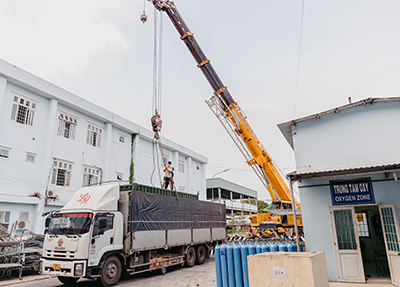
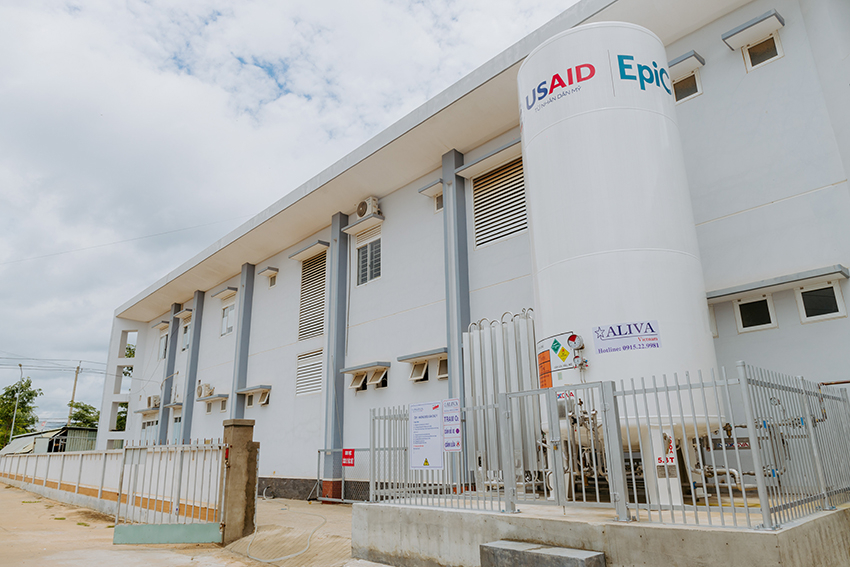
A mobile oxygen generation system is delivered and installed in Tây Ninh, Viet Nam, through the EpiC project. Medical oxygen is complex to safely produce, transport and store. Photo credit: EpiC Viet Nam
In 2022, the U.S. Agency for International Development (USAID) invested at least US$70 million to expand access to medical oxygen in low- and middle-income countries. While this investment has contributed to momentum within the global community to prevent oxygen shortages, there are still critical gaps in many countries’ medical oxygen ecosystems.
FHI 360, therefore, applauds the World Health Organization’s (WHO) resolution issued this January, Increasing Access to Medical Oxygen, which 33 countries signed. The resolution publicly indicates that access to medical oxygen is a priority among and low- and middle-income countries, and it calls for nation states to take 20 actions to increase access to medical oxygen.
How FHI 360 is supporting oxygen investments
At FHI 360, we have supported USAID’s investments in preventing oxygen shortages through our Meeting Targets and Maintaining Epidemic Control (EpiC) project. EpiC is already working to undertake many of the WHO-recommended actions to strengthen oxygen ecosystems in 15 countries across Africa, Asia and the Caribbean.
In our experience, gaps in medical oxygen ecosystems are best filled by engaging key stakeholders; identifying priorities for investments; and developing short-, medium- and long-term work plans. Here is how EpiC is investing in medical oxygen, with the goal of building resilient health systems capable of meeting surges in demand:
- Strengthening health facility infrastructure: EpiC is supporting USAID’s investments by creating or bolstering oxygen system infrastructure in health facilities. In early 2022, the project conducted a rapid assessment in 26 countries that revealed gaps in hospital staff capacity, budget, physical infrastructure and market conditions. That assessment informed the selection of 10 priority countries for strengthening oxygen infrastructure in select high-volume facilities (read about those efforts in Viet Nam). These facilities were selected after consultations with hospitals, subnational and national leaders, and local partners. At those facilities, EpiC is making infrastructure investments such as pouring concrete foundation slabs; procuring, installing and maintaining bulk storage tanks and centralized piping to patient bedsides; and providing oxygen delivery devices. These investments will help ensure that more medical oxygen is available when patients need it.
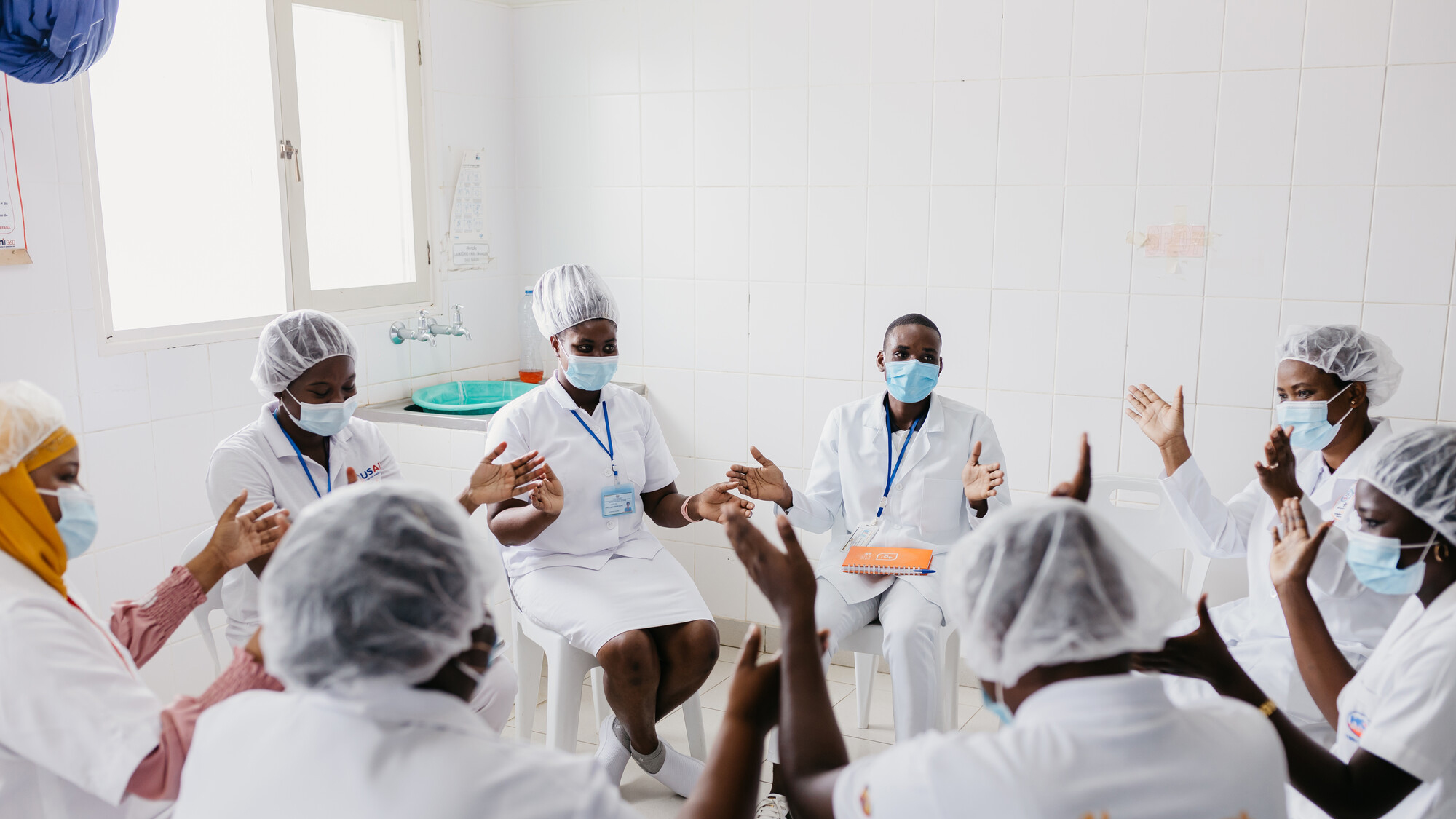
- Building health care workers’ capacity: A robust oxygen ecosystem requires trained staff to both maintain oxygen systems and safely provide oxygen therapy to patients. EpiC is building the capacity of both clinical and nonclinical staff to ensure the effective implementation of these investments and the proper use of medical oxygen in treating patients, thereby reducing global mortality due to hypoxemia, which occurs when blood oxygen levels are lower than normal.
- Conducting country-level sustainability planning: EpiC supports national sustainability planning to ensure investments in oxygen are managed in the long term. Sustainability plans consider needs and costs related to human resources, oxygen system maintenance, and restocking oxygen and associated oxygen delivery systems.
In addition, medical oxygen must be made more affordable, especially for low- and middle-income countries. We can meet this challenge by procuring and supplying liquid oxygen in bulk. EpiC recently launched a market-shaping initiative to improve the availability and affordability of liquid oxygen (one form of medical oxygen) in nine east and southern African countries. This project will be coordinated with ministries of health and done in collaboration with the Clinton Health Access Initiative.
The actions we have taken so far are only part of the list of recommended actions included in the WHO’s resolution. We support all of the resolution’s recommendations and encourage other ministries of health to join the 33 countries that signed the declaration, seizing this moment to ensure that all health systems have the infrastructure they need, both for routine and emergency health care services.
USAID’s EpiC project was originally an HIV response project focused on achieving HIV epidemic control. In 2020 it was modified to also support the COVID-19 response. As of this writing, EpiC conducts COVID-19 response activities in approximately 50 countries.