In emergency contexts, when many support structures fracture, education can provide protection, heal trauma and inspire hope. Education programs that feature social-emotional learning (SEL) interventions — the process through which children and adults understand and manage emotions and develop self-control and interpersonal skills — have the potential for large-scale impact in fragile and humanitarian contexts. SEL is an especially powerful healer for migrants, refugees and children who can be scarred from prolonged insecurity, trauma, loss, violence or separation from family or homeland.
As new crises seemingly arise every day and existing ones become more protracted, we at FHI 360, the LEGO Foundation and UNESCO’s Global Education Monitoring (GEM) Report are exploring evidence-based ways to incorporate SEL research and programming for education in emergencies.
A new policy paper from the GEM Report, Education as Healing: Addressing the Trauma of Displacement through Social and Emotional Learning, draws on the global analysis in the 2019 GEM Report assessment on migration, displacement and education and rigorous new research done in partnership with FHI 360 to compile evidence-based findings on effective SEL approaches. The paper also presents recommendations for policymakers and other stakeholders to invest in SEL evidence-generation and programming at global, national and regional levels.
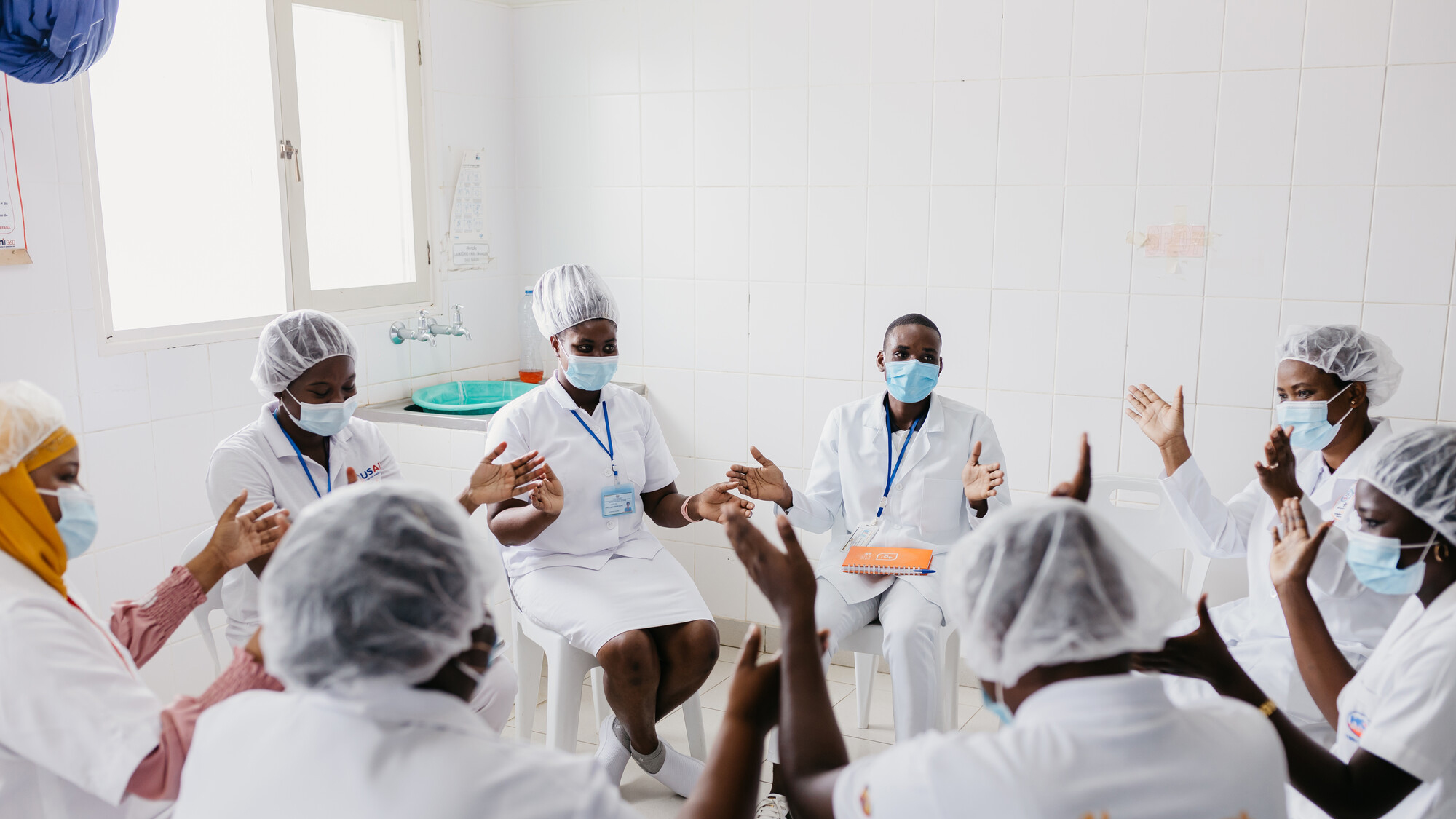
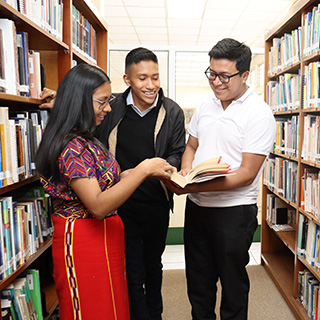
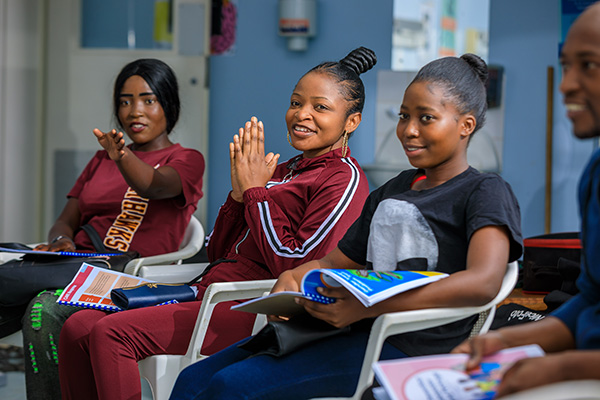
The paper highlights the importance of comprehensive support for caregivers and teachers, especially as it relates to their social-emotional well-being. In order to teach kids how to be well, teachers must be well themselves. FHI 360 has focused on teacher well-being in its own programs. The Strengthening the National Education System project in El Salvador includes an SEL workshop for teachers working in communities with a high prevalence of gang violence. The workshops offer each of 3,000 teachers 120 hours of comprehensive professional development to build essential SEL competencies, such as self-awareness and emotional management, to improve their overall well-being and resilience.
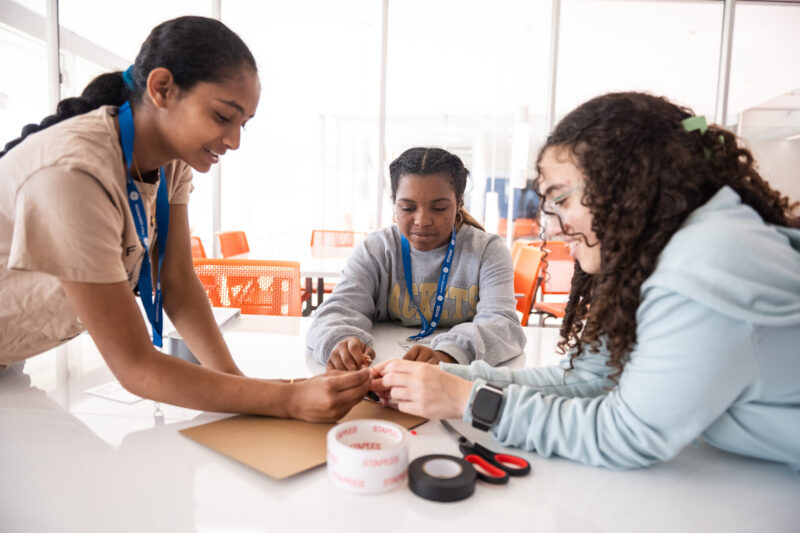
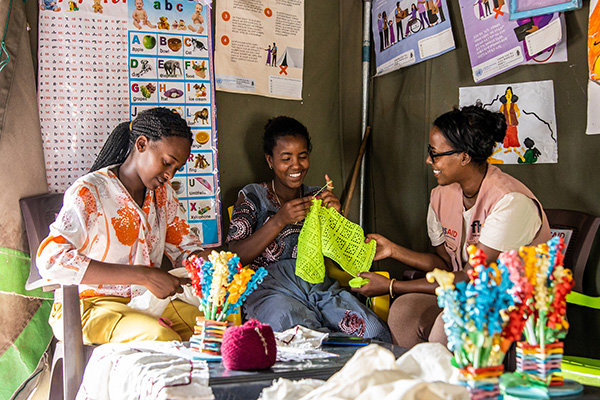
Innovative approaches championed by the LEGO Foundation aim to redefine learning and reimagine the concept of the importance of play, especially in conflict and crisis settings. Play is a vehicle for children’s holistic development, sparking curiosity, creativity and lifelong learning. In 2018, for instance, the LEGO Foundation helped to ensure that young children affected by the Rohingya and Syrian refugee crises had opportunities to grow and learn through play. In both contexts, the needs assessments found that play is valuable for cognitive, emotional and psychosocial skills development.
During the United Nations General Assembly this week, we hosted an event to discuss the findings and recommendations with international development colleagues. The event closed with a call to action anchored by five recommendations and ways forward for partners working in education in emergencies.
Now, we challenge the international development community of colleagues, governments, funders, partners and researchers to join us in exploring the next frontier of education in emergencies and SEL by adopting these five call-to-action agreements:
- Require rigorous research, monitoring and evaluation.
Rigorous research demonstrates the positive impacts that SEL interventions can have on children and youth and the connection to short-term academic success and longer-term outcomes. We must continue to generate evidence on what works, for whom, under what conditions and at what cost. Evidence must be used to inform SEL policy, investments and improvements to interventions. - Promote learning through play.
Learning through play empowers children to become creative, engaged, lifelong learners. We must recognize that learning encompasses the continuum of child development. Play and SEL are essential to healing and fostering the breadth of skills that we want to see all children develop. Learning through play or other means must take place in environments that are safe. - Localize SEL.
There is rarely a one-size-fits-all approach. Though we must develop a common SEL language based on up-to-date, evidence-based frameworks for the education in emergencies sector, we must also adapt this SEL framework to local settings and cultures. This action should include expanding the definition of learning to include SEL. We also must “Do no harm,” ensuring that SEL is sensitive to potential conflict dynamics and that interventions are equitable and inclusive for their local contexts. They should also take into account the needs of marginalized children and children with disabilities. - Build self-reliance.
Local communities must buy into and believe in the power of SEL and learning through play methodologies and should be involved as much as possible in the assessment, prioritization, design, implementation, monitoring and evaluation of activities. Local SEL capacity development across multiple levels of the education ecosystem is an important factor. Local ownership and self-reliance can be developed over time in a progressive manner and should include creating national SEL standards. - Invest in teachers and caregivers.
Teachers and caregivers have a major influence on children’s social-emotional development. To model positive social-emotional skills for conflict- and crisis-affected children, teachers and caregivers must be well themselves. We must invest in their well-being and social-emotional competencies and provide robust professional development opportunities for them to effectively support children and youth. Teachers and caregivers must also believe in and advocate for SEL programs for their children.