

In Myanmar, more than half of the population is under 30. Young people make up nearly a third of the agricultural sector, yet barriers — such as limited access to markets, financial services, and technical skills — limit their full participation. Many are migrating to larger cities and other countries; conflict and political instability have exacerbated this trend.
The Feed the Future Burma: Agriculture and Food Systems Development Activity (AFDA), funded by USAID and led by ACDI/VOCA and FHI 360, supported 30,000 young people to find careers in agriculture. The project has helped remove barriers and foster a stronger “agri-preneurship” ecosystem for young people.
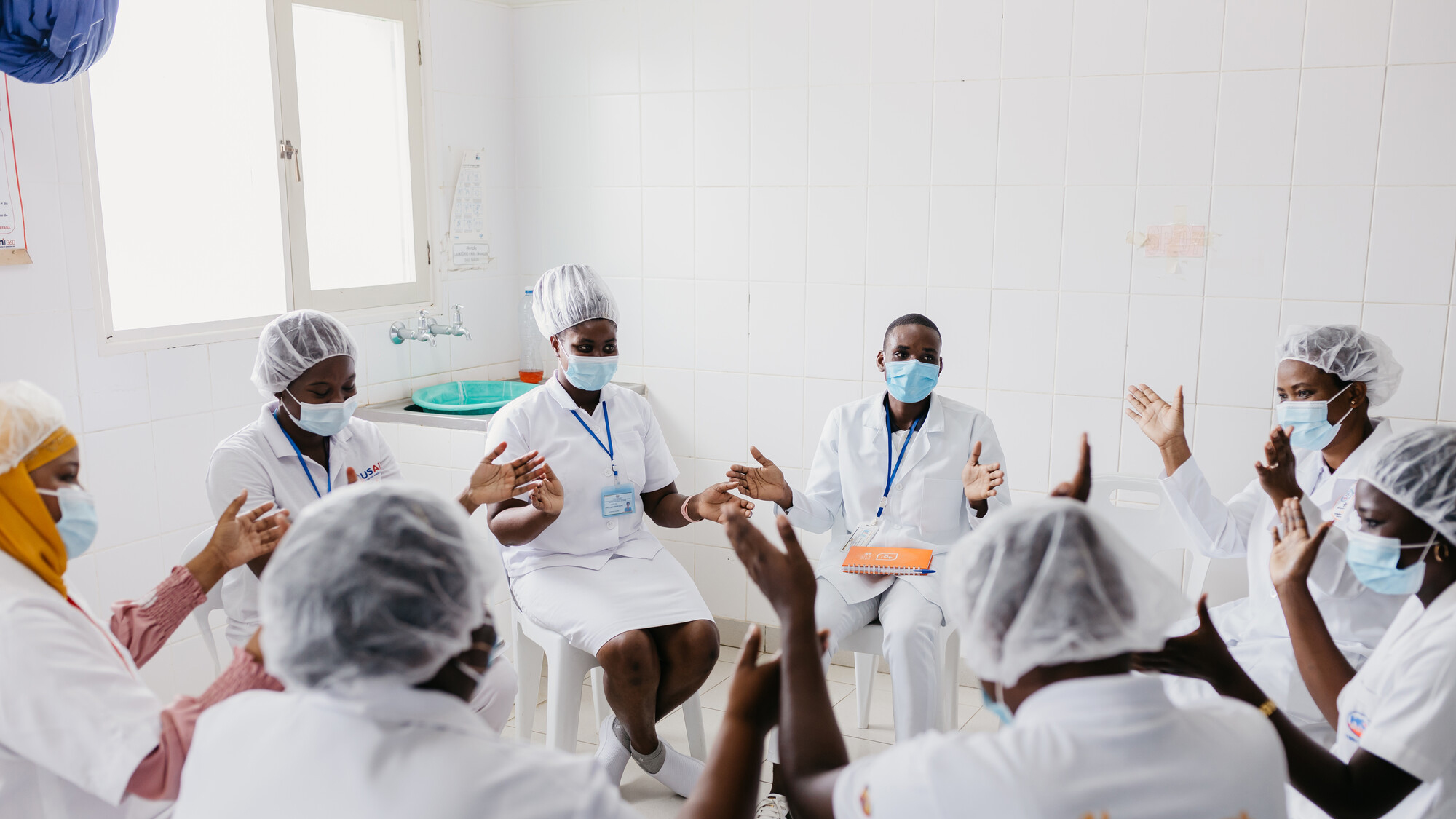
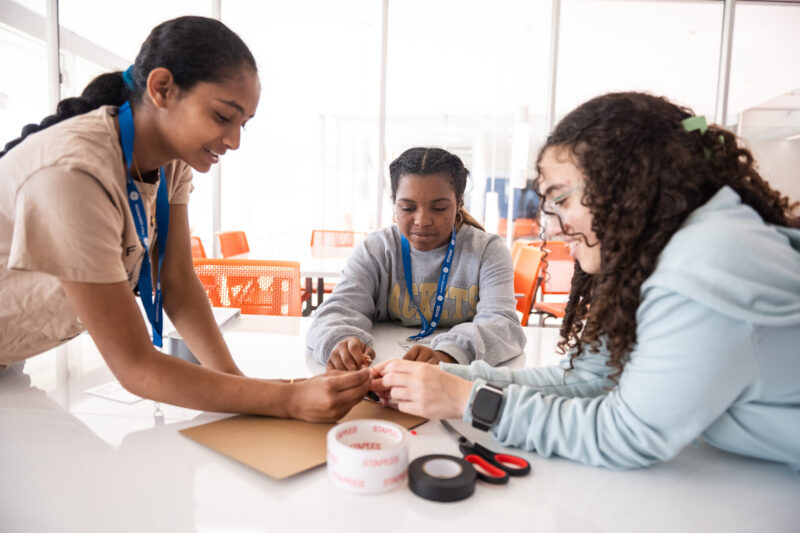
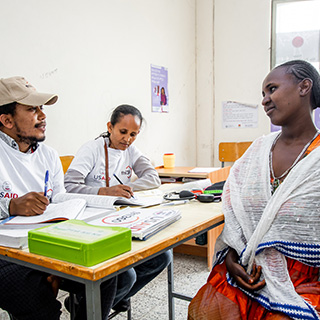
FHI 360 led the project’s youth economic empowerment component, connecting young people from rural communities and of different ethnicities to trainings, internships, financing, technology and partners in the private sector — and equipping them with skills to enter the workforce or start an agri-business.
Meet three agri-preneurs who found economic opportunity through their participation in the program.
Brewing healing tea for diabetes and hypertension
Nyein*, 27, and her business partner make tea using leaves of the mulberry tree, which grows abundantly where Nyein lives in Shan state.
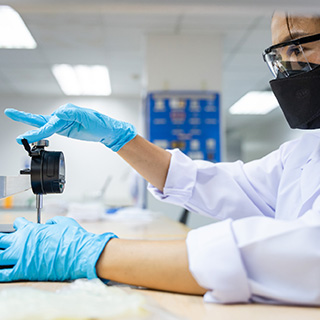
Mulberry leaf can be used to help regulate blood sugar and manage diabetes and hypertension. Nyein and her partner use predominantly organic ingredients; production is overseen by a doctor.
They started their business in early 2023 amid civil war and ethnic tensions. Through the AFDA program, “I got to learn from [other] youth participants how we stay strong to build our small businesses during these unstable situations,” Nyein says.
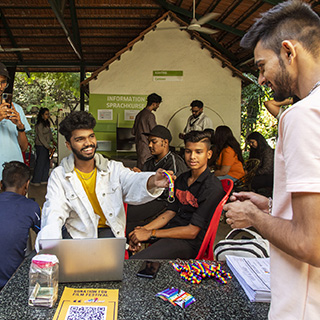
She won a pitch competition — put on by AFDA and local business accelerator Impact Hub Yangon — that offered a prize for winners, plus workshops, knowledge-sharing sessions, and networking opportunities with potential partners and investors.
“The program offered me a key to business expansion,” she says.
Nyein values employing other young people, especially single moms. Her business has five full-time employees and 10–15 part-time employees during peak season.
“These employees are part of my energy to continue to grow in my business,” she says.
Creating vermicompost to transform waste
When Su Wai Aung, 24, from Kachin state, learned about a business management program supported by AFDA, she “was totally lost and not knowing what to do with” her life, she says. She had studied agricultural science but felt aimless due to political instability and limited job opportunities.
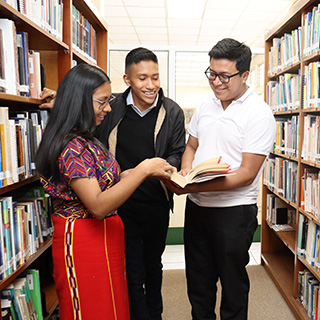
Through the program, Su Wai Aung took classes in marketing, accounting, agriculture and employability, and economics. She also interned at a compost production farm in Shan state.
After, she returned home and pooled her savings with two friends to start a vermicompost business — the first of its kind in their area. Their compost is created with earthworms, animal waste — particularly cow dung — and vegetable waste. It’s organic, nutrient-rich and environmentally friendly.
“We want organic fertilizers to be widely used in Kachin, as the chemical fertilizers cause harm to the environment and people’s health,” she says.
She also wants to show other young people that there are opportunities outside of mining. Mining is popular in Kachin due to an abundance of natural resources like jade, gold and tin, but it has dire environmental and health consequences.
Boosting soil health to increase yields
Htet*, 26, grew up in a farming family in the Magway region, but he hadn’t planned to work in agriculture himself. He was in college when COVID-19 hit, schools closed and political unrest rose, and he was forced to return home. He started a business producing charcoal substitute fuel to help reduce carbon emissions.
“I witnessed firsthand the challenges farmers face with crop losses and financial strains due to costly chemical fertilizers,” he says.
He researched soil rehabilitation methods and launched a biofertilizer business in December 2022. Farmers are accustomed to chemical fertilizers, so he hosts meetups and conducts on-farm demonstrations with his biofertilizer to earn their trust.
Htet was a runner-up in the pitch competition. “Joining this program has [brought] a sparkle to myself and my business,” he says, noting that he learned about strategic planning, market strategy and accessing financial resources.
With his prize money, he purchased pH testing equipment to help farmers identify soil issues and yield more successful harvests. He expected to double his sales in 2024.
“There are many youth leaving our country, and many of my friends work overseas,” says Htet, whose employees are all young people, most of whom are young women. “Compared to [my friends overseas], my earnings seem insignificant. But I want to innovate, to serve communities around me, and to work for myself.”
*Name has been changed.
Learn more about the project here.