













Skip to content
FHI 360
  • Languages
  • Low bandwidth
  • High bandwidth
  • Search
  • Who we are
        • Who we are
          • About us
          • Leadership
          • Ethics and safeguarding
          • Impact and financial reports
          • Contact us
        • About us

          Impact and financial reports

  • What we do
        • What we do
          • Economic opportunity
          • Health


        • How we do it
          • Research in action
          • Humanitarian response
          • Digital innovation and AI
        • Explore our expertise
        • Economic opportunity

          Health

  • Where we work
        • Where we work
          • Asia Pacific
          • Central Africa
          • East Africa
          • West Africa
          • Southern Africa
          • Middle East and North Africa
          • Europe and Central Asia
          • Latin America and the Caribbean
          • United States
        • Around the world

          In the United States

  • Work with us
        • Work with us
          • Join our team
          • Local partners
          • Government and multilateral funders
          • Foundations and corporations
          • Academic and research partners
          • Small businesses and vendors
          • CEO position specification
        • Join our team

          Local partners

          Government and multilateral funders

          Foundations and corporations

          Academic and research partners

          Small businesses and vendors

  • News
        • News
          • Newsroom
        • Get the latest news
        • Newsroom

  • Stories
        • Stories & blog
          • Stories
          • Videos (YouTube)
          • Blog
        • Explore our storytelling
        • Our storytelling

          Blog

  • Resources
        • Resources
          • Resource library
        • Resource library

Home | Articles | Guide: Enhancing the performance of health care systems
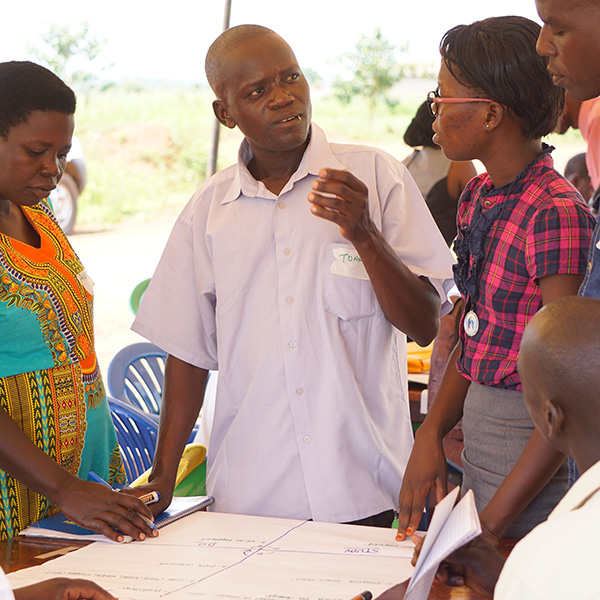
A community health worker shares ideas for improving health care services with his peers in northern Uganda’s Oyam District. Photo credit: Christine Kim/University of North Carolina at Chapel Hill
March 12, 2018

Guide: Enhancing the performance of health care systems

Frontline health workers in low- and middle-income countries face significant challenges to providing high-quality services: inadequate staffing, wide gaps between evidence and practice, low demand for health services and too little use of data. To help workers address these problems, FHI 360 created the Quality Improvement Handbook, which offers step-by-step guidance on using evidence-based models to improve health system performance.

The handbook, which is primarily intended for program managers and technical staff, provides tools and practical advice. The guide can help individuals or teams identify opportunities for change and design appropriate improvements, in addition to testing proposed interventions, assessing progress and applying lessons learned.

The handbook features five case studies and other examples that show how FHI 360 has used guidance and technical assistance to effectively mentor teams of health care workers in multiple countries, enabling them to:

  • Double the percentage of tuberculosis (TB) patients in Ukraine who received HIV counseling and testing services from TB staff — from 40 percent to 80 percent — through the RESPOND project
  • Increase the number of patients screened and treated for hypertension and diabetes at pilot primary care centers — from a few to hundreds — through the Abundant Health project in Vietnam
  • Raise the percentage of women and couples who visited their community health workers on time to continue the use of a family planning method — from 30 percent to 70 percent — through the Advancing Partners and Communities project in Uganda
  • Boost the enrollment of people with HIV in care and treatment services — from 59 percent to 78 percent — through the Clinical and Community HIV/AIDS Services Strengthening project in Mozambique

Since 2009, FHI 360 has implemented health system improvement projects in more than 20 countries. The handbook draws from this depth of experience, with the goal of empowering managers, clinicians, nurses and community health workers to independently improve their own practices and systems.

Share article
Back to top

Related articles

News
New AI chatbot aims to boost teacher pedagogical support
May 11, 2026
News
Why more employers are turning to apprenticeships — and seeing results
April 24, 2026
News
Investing in hope: How Nigerian women are building economic opportunities
April 16, 2026

On this page

FHI 360

We are a nonprofit organization that mobilizes research, resources and relationships so that people everywhere can access the opportunities they need to lead full, healthy lives.

  • Partner with us
  • Business opportunities
  • Contract mechanisms
  • Small business
  • Our FHI 360 network
  • Events
  • Employee access
  • Contact us
  • Press
  • Privacy notice
  • Ethics and safeguarding

FHI 360 Headquarters
359 Blackwell Street, Suite 200
Durham, NC 27701 USA
1.919.544.7040

Washington, D.C., Office
2101 L St NW, Suite 700
Washington, DC 20037 USA
1.202.884.8000

Anti-trafficking statement

Connect

Sign up for our mailing list and receive the latest updates from FHI 360 straight to your inbox!

  • LinkedIn
  • Facebook
  • X
  • Youtube
  • Instagram

FHI 360 is the registered trade name of Family Health International.

©2026 FHI 360

We are using cookies to give you the best experience on our website.

You can find out more about which cookies we are using or switch them off in .

FHI 360
Powered by  GDPR Cookie Compliance
Privacy overview

This website uses cookies so that we can provide you with the best user experience possible. Cookie information is stored in your browser and performs functions such as recognising you when you return to our website and helping our team to understand which sections of the website you find most interesting and useful.

Essential cookies

Essential cookies should be enabled at all times so that we can save your preferences for cookie settings. However, they can be enabled or disabled using the button below.

Non-essential cookies

This website uses Google Analytics to collect anonymous information such as the number of visitors to the site, and the most popular pages.

Keeping this cookie enabled helps us to improve our website.