




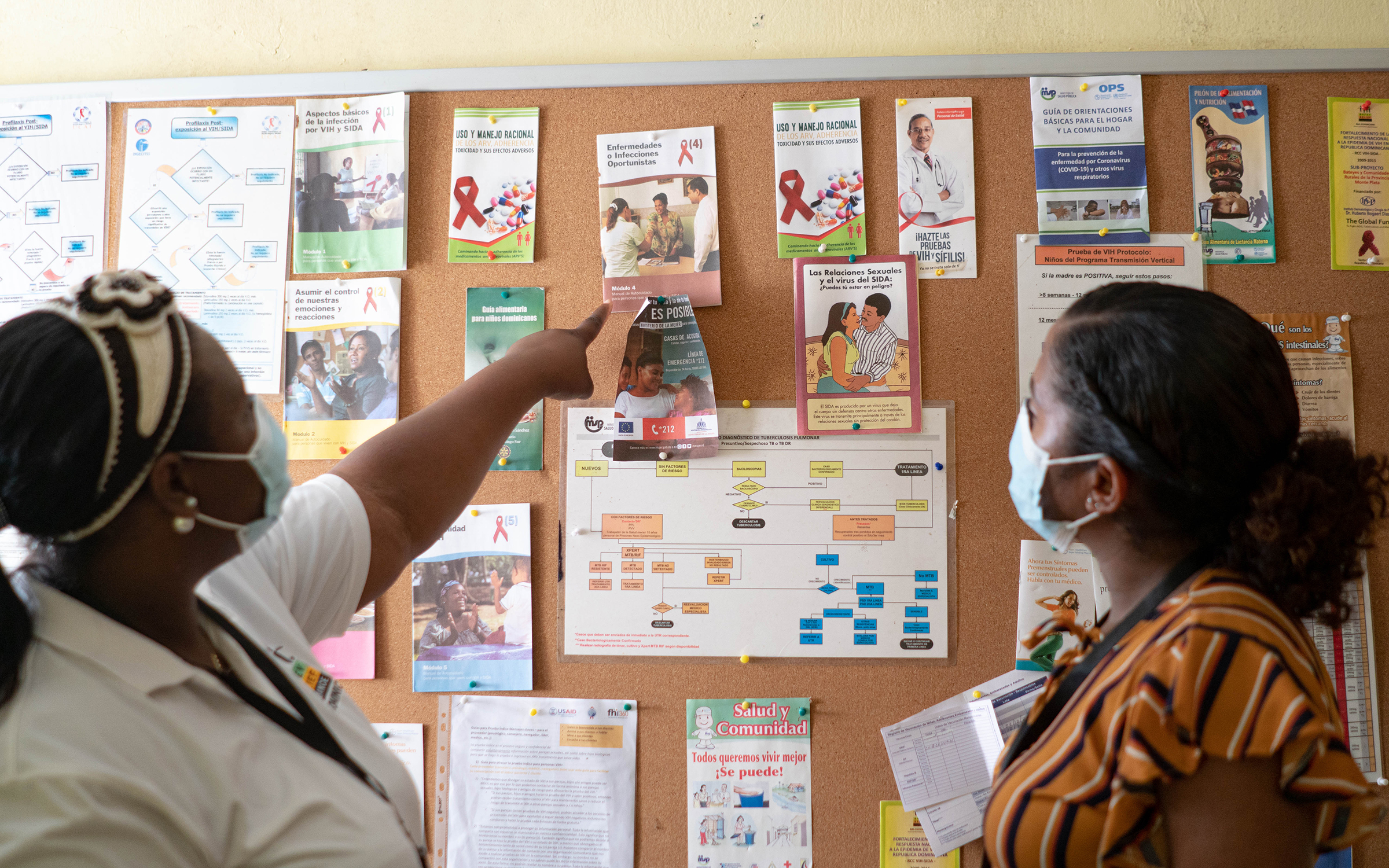
Resource Type: Guide, manual or tool
-
Malawi Nutrition Quality Improvement (brief series)
2017 — The Food and Nutrition Technical Assistance III (FANTA) project began working with the Ministry of Health in Malawi in 2016 to apply quality improvement methods to community-based management of acute malnutrition to reduce severe acute malnutrition in children. The resulting briefs can be used by organizations working to strengthen treatment for children with…
-
Service Availability Mapping for HIV, Sexually Transmitted Infections, Gender-based Violence and Tuberculosis, National Capital District – Papua New Guinea
February 2018 — This report provides information on the distribution of management services for HIV, sexually transmitted infections, gender-based violence and tuberculosis in National Capital District, Papua New Guinea. It details the health infrastructure with global positioning system (GPS) coordinates for specific elements such as physical infrastructure, communication capacity, health workforce, availability of medicines, medical…
-
Integrated Humanitarian Assistance to Northeast Nigeria (IHANN): Facts and Figures (fact sheet)
May 2018 — FHI 360’s Integrated Humanitarian Assistance to Northeast Nigeria (IHANN) project is responding to the situation in northeast Nigeria with an integrated set of services to meet the most pressing needs of internally displaced people in Borno State. This fact sheet presents our approach and lists achievements to date in areas such as…
-
When Situations Go from Bad to Worse: Guidance for International and Regional Actors Responding to Acute Violence Against Vulnerable Populations
June 2018 — This brief provides guidance to international and regional actors who wish to be part of an effective and coordinated response to violence against members of those at an increased risk for HIV. Developed by representatives from key population networks, community-based organizations, United Nations agencies, international nongovernmental organizations, donors and defenders of human…
-
Enhancing Reading and Numeracy in Nigeria (infographic)
December 2020 — This resource provides an overview of the Reading and Numeracy Activity (RANA), highlighting the project context, key elements of RANA’s implementation approach, the scope of its geographic expansion, learning outcomes and key research findings. With this tool, nongovernmental organizations and Nigerian stakeholders have a valuable resource for communicating about the project and…
-
Work-Based Learning Manual
December 2017 — Work-based learning (WBL) is a set of instructional strategies that engage employers and schools in providing learning experiences for students. WBL activities are structured opportunities for students to interact with employers or community partners either at school, a worksite or virtually, using technology to link students and employers in different locations. The…
-
Integrated Development Tools
January 2018 — FHI 360 believes that intentional, integrated approaches to the design, delivery and evaluation of programs have the potential to make an enduring difference in people’s lives. Since 2014, we have been building the evidence and advancing the global conversation on the promise offered by integrated development approaches. Our publications and tools demonstrate…
-
NORMAL Counseling Tool for Menstrual Bleeding Changes
These tools contain guidance for health care workers to counsel family planning clients on bleeding changes associated with the use of hormonal contraception and the copper intrauterine device (IUD). Fears and misconceptions about menstrual bleeding often contribute to discontinuation and non-use of contraception. Although amenorrhea or reduced bleeding can have important noncontraceptive health and lifestyle…
-
CIP Execution Country Assessment Checklist
April 2018 — The CIP Execution Country Assessment Checklist is one of a series of tools in the Family Planning Costed Implementation Plan (CIP) Resource Kit. It helps stakeholders understand the strengths and weaknesses in CIP execution within their country’s context and develop recommendations for CIP execution and review. The tool contains four pieces: an…