








FHI 360 harnesses digital technology and innovations to help people access what they need to live full and healthy lives. Our expertise is helping us reimagine our programs and partnerships with local communities — improving education systems and supporting essential health workers so they can serve communities more effectively.
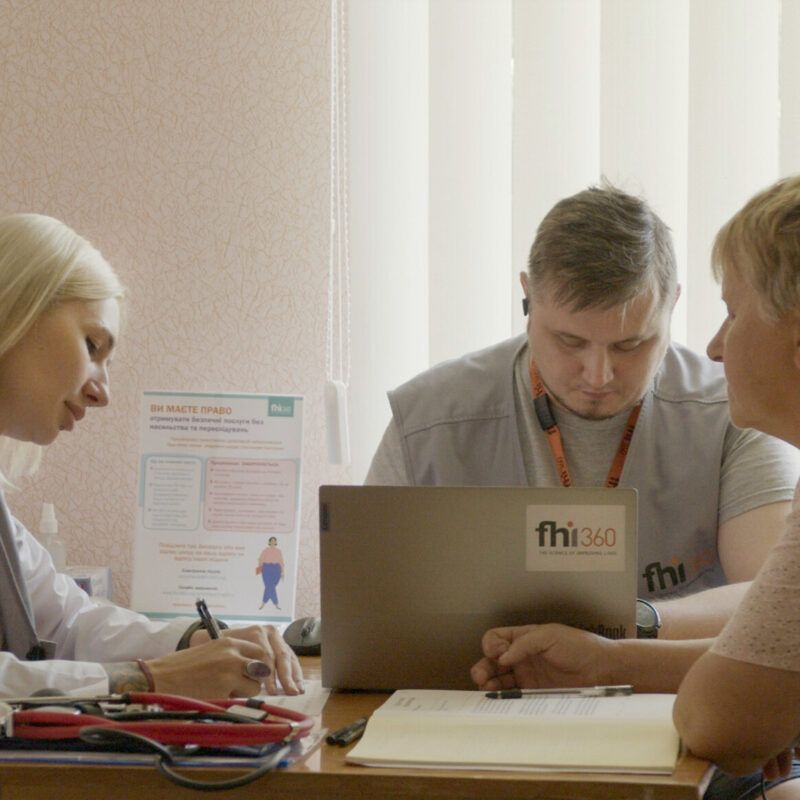
Digital tools expand access to essential services and enable smarter, faster decisions, leapfrogging traditional approaches in health care, even in fragile environments. In Ukraine, we launched an AI-powered chatbot for new mothers, offering them breastfeeding support and professional advice when they need it most. And in Viet Nam, we are enhancing chest X-rays with AI to support health staff — particularly those with less experience and those who read hundreds of X-rays each day — in diagnosing people with TB.
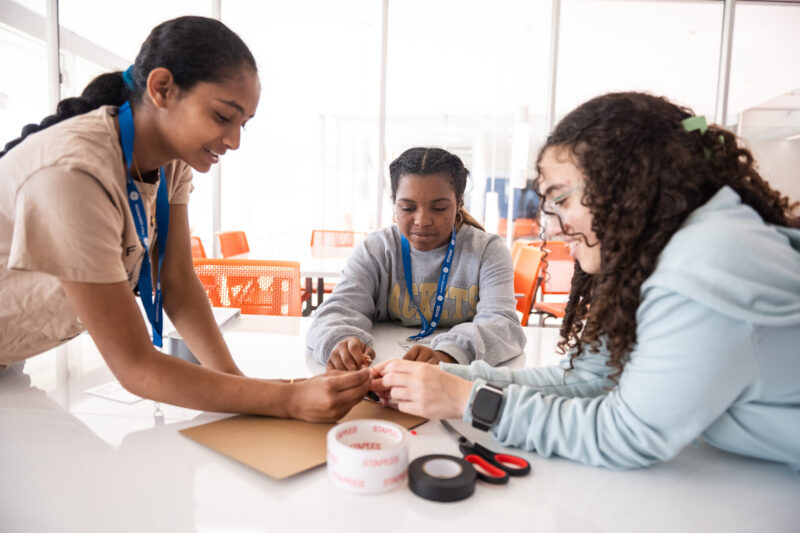
Digital technology skills are also a keystone for education and career success, so we invest in the next generation to deepen their skills, preparing the workforce of the future. Through the GE Aerospace Foundation-funded Next Engineers program, students ages 13 through 18 gain engineering experience through career coaching and exploration, skills-building workshops, and design challenges that teach them how engineers design, prototype, and test solutions, including using various digital tools in the process.
Thoughtful digital policies protect privacy, provide boundaries and help keep people safe online. So, in our work with governments and tech partners, FHI 360 advances robust safeguarding measures to promote safe online environments. Guided by ethics and evidence, we ensure technology serves people and progress, turning information into insight, and insight into impact.
Our core digital capabilities
Across everything we do, we build responsibly — embedding data privacy, security and ethical AI safeguards into our designs.
User-friendly data systems
We employ health reporting tools and connected digital records that accelerate data delivery, improve accuracy, and can be set up quickly.
Data ecosystems for decision-making
We use maps, charts and other visual tools to bring together information from different sectors to support smarter planning.
Virtual services at scale
We advance online appointment booking, digital referrals, case management and telehealth services, built on FHI 360’s QuickRes platform.
Mobile and low-bandwidth tools
We deploy text messages, phone calls, radio, WhatsApp and web apps to reach underserved groups at scale.
Long-term solutions by design
We prioritize shared ownership with government partners, open standards, skills training and clear transition plans — so innovations last beyond the life of a project.
AI and data analysis tools
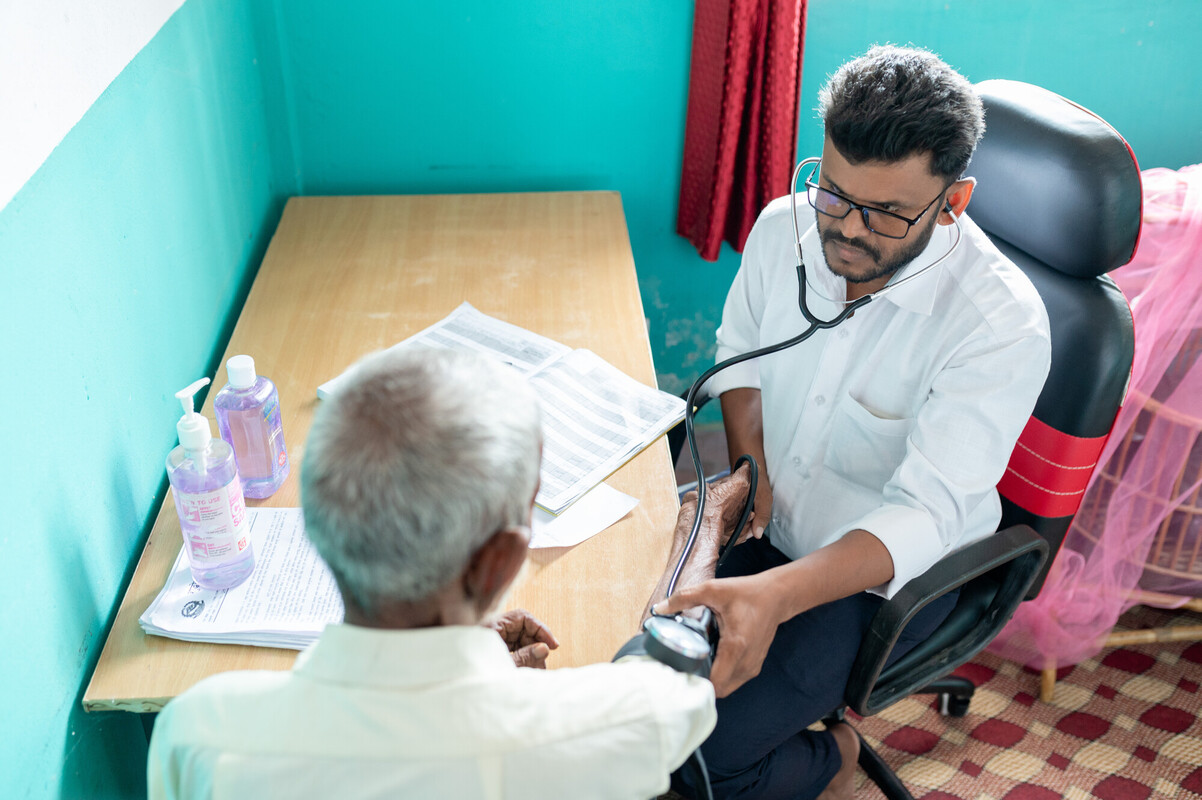
We leverage AI and data analysis tools to support earlier detection and help health care professionals prioritize and improve performance.
How we use blockchain
FHI 360 uses blockchain to improve transparency, efficiency and financial access in development and humanitarian contexts. With organizations such as the Stellar Development Foundation, VIA and Decaf, we deploy blockchain-enabled digital wallets and payment systems to deliver cash assistance and incentives directly to workers. By reducing reliance on traditional banking, these approaches lower transaction costs and enable secure, traceable transfers — helping funds reach intended recipients and expanding digital financial services, especially for people who are unbanked or underbanked.
-
Featured story
To detect, treat and prevent tuberculosis, we need to replicate this flexible strategy
FHI 360 uses AI with chest X-rays to identify people with TB. “Sometimes we overlook small lesions or lesions covered by other organs,” says radiologist Ho Tuan Kiet. “AI detects and marks these areas on the X-ray film screen.”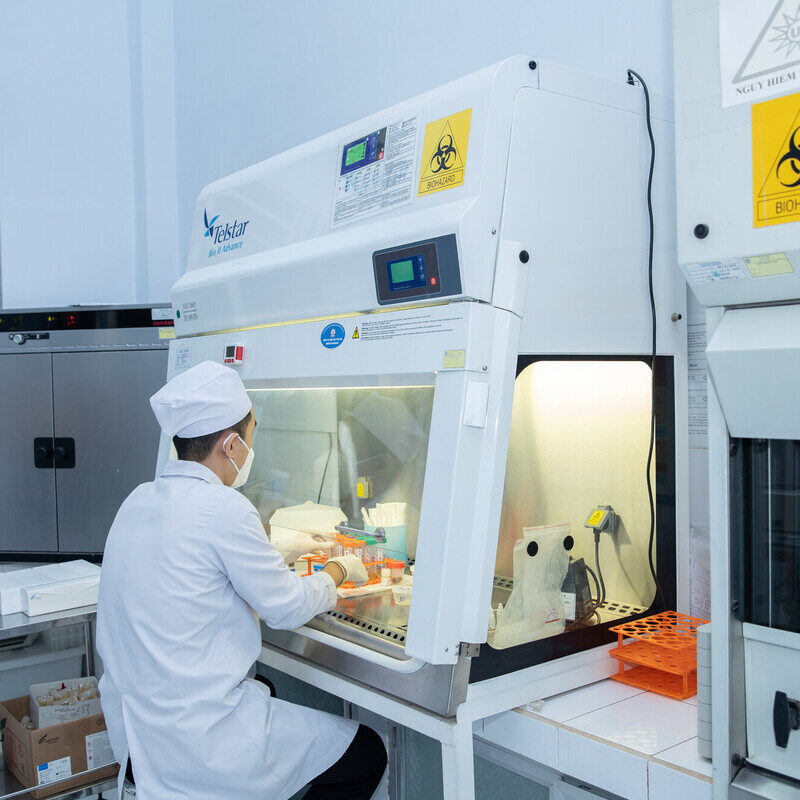
-
Featured story
Fighting drug-resistant infections with data
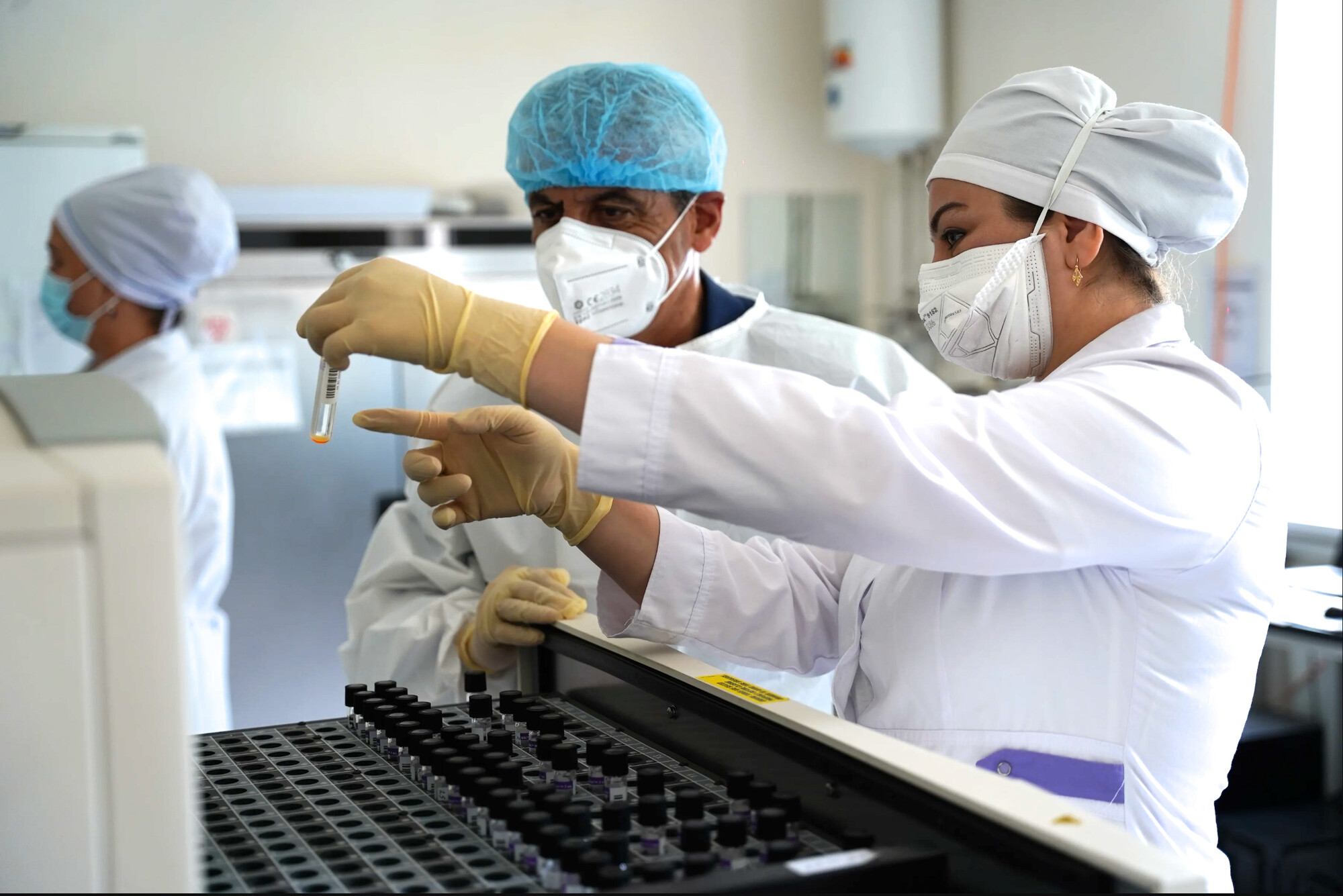
With support from the Fleming Fund, FHI 360 has introduced “bot” technology in 23 out of 26 sites in Nepal, advancing the country’s drug resistance surveillance network.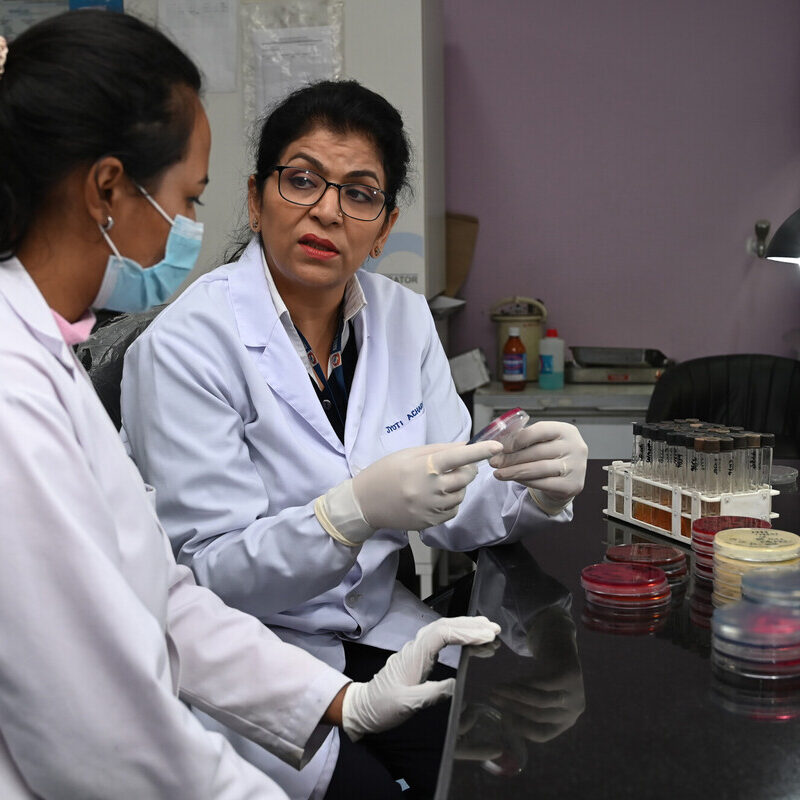
-
Featured story
The chatbot helping mothers and infants during conflict
Harmony of Parenthood, an AI-powered chatbot for mothers in Ukraine — launched by FHI 360 — shows how technology, empathy and professional expertise can support mental and physical health during crises.
Critics of technology say no one can replace a doctor, a nurse, a teacher, and they are right. But where we work, there aren’t enough doctors, nurses, or teachers. What then? That’s where we can come in, with an app that is accessible via WhatsApp or another messaging app that clients already have on their phone and provides diagnostic support or e-learning to reach people far from doctors.
Daniel Messer, Chief Digital and IT Transformation Officer (CDxO), FHI 360