




Skip to content
FHI 360
  • Languages
  • Low bandwidth
  • High bandwidth
  • Search
  • Who we are
        • Who we are
          • About us
          • Leadership
          • Ethics and safeguarding
          • Impact and financial reports
          • Contact us
        • About us

          Impact and financial reports

  • What we do
        • What we do
          • Economic opportunity
          • Health


        • How we do it
          • Research in action
          • Humanitarian response
          • Digital innovation and AI
        • Explore our expertise
        • Economic opportunity

          Health

  • Where we work
        • Where we work
          • Asia Pacific
          • Central Africa
          • East Africa
          • West Africa
          • Southern Africa
          • Middle East and North Africa
          • Europe and Central Asia
          • Latin America and the Caribbean
          • United States
        • Around the world

          In the United States

  • Work with us
        • Work with us
          • Join our team
          • Local partners
          • Government and multilateral funders
          • Foundations and corporations
          • Academic and research partners
          • Small businesses and vendors
          • CEO position specification
        • Join our team

          Local partners

          Government and multilateral funders

          Foundations and corporations

          Academic and research partners

          Small businesses and vendors

  • News
        • News
          • Newsroom
        • Get the latest news
        • Newsroom

  • Stories
        • Stories & blog
          • Stories
          • Videos (YouTube)
          • Blog
        • Explore our storytelling
        • Our storytelling

          Blog

  • Resources
        • Resources
          • Resource library
        • Resource library

Home | Blog | How to ensure that hand hygiene gains outlast the pandemic
October 15, 2021

How to ensure that hand hygiene gains outlast the pandemic

–Aarin Palomares, Program Officer, Water, Sanitation and Hygiene, FHI 360
–Ron Clemmer, Associate Director, Water, Sanitation and Hygiene, FHI 360

Contributors: Henry Omara, Ibrahim Abali, Kenneth Otieno Awuor, Washabiah Chagwa, Peter Gottart, Aeorangajeb Al Hossain and Julia Rosenbaum, FHI 360

As FHI 360 marks its 50th anniversary, explore our history of solutions and future of possibilities. 

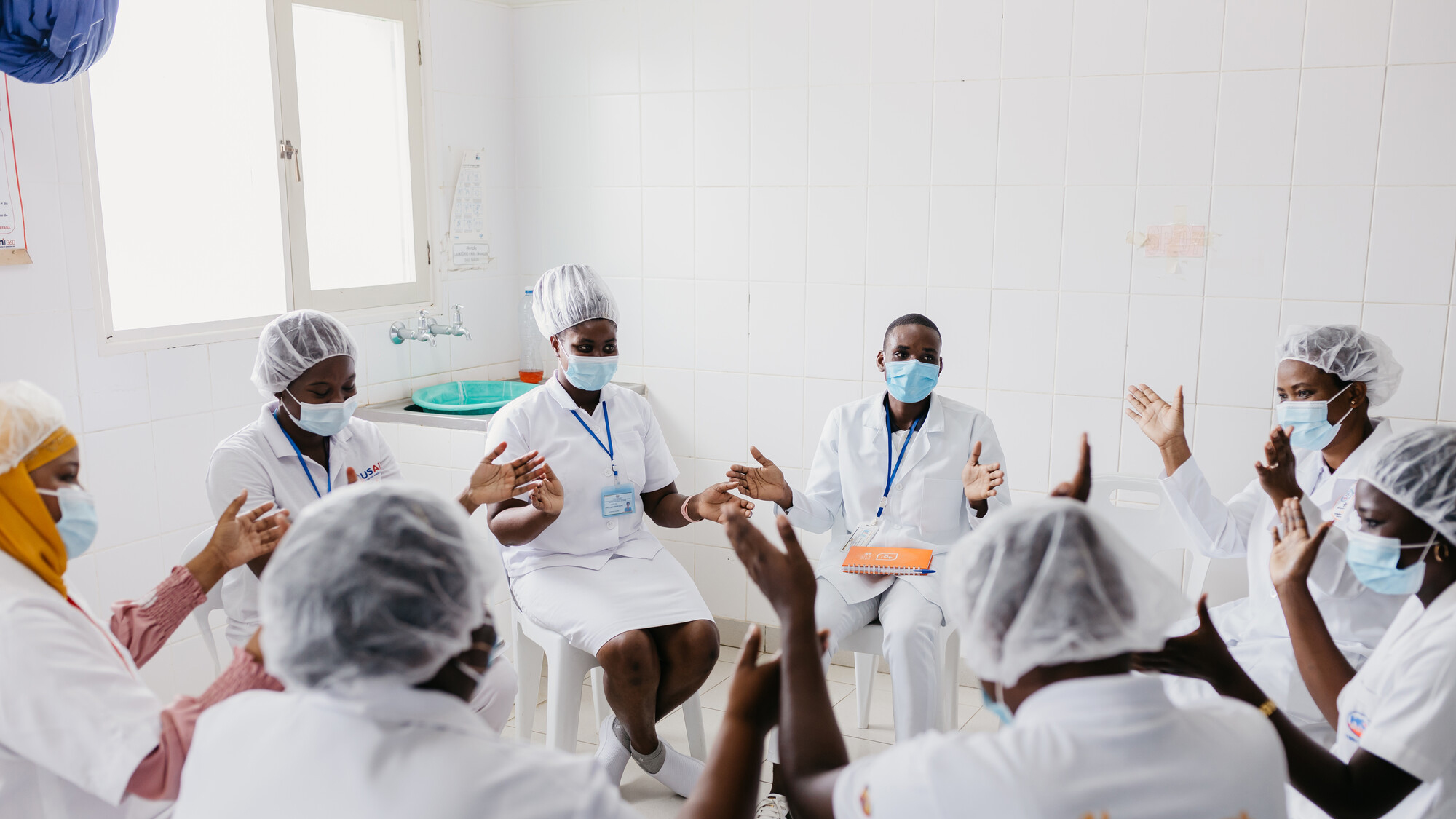
For years, hand hygiene was a neglected issue within the broader water, sanitation and hygiene (WASH) sector — until COVID-19. During the pandemic, public health messaging has re-emphasized the importance of handwashing and contributed to gains in more people practicing better hand hygiene. But now, we are seeing signs of fatigue and handwashing rates have begun to drop. As the pandemic continues, there is an urgent need to ensure that these gains are not lost. We must create a new normal, one in which hand hygiene is a mainstay in public health interventions. There are three ways to ensure that healthy handwashing behaviors outlast the pandemic.

1. Recognize the crosscutting benefits of hand hygiene.

FHI 360 has integrated hand hygiene interventions into several projects, including the Integrated Humanitarian Assistance to Northeast Nigeria III project — which addressed cholera in northeast Nigeria — and the WASHplus project — which reduced school absenteeism in Zambia. By understanding the correlation between hand hygiene and other development outcomes and by embedding hand hygiene into multiple sectors, we can show a crucial contribution to broader global development goals and attract needed attention and funding.

2. Build on the best practices of behavior change.

While hand hygiene is a seemingly simple practice (it only takes 20 seconds!), people can face barriers to washing their hands frequently and effectively. FHI 360 is a pioneer in the science of forming handwashing habits. We know that the key to sustaining hand hygiene practices relies on addressing social determinants and other behavioral motives, such as the influence of a person’s external environment (nurture) and a person’s sense of belonging (affiliation).

In eastern Democratic Republic of the Congo, FHI 360 supported handwashing in public marketplaces and transport stations by increasing access — a key behavioral determinant — through installing conveniently placed handwashing stations and mobilizing the community to maintain them. To sustain hand hygiene behavior, we must recognize the range of behavioral determinants for handwashing and build on habit-forming principles.

3. Invest in inclusive, locally led programs.

FHI 360 hosts the Global Handwashing Partnership, which plays a key role in the Hand Hygiene for All Initiative. The initiative supports countries in developing their costed national roadmaps (action plans that are incorporated into national budgets) for universal hand hygiene. Pakistan is an early champion of this type of national commitment, and their country roadmap is a model of an approach that activates the local system. By mobilizing local markets, supply chains, policies and resources, countries can generate more innovative, sustainable and community-specific solutions to barriers to hand hygiene.

The COVID-19 pandemic catalyzes us to reimagine how we approach hand hygiene as a public health intervention. Lessons from the past year show that we must continue employing innovative, 360-degree approaches to solidify healthy handwashing habits globally. Let us meet the urgency of this moment and work to accelerate our progress toward hand hygiene for all.

Share blog
Back to top
FHI 360

We are a nonprofit organization that mobilizes research, resources and relationships so that people everywhere can access the opportunities they need to lead full, healthy lives.

  • Partner with us
  • Business opportunities
  • Contract mechanisms
  • Small business
  • Our FHI 360 network
  • Events
  • Employee access
  • Contact us
  • Press
  • Privacy notice
  • Ethics and safeguarding

FHI 360 Headquarters
359 Blackwell Street, Suite 200
Durham, NC 27701 USA
1.919.544.7040

Washington, D.C., Office
2101 L St NW, Suite 700
Washington, DC 20037 USA
1.202.884.8000

Anti-trafficking statement

Connect

Sign up for our mailing list and receive the latest updates from FHI 360 straight to your inbox!

  • LinkedIn
  • Facebook
  • X
  • Youtube
  • Instagram

FHI 360 is the registered trade name of Family Health International.

©2026 FHI 360

We are using cookies to give you the best experience on our website.

You can find out more about which cookies we are using or switch them off in .

FHI 360
Powered by  GDPR Cookie Compliance
Privacy overview

This website uses cookies so that we can provide you with the best user experience possible. Cookie information is stored in your browser and performs functions such as recognising you when you return to our website and helping our team to understand which sections of the website you find most interesting and useful.

Essential cookies

Essential cookies should be enabled at all times so that we can save your preferences for cookie settings. However, they can be enabled or disabled using the button below.

Non-essential cookies

This website uses Google Analytics to collect anonymous information such as the number of visitors to the site, and the most popular pages.

Keeping this cookie enabled helps us to improve our website.