
The 26th U.N. Climate Change Conference of the Parties (COP26) has brought renewed attention to the concept of “green jobs” — those where workers produce goods or provide services that benefit the environment or conserve natural resources and those in which workers’ duties involve making production processes more environmentally friendly.
The International Labour Organization has predicted that transitioning to a greener economy could create 24 million new jobs by 2030. Particularly in resource-constrained countries, it is critical to ensure that young people — whose energy and talents will drive economies for decades to come — are actively engaged in green jobs creation and can obtain meaningful employment.
FHI 360 is leveraging its expertise, resources and global networks to both support innovative thinking and programming and collaborate with promising national and local partners and actors.
Using the Labor Market Assessment Toolkit developed with the support of the U.S. Agency for International Development and tested in 14 countries, FHI 360 applies a “green lens” to select economic sectors with high potential for creating green jobs (such as sustainable and adventure tourism, handicrafts derived from natural products, and clean technology) and to analyze current and future demand for skills within those sectors.
Informed by learning, we empower local partners — including young people, women, business associations, universities and training institutions, and regional or national government authorities — to increase economic competitiveness and improve the alignment of labor supply and demand.
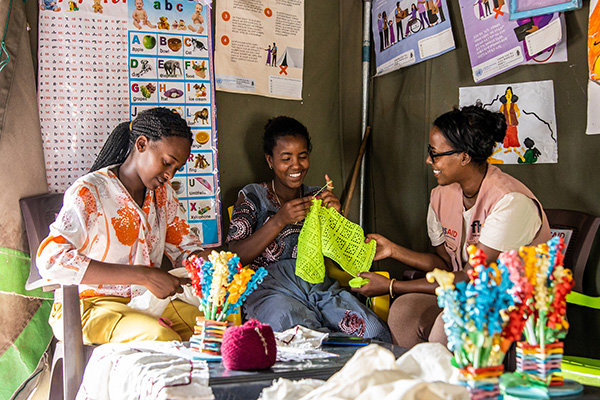
In Tunisia, for example, the Collaborative Action for Handicrafts Exports project has supported artisans — most of whom are women — who produce essential oils from rosemary and other wild-collected plants. Their efforts are preserving local natural resources, and their products, which they are now exporting, have achieved organic certification. These artisans play a leading role in the Wiki PAM cluster, a grassroots association that connects them to market actors.
Another green jobs effort began in 2021, when — despite the challenges posed by COVID-19 — FHI 360 partnered with a local business, Tunisia Campers, to introduce a new ecotourism product in the botanically rich forest lands of Northwest Tunisia, directly benefiting local women artisans.
In Jordan, FHI 360’s economic research (PDF) under the USAID-funded Local Enterprise Support (LENS) Project showed that the local adventure tourism industry had the potential to create up to 500 formal jobs and generate over US$10 million in revenues, directly contributing to small businesses and communities. Building on that evidence, USAID LENS launched an adventure tourism component that holistically strengthened industry competitiveness, including marketing and branding, product quality and innovation, and safety.
Today, following the massive disruption caused by COVID-19, the adventure travel segment is recovering quickly, bringing green jobs and entrepreneurial opportunities back to hard-hit areas. With private-sector partners, FHI 360 introduced successful products that directly benefited local communities.
Our support of Beit al Baraka, a highly rated guesthouse in Umm Qais, northern Jordan, created sustainable livelihoods opportunities for local women, men and youth who lead green experiences such as foraging and beekeeping.
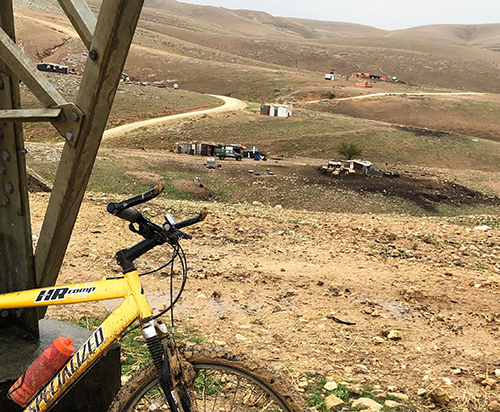
In collaboration with Experience Jordan, FHI 360 established the award-winning Jordan Bike Trail, a 454-mile (730-km) mixed-surface bike route that runs the length of the Kingdom, passing through historical sites and natural wonders and connecting cyclists to local community services, such as meals and homestays.
And in Ukraine, FHI 360, in partnership with DAI under the USAID-funded Economic Resilience Activity, is working with employers and education and training institutions to prepare young people for the green jobs of the future in sectors such as forestry, alternative energy and information technology.
Moving forward, FHI 360’s deep experience in youth participation and leadership, sustainable and inclusive tourism, workforce development and women’s economic empowerment will continue to directly support the design of green jobs activities that are economically scalable and sustainable and that achieve maximum economic and social impact.