
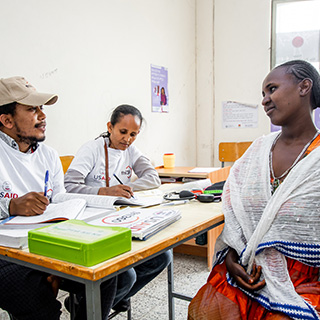
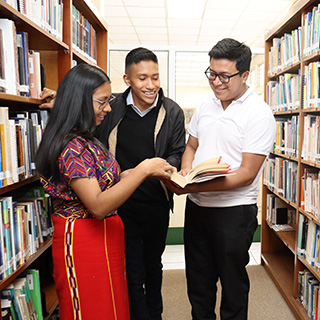

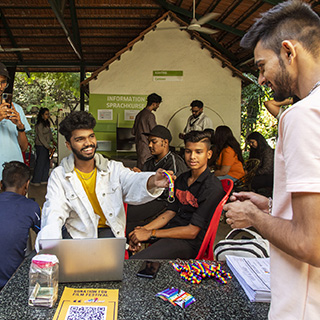
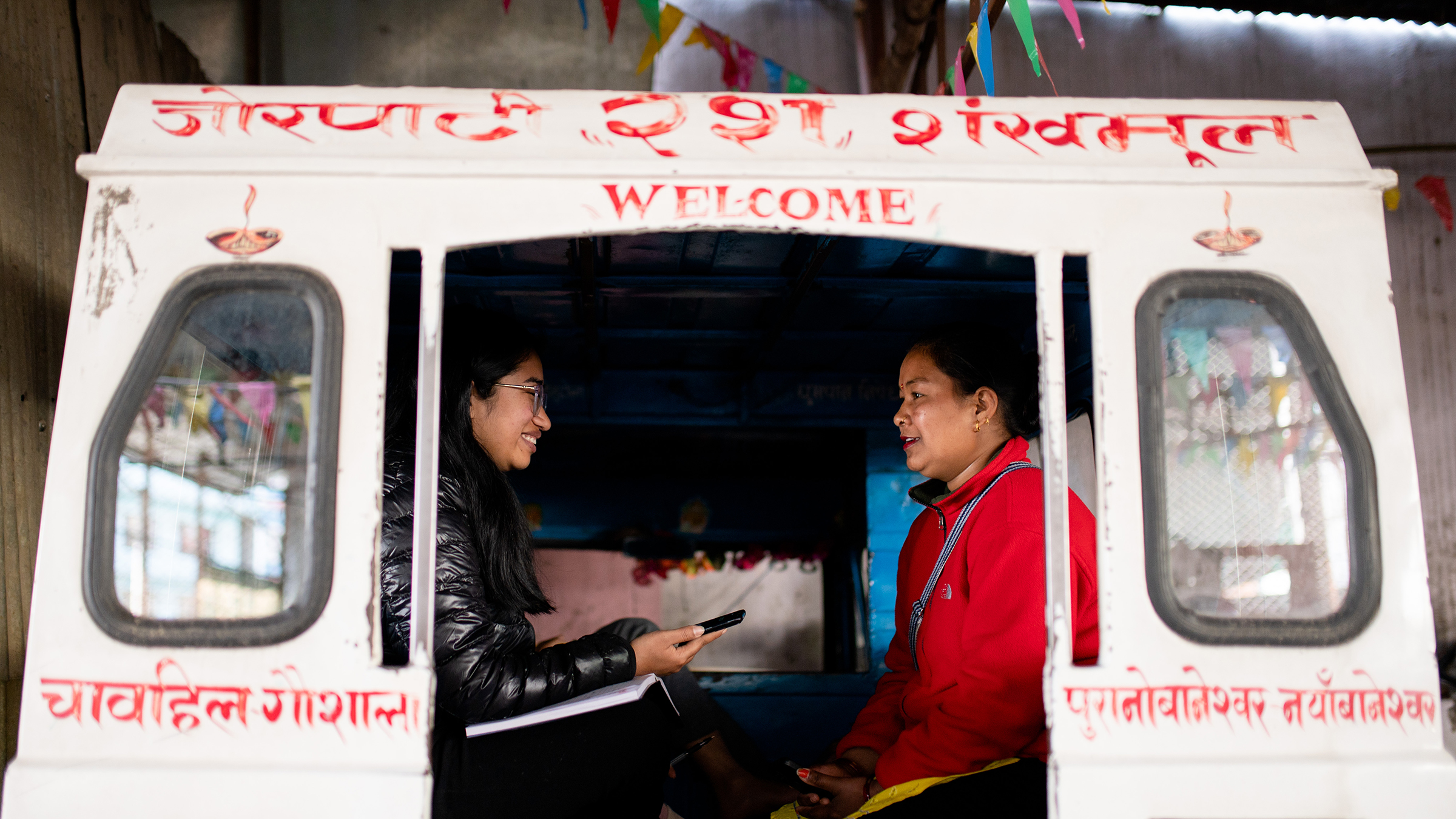
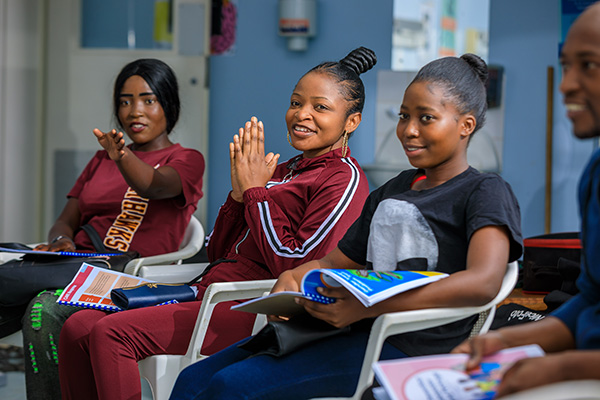

In Zambia, more than 70% of the population is younger than 30. Young Zambians are at the helm of the country’s future, but they must contend with both political instability and a challenging economy with high unemployment. To amplify the work of young Zambian changemakers, FHI 360 launched Youth Lead in 2018. This project, which continued through 2021, supported Zambian youth to lead civic action and local development projects, build leadership skills and participate in internships to further their careers.
“This process was a real game changer for my life,” says Tapela Lungu, a Youth Lead participant who is now a media and communications officer on USAID’s Open Doors Project, which increases access to comprehensive HIV prevention, care and treatment services in Zambia. “The knowledge, the experience, the exposure, and the connections I got helped me get to where I am today.”
Funded by the U.S. Agency for International Development, Youth Lead collaborated with more than 100 organizations — from the government, civil society and the private sector — to connect young adults, like Lungu, with internships.
“Youth Lead’s curriculum is equipping youth with the kinds of soft skills that are in high demand from our members, especially as they seek to expand and grow their management teams with younger, more entrepreneurial professionals, particularly those that understand government processes and how to engage with local communities,” says Hilary Chilala, executive director of the Zambia Federation of Employers.
Projects that effect positive change
In partnership with Zambia’s National Youth Development Council (NYDC), Youth Lead supported 364 program fellows in putting passion into practice — designing 44 capstone projects to address community needs. They conducted research, worked with their communities to develop their ideas, mobilized resources and implemented a range of innovative solutions.
One capstone project was Voters in Action. While legislation and policies acknowledge the rights of people with disabilities, barriers limit their ability to register to vote, run for office and participate in the voting process. In Kanyama, a suburb of Lusaka, Voters in Action partnered with organizations to support the participation of 128 people with disabilities in the 2021 general elections.
Calo Cesu, another capstone project, worked with a local organization to establish a garden that the community could use to grow and sell produce. It also trained farmers in climate-smart agricultural practices such as drip irrigation and tree planting — crucial in a country where 64% of the population depends on rain-fed subsistence agriculture.
Other projects included the setup of a solar pump, water tank and hand-washing facilities at a primary school, the launch of community awareness campaigns to counter stigma around mental health, and the development of a mobile phone application to enable people to call for help during emergencies.
A sustainable model and a common goal
FHI 360 prioritized local expertise and engagement from the beginning, assembling an advisory board to co-create the program design. The Youth Lead team heard directly from employers, youth development champions, government stakeholders and young people about their priorities.
Though Youth Lead has ended, the impact and innovations of the capstone projects live on, and the program cohorts of young civic leaders and community developers are taking the lead in new pursuits. Program fellows have gone on to accept job offers managing new projects and other entrepreneurial endeavors in local, national and even international development.
FHI 360’s partnership with the NYDC played a critical role in ensuring Youth Lead’s impact and sustainability. As a public institution established to promote inclusive youth participation in the country’s development, the NYDC provided government recognition and support to the program, including links to government departments that employed Youth Lead interns. In its second year, Youth Lead provided technical and operational support to the NYDC-led National Internship and Apprenticeship program, a government adaptation of Youth Lead for more than 6,000 young people from Zambia’s 10 provinces. The NYDC continues to support young Zambians in becoming catalysts for change and development.
“My experience with [Youth Lead] has been exciting. I got to meet and interact with different youths’ diverse backgrounds and beliefs,” says Lydia Chiziba, a program participant who was offered a full-time job as a project manager. “But we all carried a common goal, which is the hunger for success and working toward making Zambia a better place.”