


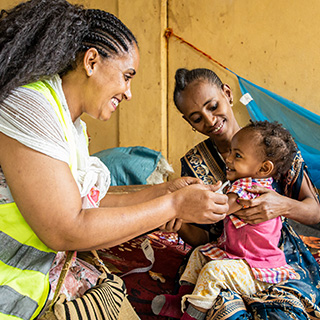
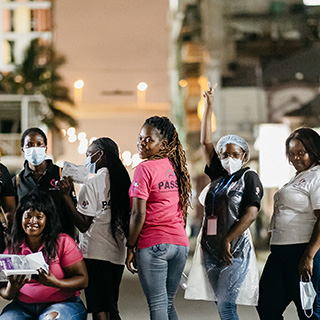
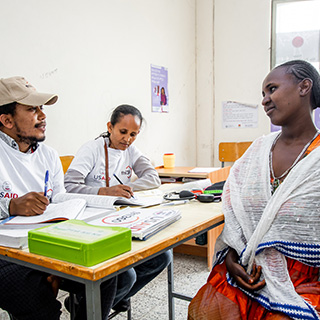

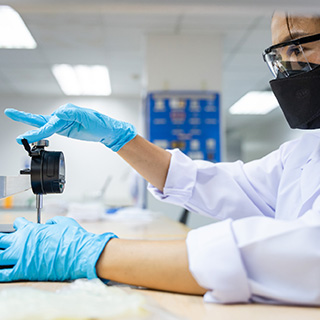



While much progress has been made to end the HIV epidemic, not enough has been done to put the power of prevention directly in women’s hands. The dapivirine ring, a flexible silicone ring inserted monthly into the vagina, can change this. If approved by regulators, the ring would be the first discreet, long-acting HIV prevention tool available specifically for women. The ring would complement daily oral HIV pre-exposure prophylaxis (PrEP) as another biomedical tool in the fight against HIV.
Recent evidence suggests significant acceptability of and demand for vaginal rings as a drug-delivery platform among women who used the dapivirine ring during clinical trials — and also among policymakers and other stakeholders in countries with a high HIV burden. To better understand these perspectives, the OPTIONS Consortium interviewed policymakers, implementers and civil society leaders in seven sub-Saharan African countries about possibilities for introduction and scale-up of the dapivirine ring. An analysis of the interviews shows widespread enthusiasm for the ring as part of comprehensive HIV prevention programming. Four primary factors outline benefits:
1. It is a unique, female-initiated product.
In eastern and southern African countries with a high HIV burden, women have a disproportionately high HIV prevalence relative to men. Because of biological and gender inequities that put women at greater risk, public health stakeholders are committed to providing options that are initiated and managed by women. It is important to identify prevention options that support continued use and adherence, especially among adolescent girls and young women. The REACH study (MTN-034) is examining safety, preferences and use patterns for the monthly ring and daily oral PrEP among this group. The results will inform potential expansion of regulatory approvals for the ring.
2. It would improve HIV prevention coverage through greater product choice.
The ring provides women and girls with choice, complementing daily oral PrEP and condoms. As a discreet product that delivers medication with little absorption through the body, the ring may appeal to women who experience side effects with daily oral PrEP, those who have stigma-related concerns with a daily pill, or those who cannot negotiate regular condom use with their partners. Policymakers and stakeholders expect that increased choice will result in greater prevention for women. Similar patterns emerged with contraception, where research shows that the addition of new contraceptive methods correlates with consistent increases in total use of modern contraception methods.
3. It would not create major health system impacts.
While additional evidence is needed, policymakers are enthusiastic about the possibility that the ring may have a lower risk of creating HIV drug resistance than daily oral PrEP and may require fewer health system resources for monitoring and follow-up. Given its safety profile, the ring is expected to carry no additional requirements beyond regular HIV testing. The ring also has the potential to be dispensed by lower cadre health care workers, such as community health workers. Further, stakeholders express interest in the demedicalization of the ring to expand access and uptake, which is important for reducing health system burdens.
4. It would expand the portfolio of self-care biomedical HIV prevention options.
The ring does not require storage conditions such as refrigeration, and women can insert the ring themselves without a health care provider. Because it remains in the vagina for a month, it also has a low user burden. The ring is ideal for incorporation into broader self-care interventions, such as HIV self-testing and self-administered injectable contraceptives that enable women to manage their health needs without repeat visits to a health care provider. Adding the ring to the self-care portfolio could increase women’s self-efficacy, autonomy and engagement in health overall.
Results from the analysis show the ring as a powerful addition to the HIV prevention effort, especially for young women. Stakeholders are considering how to introduce the ring into a growing portfolio of prevention options.
Donors, regulators, policymakers and program implementers must lay the groundwork to meet demand for the ring and other HIV prevention products in the pipeline. They must pursue additional World Health Organization guidance and national regulatory approvals and conduct implementation research or pilot projects to understand the application of the ring in real-world settings. National policymakers and implementers must lead the way in defining approaches to manage increasingly diverse HIV prevention toolkits.
Women and girls need greater choice in HIV prevention. The dapivirine ring creates a pathway for moving new prevention choices out of the laboratory and into the hands of those who need them most.