



Indigenous people around the world face challenges that hinder their development and their inclusion in mainstream society. In the Democratic Republic of the Congo (DRC), these issues are further complicated by their mistrust of the dominant group, Bantus. While Bantus are often perceived as oppressors, the groups have historically shared cultural and commercial exchanges and mutually respected each other.
Those who experience problems are best positioned to find solutions. But humanitarian and development organizations often fail to genuinely listen to and involve Indigenous people in designing and implementing programs that affect them. This risks perpetuating unnecessary harm to program participants. As Brigitte Anziom from ASTRADHE, an Indigenous-led organization in Cameroon, states, “Anything done for me, but without me, is against me.”
We must support Indigenous people to participate in and lead programming that concerns them. How? We can look to these initiatives:
Réseau des Associations Autochtones Pygmées (RAPY)
While many organizations fail to engage Indigenous people, RAPY — a local Indigenous-led nongovernmental organization in the DRC — has implemented meaningful strategies to do so. These include meeting with different groups — such as girls, boys and elders — to discuss important cultural values to emphasize in programming. These meetings ensure that each group’s needs and perspectives are considered. They also serve to obtain Free, Prior and Informed Consent, a crucial principle in respecting Indigenous people’s autonomy and decision-making power.
To design interventions and drive advocacy efforts, RAPY conducts participatory surveys to analyze the risks of modern development for Indigenous people. They also undertake literature reviews to compare the situations of Indigenous people in different regions, particularly in eastern DRC, where their programs operate. This research-driven approach helps inform interventions that respect Indigenous people’s cultural contexts and has increased participation rates of Indigenous young people in programs.
RAPY involves Indigenous parents in their children’s education using tools like educational radio, which supports children’s learning and strengthens familial bonds and community cohesion. It allows parents to take their children into the forest during the peak harvesting season and engage in traditional rituals without delaying their learning.
Elimu ni Jibu
The Elimu ni Jibu (“Education is the Answer”) project — implemented by FHI 360 in partnership with local community organizations, including RAPY — undertook a participatory study with Indigenous people to understand their values, perspectives and aspirations regarding primary school education. Many areas where the project works include Indigenous communities; not accounting for them in program design would risk not meeting their needs.
Taking what they learned from the study, the project worked with Indigenous employees from RAPY to adapt its existing interventions in eastern DRC. It developed additional materials to foster social cohesion between Indigenous and Bantu populations.
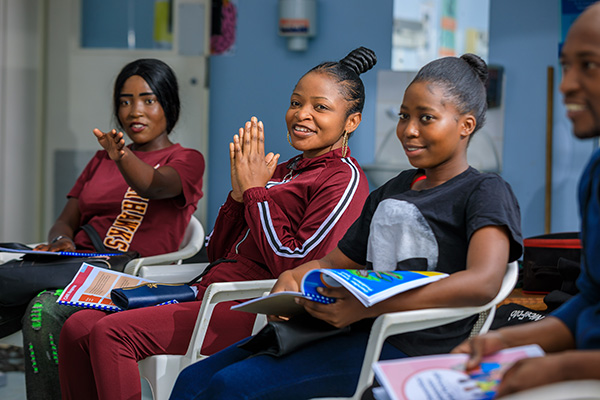
The project also helped integrate young Indigenous and Bantu people into leadership and gender clubs, promoting inclusivity and mutual respect from a young age. For the project’s tutoring program, people from Indigenous communities were trained to become tutors, ensuring that educational support was culturally relevant and effective for Indigenous children. These efforts have led to increased and sustained enrollment and participation of Indigenous children and young people in activities.
ASTRADHE
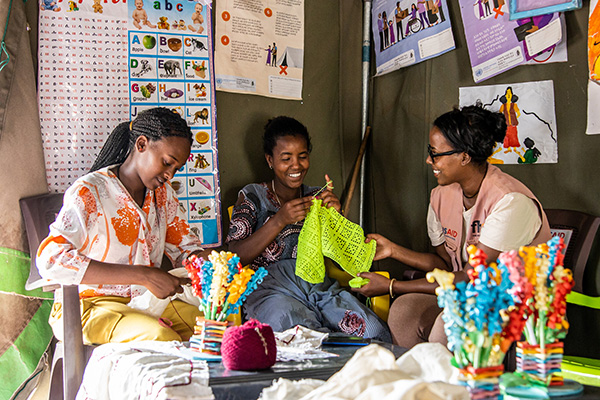
In Cameroon, ASTRADHE runs a preschool program for Indigenous Baka children. This unique program is designed and delivered by educators from the Indigenous community, ensuring that the curriculum is culturally appropriate and relevant — while also preparing Indigenous children to excel in public primary school.
ASTRADHE’s long-term engagement, spanning over 10 years, has demonstrated the value of such programs to the Cameroonian government, which now recognizes and supports these efforts. ASTRADHE is developing a toolkit to document and disseminate how they adapted their programming to meet community needs. Results from a learning assessment also show significant improvements in Indigenous children’s learning, suggesting adapted programming can make a difference.
Building a thriving future
Considering each of these examples — including conducting participatory studies and surveys, meeting with different community members, involving Indigenous people as tutors, and tailoring tools to meet communities’ unique needs — a theme becomes evident. Each example includes Indigenous community members as collaborative partners in the design and implementation of education programs. They are involved at every step of the way and their knowledge is valued and integrated.
When organizations striving to create positive change partner with Indigenous groups and community members, activities are not only more collaborative and culturally significant — they are vastly more effective.