



While disparities have long existed in education, the challenges of the COVID-19 pandemic have made them even more apparent.
K–12 education took a hard hit during the pandemic. The 2022 National Assessment of Education Progress scores reflect declines in both reading and math, with historically marginalized students facing disproportionate decreases.
While many students struggled to adapt to a new way of learning, challenges were only heightened by the mental health crisis facing young Americans. During the pandemic, more than a quarter of a million young people lost a parent.
Calls from all sides of the academic sphere — parents, educators and politicians — demand action to address the gaps that the pandemic created. Yet, in the conversation surrounding education and how to recover from pandemic losses, one strategy is emerging as especially promising: summer learning programs.
Historically, summer school has been used as a way for students to retake classes they failed during the normal academic year. As such, many students view summer classes as a punishment for those who aren’t doing well. To make matters worse, when educators try to provide students with access to high-quality summer programs, they often face barriers, including lack of control over curriculum choices, national staffing shortages and insufficient time — sometimes just a few hours — to prepare for the summer.
However, with so many students struggling, a wider implementation and radical reconceptualization of summer learning programs could help curb some of the learning loss incurred over the course of the pandemic. By using summer learning programs not just as a means to repeat classes, but rather as a complement to school-year education, these programs can reinvigorate, enhance and accelerate all students’ learning experiences. The RAND Corporation has done ongoing research on summer learning, leading to a set of evidence-based practices to ensure high-quality summer programming .
At FHI 360, we are seeing evidence that this approach works through the District Summer Learning Network (DSLN), a group of more than 100 school districts across the United States committed to maximizing summer learning opportunities, especially for young people from under-resourced communities. The network is managed by FHI 360 and supported by the Wallace Foundation.
Not only do DSLN districts support students academically through exciting and challenging content, they also provide enrichment activities that center on boosting students’ well-being and connection to their school community. These programs provide a great opportunity for all students to supplement their school-year education and allow educators to rethink how their schools and classrooms operate and how they can best serve young people.
The flexibility of summer learning programs offers an exciting opportunity for experimentation. Free from the standardized testing requirements and rigid curriculums that characterize the school year, summer is the perfect time for educators to explore new instructional techniques and get creative with their content in ways that engage and encourage students. During the pandemic, Congress allotted billions of dollars for new student services; many of the DSLN districts used those funds to jumpstart new strategies to address students’ needs and interests.
For example, the DSLN district in Logan County, West Virginia tested out outdoor classrooms, a fresh curriculum and teachers assigned not by grade, but by passion. They found that opening themselves up to new possibilities proved to be worthwhile; students’ attendance improved and teachers are eager to return next summer.
Other districts worked with community partners or local cultural institutions to provide students with one-of-a-kind learning experiences distinct from what they would typically get during the school year, much less a repeat. For example, Battle Creek Public Schools in Michigan leveraged their partnerships to bring students to museums and explore the city’s rich cultural offerings. Student retention throughout the summer soared.
By bringing in new ideas, children get to have fun while schools collect data about what works. It’s a win-win.
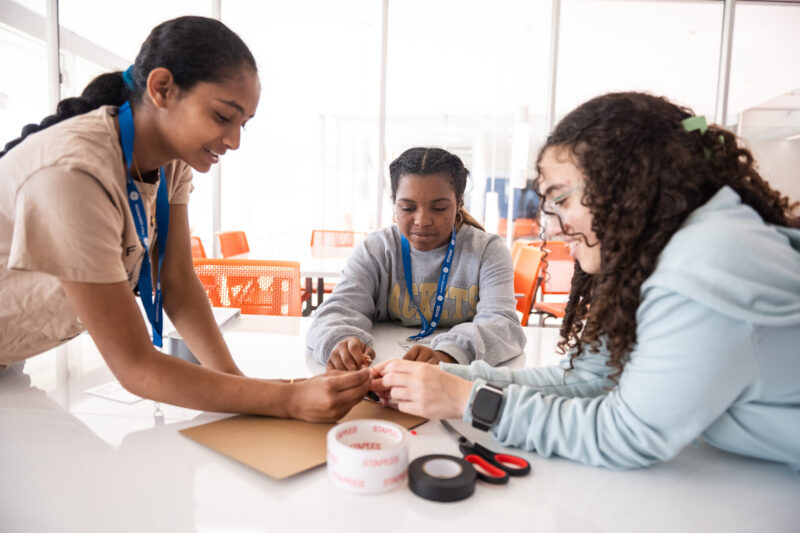
Many students who participated in summer learning programs in DSLN districts were ready to seize new opportunities and welcomed the chance to learn and build confidence. Some took accelerated courses, completed hands-on projects or even taught younger students.
The outdated notion that summer learning is only for students who need to retake classes couldn’t be further from the truth. Young people are ready to challenge themselves, learn new skills and come back to school in the fall with newfound confidence and a renewed zest for learning. Given the right tools, summer learning programs can help students, including those from historically marginalized communities, achieve that.
Summer learning programs can be a powerful tool for addressing opportunity gaps in education, but harnessing that power is dependent on the creation of engaging environments and programs. By rethinking their approach to summer learning, educators can and should take advantage of the season’s unique perks, like increased flexibility and room for experimentation. This way, everyone — educators and students alike — can return to school in the fall having learned something new. As this movement around strong summer learning grows, it will be critical to collect data to document the impact it has on young people in both the immediate and longer term.
If young people across the United States don’t feel inspired and excited about their education, we will never come back from post-pandemic drops in academic performance. A good place to start is a summer that engages them, nurtures their interests and encourages their drive to learn new things, positioning them to thrive in the fall.