
Conflict and forced relocation have disrupted the lives of millions of people around the world. In Ukraine, for example, a year of armed conflict has resulted in the displacement of more than 13 million people and the destruction of much of the nation’s infrastructure, including schools and universities. As a result, the education of many young Ukrainians has been interrupted, as has their ability to build their futures.
Refugees have alarmingly low enrollment in higher education
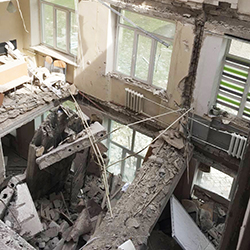
Volodymyr Dahl East Ukrainian National University, pictured above, is one of the nearly 70 universities damaged or destroyed by bombs and shelling. Since the conflict started in February 2022, more than 35,000 university students have been displaced inside and out of Ukraine. Photo credit: USAID Economic Resilience Activity Ukraine/FHI 360
By offering a vital link between learning and earning, education beyond the primary grades improves both an individual’s quality of life and society at large — but for refugees and for students affected by conflict, it is largely inaccessible. They are confronted by such challenges as language difficulties, unrecognized qualifications, missed coursework, high tuition costs and limited job prospects — not to mention the emotional and psychological toll of displacement. According to UNHCR, the UN Refugee Agency, among the world’s more than 82 million refugees, only 5% of eligible youth are enrolled in higher education programs.
Three important steps would expand opportunities for refugee and displaced students:
Expand pathways to higher education
Complementary education pathway programs allow displaced young people to seek higher education in places outside their home country without the logistical hurdles found in traditional application processes. These programs are typically driven by several coordinating partners, such as governments, community organizations, academic institutions and faith-based organizations, which provide housing, emotional and financial support and more.
The Canadian government has embraced this approach by developing initiatives aimed at supporting refugees in their education and career development, such as the Resettlement Assistance Program and Student Refugee Program. Through these programs, refugees are provided with financial assistance, language training and access to complementary education pathways, enabling them to pursue higher education in Canada. Since its inception, the Student Refugee Program has benefited over 2,200 refugees, providing them with scholarships to attend post-secondary institutions and helping them to integrate and contribute to Canadian society.
Invest in psychosocial support and education that emphasizes soft skills
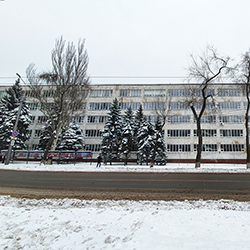
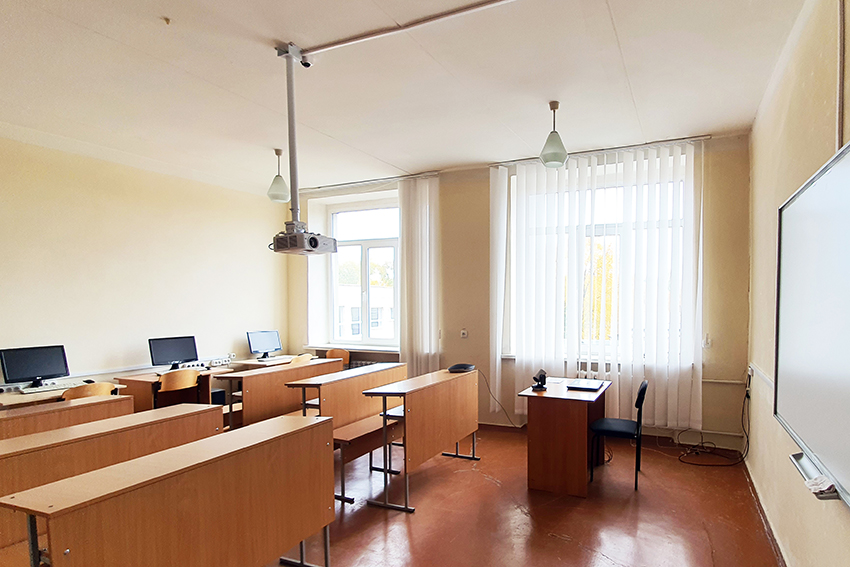
Located in Mariupol, Pryazovsky State Technical University was home to the Center of Innovative Entrepreneurship (CIE), funded by the U.S. Agency for International Development. Since 2018, the CIE had been active and hosted a wide range of professional trainings to develop students’ entrepreneurial skills. Photo credit: USAID Economic Resilience Activity Ukraine/FHI 360
To help students from conflict settings succeed in the long term — and in higher education — host governments and academic institutions must offer both psychosocial support, which addresses the impact of their contexts and experiences, and education that helps them develop soft-skill competencies. These types of support can come in a variety of forms, such as counseling, mentorship, peer support and group therapy. Providing these services can help students cope with the emotional stress they have experienced and create a safe and supportive environment in which they can learn and grow.
Education emphasizing soft skills helps refugees develop vital skills to navigate their social and emotional worlds. It includes competencies that can help students build relationships, navigate conflict, set and achieve goals, and manage stress and anxiety. Investing in this kind of education can help refugees and displaced students develop the skills they need to succeed in higher education and beyond, while also promoting their resilience and overall well-being.
Open pathways to entrepreneurship
Entrepreneurship programs can provide alternative pathways for refugees and displaced people to learn a new skill or trade and earn a living. Such programs equip students with the skills and knowledge to start and run their own businesses, setting them up for future success and contributing to the economic development of their host communities and of the areas where they eventually settle, whether back in their home country or elsewhere.
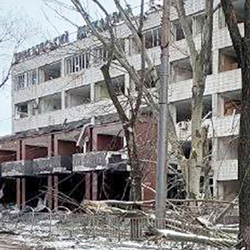
In 2022, the Center of Innovative Entrepreneurship at Pryazovsky State Technical University was destroyed. Photo credit: USAID Economic Resilience Activity Ukraine/FHI 360
In Ukraine, the Safe Haven initiative — supported by USAID Economic Resilience Activity (FHI 360 and DAI) — is sponsoring the participation of female university students, mostly from eastern Ukraine, in an immersive business start-up program at a university in the country of Georgia. Over the course of a year, they will build and pilot their start-ups, with the goal of returning to Ukraine and launching their businesses. Among their ideas are a financial education project and a museum and publishing house dedicated to the preservation of Ukrainian culture.
Entrepreneurship and vocational training are valuable investments that offer both short-term and long-term benefits. The nascent entrepreneurs can contribute to the economic growth and development of communities hosting them, and the vocational skills they learn may equip a generation to return and rebuild post-conflict.
Put choices within reach
The world needs the skills and knowledge that refugees and displaced people can offer — and by working together, governments, local institutions and other international organizations can help them overcome challenges and prioritize their access to educational programs. By expanding pathways to education, investing in psychosocial support and education that emphasizes soft skills, and exploring entrepreneurship as an alternative, global partners can ensure that refugees and displaced people have the opportunity to lead full and healthy lives.