







To help reach the UNAIDS 95-95-95 targets by 2025, the public health community must ensure that people living with HIV have access to antiretroviral therapy (ART). Access to this lifesaving medication is one issue; staying on it is another, because continuing ART is not always possible due to a variety of circumstances. In a project FHI 360 recently concluded in Nigeria, we demonstrated how machine learning can complement the efforts of health care workers to help people stay on ART.
Exploring a solution for a deadly problem
Data from sub-Saharan Africa suggests that about 1 in 3 individuals stop their HIV therapy within three years of initiation. ART only works as intended if people take the medication every day and visit their health care provider at scheduled intervals.
Interruption in a person’s HIV treatment can lead to deterioration in their health and can be fatal. It also makes it more likely for the person to transmit HIV to others. People’s treatment is interrupted for many reasons, including socioeconomic constraints; management of side effects that can include nausea, depression or hallucinations; and, in rare cases, denial of the diagnosis.
Health care workers do not always know which patients will face challenges that will interrupt their lifesaving treatment — or when. HIV programs often rely on reactive approaches in supporting people, such as tracking clients who have missed clinical appointments.
That is why FHI 360 explored the use of machine learning as a sustainable solution for predicting interruption in treatment. If health care workers can intervene earlier and help patients find ways to stay on their medication, they can improve patient outcomes and save lives.
Developing a model to predict treatment interruption
In Nigeria, we used data from a decades-long project to create a machine learning model that was over 85% accurate in predicting the possibility of patients interrupting treatment. This model, when combined with timely and appropriate intervention by health care workers, introduces great potential for prevention.
Nigeria has one of the world’s highest burdens of HIV. An estimated 1.9 million Nigerians are living with the virus, most of whom are women. To help connect people to HIV testing and treatment, FHI 360 implemented the Strengthening Integrated Delivery of HIV/AIDS (SIDHAS) project* from 2011 to 2021.
This project was an ideal testing ground for developing the machine learning model due to the trove of data from the electronic medical record (EMR) system that the project and its predecessor had developed. Called LAMIS (or the Lafiya Management Information System), the EMR system contained 16 years’ worth of individual- and clinic-level data from 154 health facilities, 103 community pharmacies and over 2,600 other community ART refill facilities in two Nigerian states.
FHI 360 scientists used this data to train, test and validate a machine learning model to determine the risk of interruption in treatment among patients receiving a 30-day supply of ART. Then, the team integrated the model into LAMIS so that it could also be integrated into routine service provision, allowing all supported health facilities to use the predictive model if they wished. Ten pilot clinics field-tested the model and were evaluated.
Introducing the model in routine clinical care settings
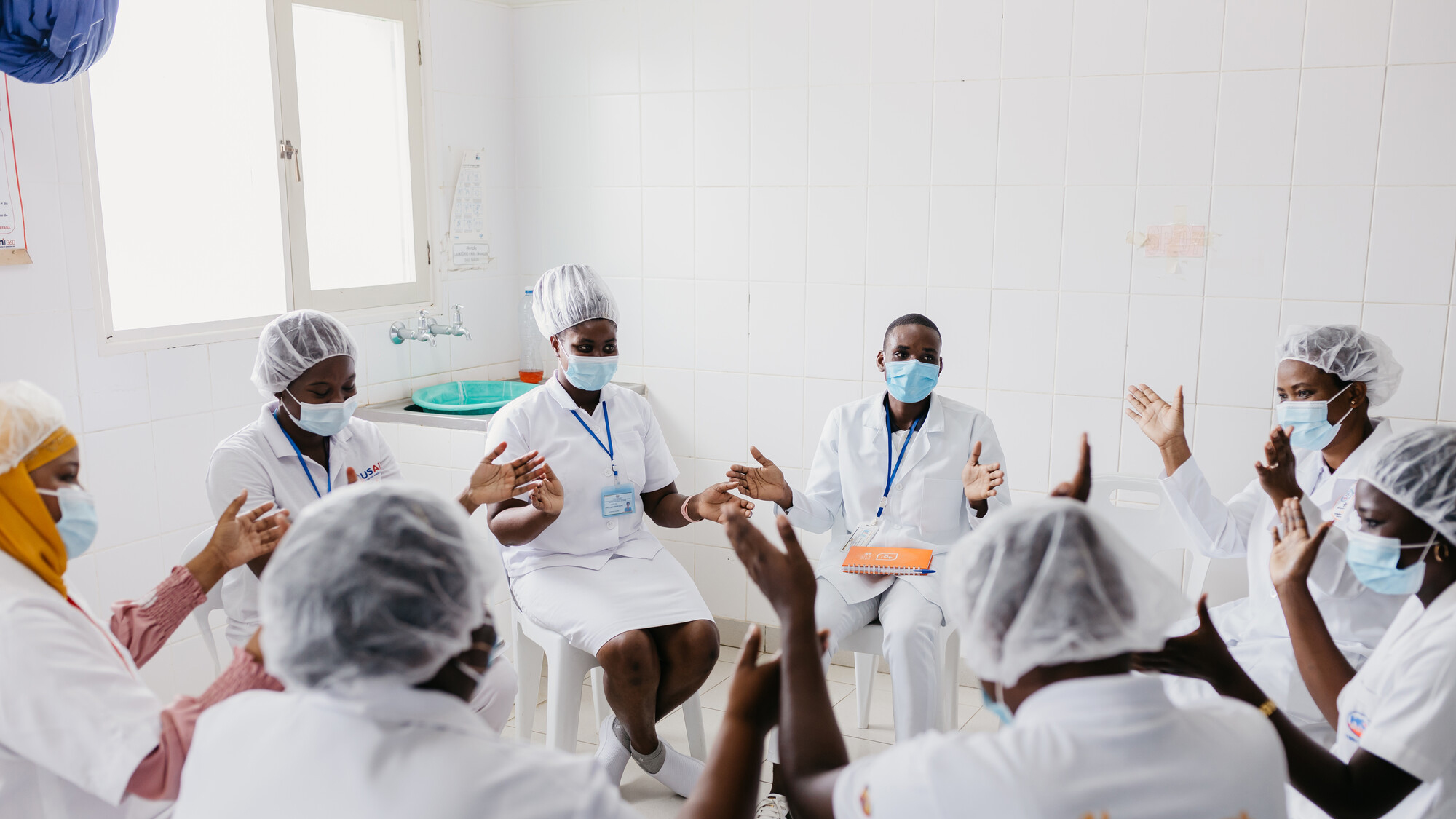
At the 10 pilot clinics, FHI 360 trained the health care workers so they could interpret risk predictive scores generated in LAMIS and take action, a necessary step for the machine learning tool to work as intended.
Once the model identified a patient as high risk, the case’s health care worker could work with the patient to better understand the circumstances that may lead to interruption in treatment. They could then counsel the patient and jointly develop plans to address those circumstances.
For example, if someone lived too far from the clinic, they could have their medications delivered at home. If someone could not take time off work to pick up their medication, they could be enrolled in a fast-track program that allowed them to pick up their medication without waiting.
In the pilot sites, 75% of the health care workers who were surveyed found the prediction tool useful. Some noted that they were still learning how to use it, but the majority were already putting it into practice. One health care worker noted:
“It has helped us to monitor our clients, calling them up and giving them a timeline to come for their refills so that their treatment won’t be interrupted.”
From pilot to practice
Machine learning still needs to be tested further and scaled to fulfill its promise. But, as demonstrated in Nigeria, it has tremendous potential.
To achieve and sustain HIV epidemic control, program implementers, donor agencies, scientists and service providers must continue exploring innovative approaches for helping patients stay on ART. There will always be obstacles, from logistical challenges to side effects, that make it difficult for patients to adhere to a treatment plan. But with the ability to anticipate and adjust for those barriers, health care workers will be better equipped to serve their patients and communities.
In pursuit of the most efficient use of human and financial resources and the most effective ways to reduce interruptions in ART treatment, machine learning is a vital tool in the path forward.
*The SIDHAS project was funded by the U.S. Agency for International Development (USAID) and PEPFAR (the U.S. President’s Emergency Plan for AIDS Relief).