


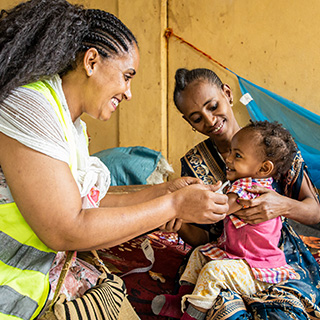
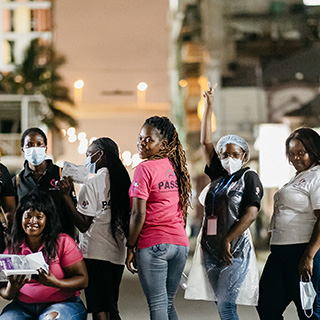
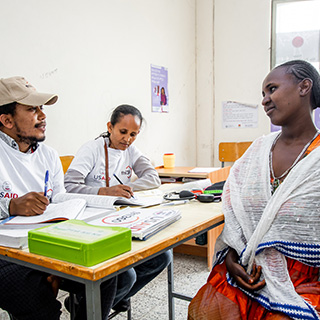


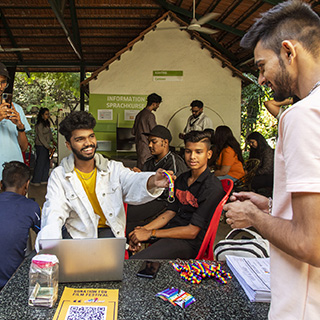


Clinicians. Administrators. Researchers. Procurement specialists. Regulators. Supply chain experts. Community-based workers. Donors. Advocates. Policymakers. These are just some of the roles required to implement effective, evidence-based global health and development initiatives. Yet many professionals are struggling with feelings of overwhelm, disconnection and exhaustion. In the past several years, we have lived and worked through a global pandemic, which exacerbated many pre–existing stressors. In this context, it is critical for us to address the risk of burnout among our staff and partners around the world.
“Burnout existed before, but the pandemic has put a spotlight on it. It has morphed it and made it something that you cannot ignore.”
-Participant in the FHI 360 Staff Learning Exchange to Address Burnout
In 2019, the World Health Organization (WHO) classified burnout as an occupational phenomenon for the first time. Likewise, in the U.S., the surgeon general recently highlighted burnout as a major problem. According to the WHO, workplace burnout is characterized by 1) feelings of energy depletion or exhaustion; 2) increased mental distance from one’s job, or feelings of negativism or cynicism; and 3) reduced professional efficacy. Research shows that burnout contributes to numerous health problems including diabetes, heart disease, respiratory problems, insomnia and depression. As the global community continues to face numerous crises, we need health and development professionals to be at their best. We cannot afford to burn ourselves out. So, what can we do?
Early in 2022, FHI 360 launched an internal staff learning exchange to explore effective strategies to prevent and reduce staff burnout. The process included a review of existing literature, in-depth interviews, and team-based surveys. We hosted roundtable sessions with staff members from around the world and facilitated conversations with several donor and partner organizations.
Here is a summary of what we learned:
- There was widespread sentiment that burnout is a substantial problem, and action is urgently needed. Too often, burnout is treated as an individual problem; however, solutions will require a combination of individual- and system-level changes.
- Different groups face various challenges and have unique needs. These groups include parents, people without children, people of color, young professionals, older professionals and people with neurodivergence. While every individual is different, there are things we can do as an organization and within teams to relieve stress and make our jobs easier and more fulfilling.
- There is a consensus that “meeting overload” and “communication fatigue” are major contributors to stress; many people feel they do not have sufficient time for focused work.
- Managers are perceived as having a great deal of influence when it comes to establishing positive culture and norms. At the same time, managers may also be struggling with burnout and may need support themselves.
In the short term, FHI 360 has committed to several action items. This includes incorporating commitments to addressing burnout in our corporate strategy, offering surge support for staff to address coverage gaps, providing coaching services for managers, improving change management procedures, and reinforcing expectations for taking leave so staff can truly disengage while away from work.
In addition, we developed a toolkit of resources, and various teams within the organization have taken the initiative to address burnout. For example, our Young & Emerging Professionals Employee Resource Group led a discussion series that was open to all staff. Several of our country offices launched tailored surveys and put into place short- and long-term action plans that are responsive to the unique needs of staff members in the relevant regions. FHI 360 is also introducing evidence-based interventions to support the mental health needs of front-line health care workers.
We hope to co-create additional solutions with our donors and partners, as many recognize that burnout is a ubiquitous problem and are trying to address it. As one external partner said, “This represents a sea change. Ten years ago, we never would have had a conversation about burnout. Now we’re taking proactive steps.” This is hopeful news, as we must all commit to making individual, organizational and sector-level changes. Only then can we truly become effective at busting burnout to improve the health and well-being of our global workforce.