







Raising an infant is a universally demanding experience — and for parents living in conflict, the challenges are heightened.
Infants and young children are uniquely vulnerable in emergencies because their immune systems are immature, their nutritional needs are highly specific, and they depend entirely on others for feeding and care. In crisis settings, this combination places them at exceptionally high risk of infectious diseases, malnutrition and preventable death.
In Ukraine, war has disrupted health services and family support networks, increased insecurity, and limited face-to-face infant and young child feeding counseling and support. Families with young children face a harsh reality: They are more likely to experience nutrition, health and psychosocial issues, yet less likely to be able to access health services.
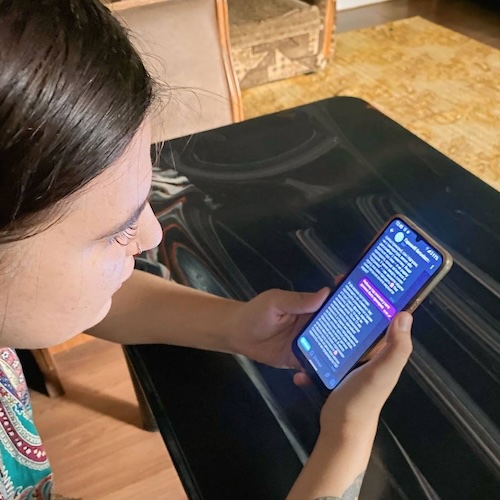
Harmony of Parenthood, an AI-powered chatbot for mothers in Ukraine launched by FHI 360 — with funding from UNICEF Ukraine — shows how technology, empathy and professional expertise can support mental and physical health during crises. The chatbot is delivered through social media and messaging platforms, primarily Telegram, to ensure accessibility and consistent engagement among mothers and caregivers. Its breastfeeding and infant feeding information aligns with the Infant and Young Child Feeding in Emergencies operational guidance and vetted content from international authorities, UNICEF, and the Ukrainian Ministry of Health, ensuring that users receive accurate, trusted and context-appropriate support.
“You can tell the bot anything: that you’re in pain, that you’re tired, that nothing is working,” says Mariia, a lactation counselor who supported the project. The chatbot then connects users to the help they need.
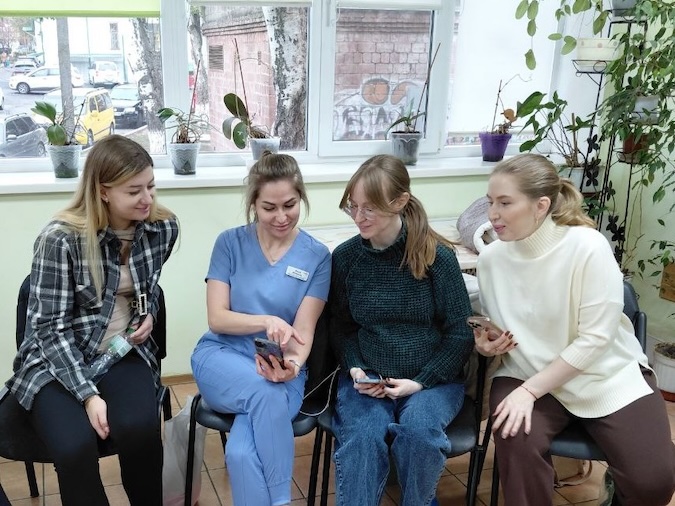
Chatbot is fast, reliable and friendly
Harmony of Parenthood, which launched in October 2024, has fielded over 38,000 interactions and has nearly 2,100 unique subscribers — 40% of whom are repeat users.
A key benefit is that it’s always available. “Blocked ducts or breastfeeding problems don’t wait until Monday,” says Mariia. “Mothers can get answers at 3 a.m.”
FHI 360 incorporated instructions for AI behavior, defining its role and boundaries and ensuring its tone is nonjudgmental and reassuring. “It is very important not just to give a dry fact, but to present it empathetically,” says Mariia.
The chatbot does not provide medical advice, diagnose conditions or prescribe medication. Instead, it guides users to appropriate support by encouraging them to contact qualified lactation counselors or psychologists when further assistance is needed. By providing direct links to these professionals, it helps users access timely, trusted and specialized care. Staff regularly review chat logs to detect and fix potential AI errors. The team updates the knowledge base frequently with new, verified information.
Holistic care at your fingertips
“In the past, women gave birth surrounded by many other women (mothers, grandmothers, sisters) who had experience,” Mariia says. “Nowadays, young mothers are often left alone with their babies in their apartments, and their only ‘support’ is their phone.”
Mothers come to the chatbot with a range of concerns: pain while breastfeeding, doubts about milk production and issues with the baby’s latch. Complementary foods and weaning are also common topics.
“Each case is unique, but all share the same need for empathy, reassurance and practical guidance,” says lactation counselor Yulia, who helps test and edit the chatbot.
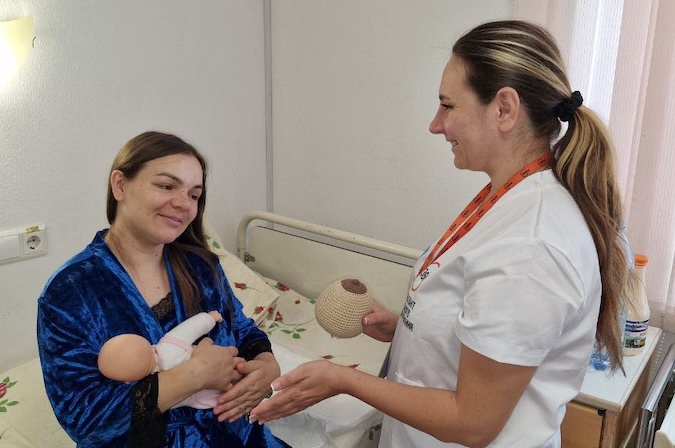
Beyond lactation advice, mothers benefit from psychosocial support. Information on the internet can create false expectations and contribute to, rather than alleviate, medical issues, and social pressure can be harmful. “Mothers are expected to be perfect, happy 24/7, and breastfeed ‘easily and naturally,’” Mariia says. “When difficulties arise, mothers feel guilty.”
This can heighten stress and anxiety, which are already elevated during conflict. “Stress directly affects the hormone oxytocin, which is responsible for milk ejection,” says Mariia. “Half of my work often involves providing psychological support to help mothers manage these pressures.”
Harmony of Parenthood also links users to local support groups, where they can share their experiences with other mothers. The groups include health workers and lactation counsellors who can offer practical assistance.
The chatbot “became a source of constant support for me and helped dispel my fears,” says user Sofiya, who has a baby boy. “I even wrote questions at midnight when I couldn’t sleep because of the questions that constantly arose in my mind … it was a lifesaver.”
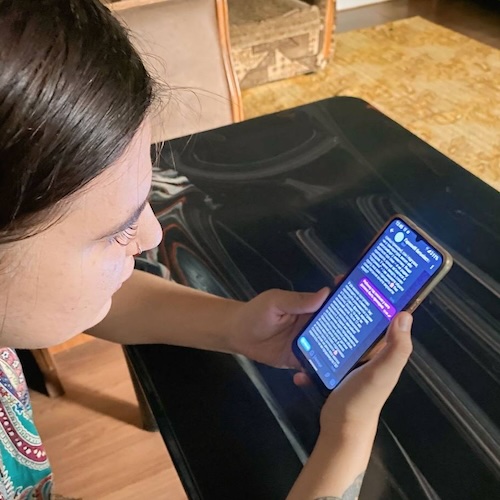
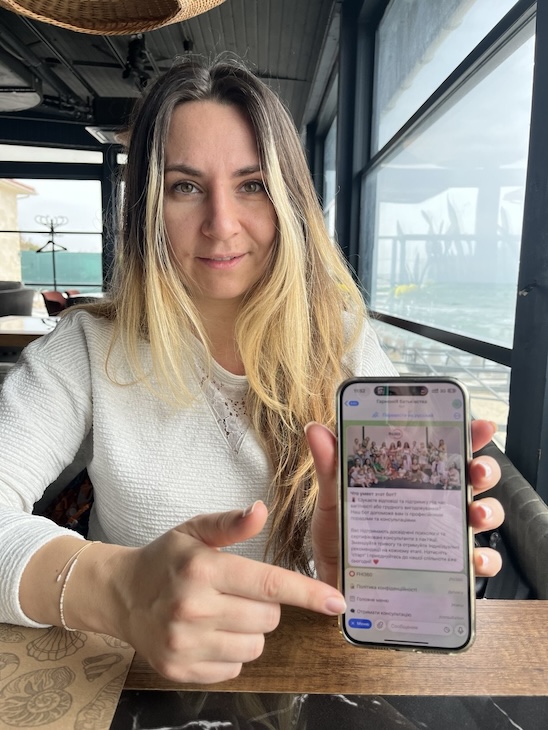
A lactation counselor behind the screen
Mariia’s connection to this project is personal. “My journey began, as is often the case, with my own experience of motherhood,” she says.
After her child was born, she encountered myths and conflicting advice, and she felt lost and lonely. When she found help and established breastfeeding, “I felt incredible relief and strength. That’s when I realized that I wanted to help other women navigate this journey with confidence and support.”
With the chatbot, she has converted “the language of science to the language of care.” She collected, verified and structured hundreds of protocols and answers to frequently asked questions, ensuring accuracy. She also identified potential red flags — times where a person might need immediate lactation support and medical attention.
“Here, my work is not just about individual counseling but about participating in the creation of systemic solutions that can help thousands of mothers at once,” says Mariia.
All photos are credited to Mariia and Yulia for FHI 360.