

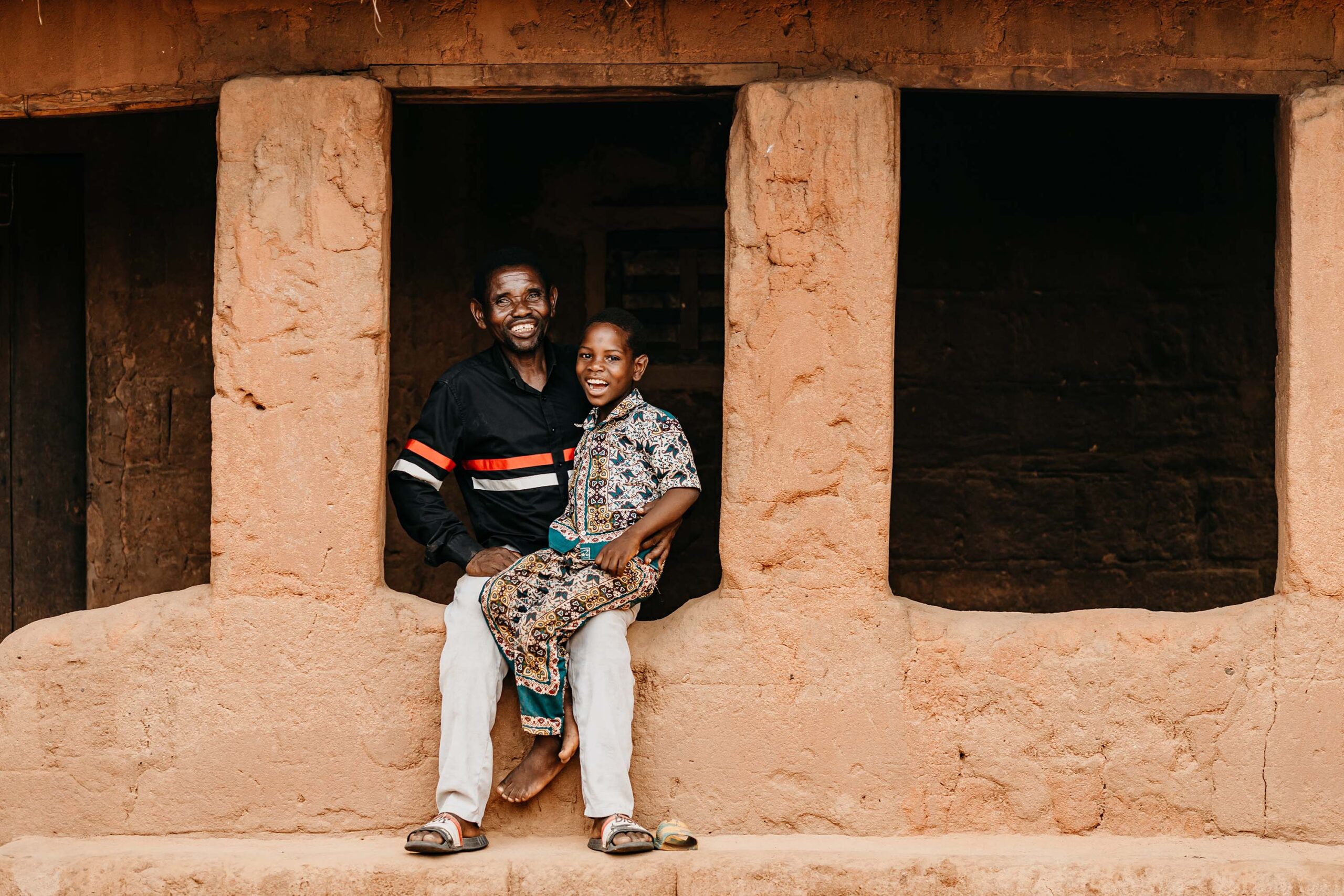
When Paulino Martinho Assane first heard activists in his community of Mutcave, in Mozambique’s Nampula province, talk about male engagement in family life, he was captivated.
The session covered the importance of preventing domestic violence, men contributing to domestic activities and child care, and supporting wives throughout pregnancy and delivery. The activists who delivered the session were trained by the Alcançar: Achieving Quality Health Services for Women and Children project, which is implemented by a consortium of international and national partners and led by FHI 360. Alcançar is funded by the U.S. Agency for International Development (USAID).
Assane, who has four children with his wife of 24 years, knew after the session that he wanted to get involved in the Alcançar project.


“We have a tradition that goes against these practices,” says Assane. He explains that, in his community, men are the traditional head of the family and often don’t participate in chores or other household activities.
Now, Assane is part of a men’s dialogue group organized by the Alcançar project that promotes male engagement in family life. “It [The Alcançar project] helps to abandon harmful practices within the family,” he says.
Reducing maternal mortality
In 2020, it was estimated that for every 100,000 live births in Mozambique, there were at least 408 maternal deaths. That’s 83% higher than the 2020 global maternal mortality rate.
The number of maternal deaths in Mozambique is greatly influenced by delays in receiving adequate care. The harm caused by these delays highlights the importance of supporting mothers every step of the way.
The Alcançar project aims to reduce maternal, newborn and child mortality in Mozambique’s Nampula and Zambezia provinces and supports high-impact, high-quality, patient-centered maternal, newborn and child health services.
“Supporting maternal, newborn and child health doesn’t stop at the health facility — it extends to the community level,” says Ester Murray, Alcançar’s gender and youth advisor at FHI 360.


Seeing changes in the household and in the community
Consida Maria Manuel, Assane’s wife, also participated in lectures organized by the Alcançar project and delivered by local partners. Both Manuel and Assane say the project’s dialogue groups have positively affected their relationship.
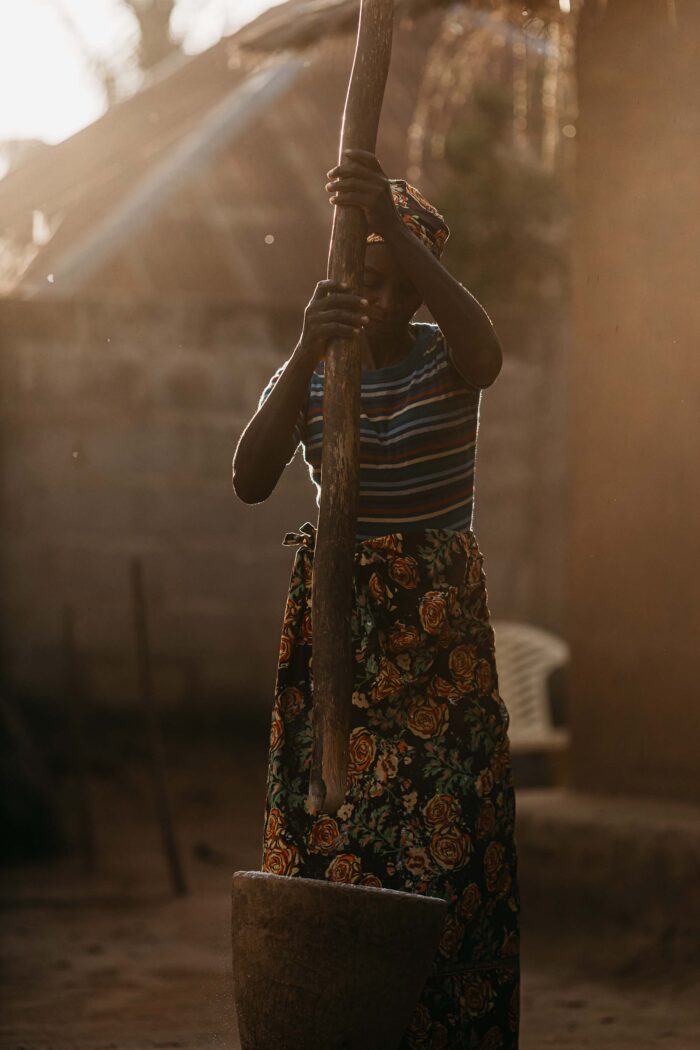
“He changed,” Manuel says of her husband. Previously, Assane had refused to cook for the family. But now, he “piles and washes the dishes when I am sick,” she says. “He even cooks for me and for our children.”



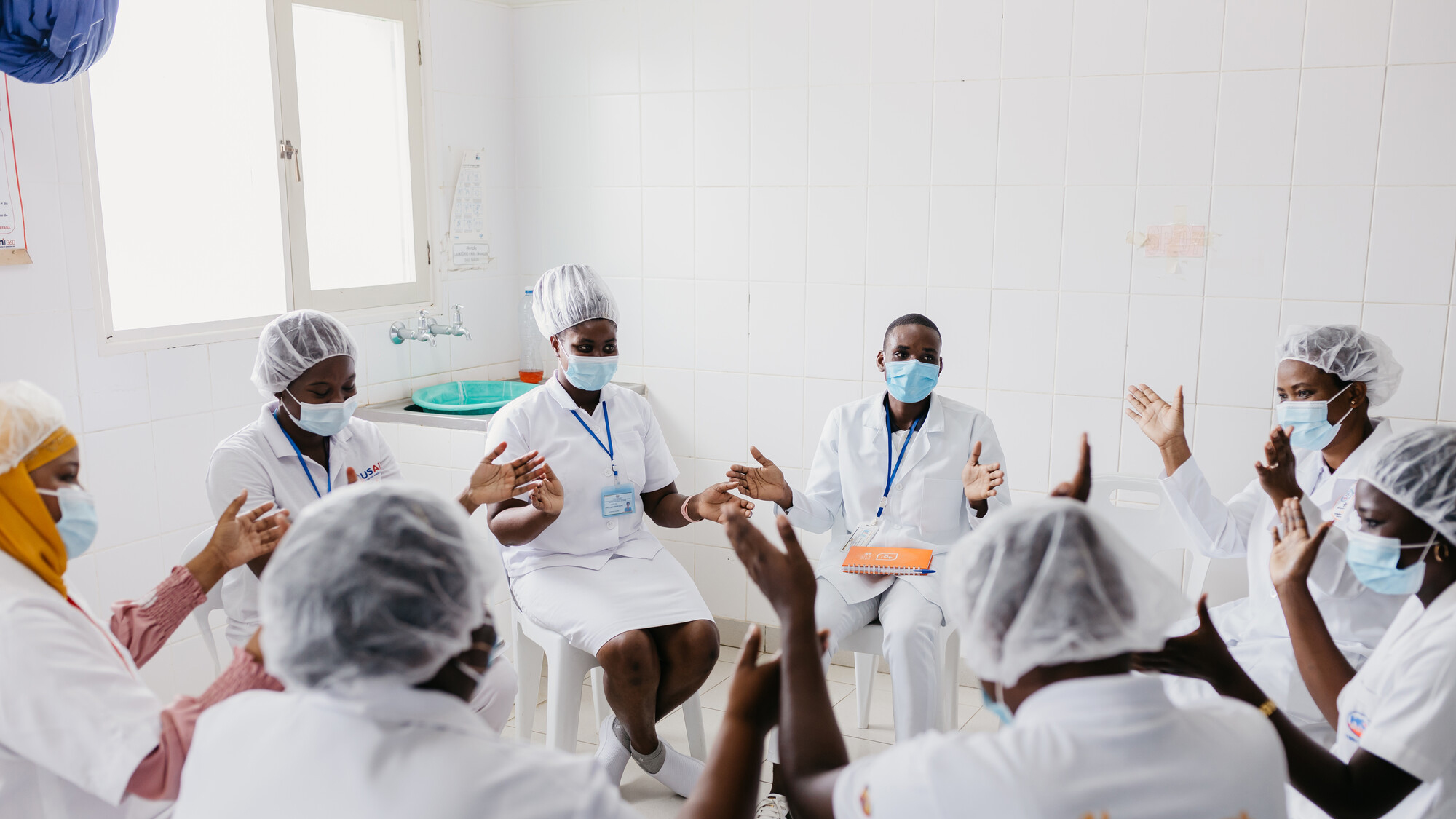
The men’s dialogue groups consist of about 15 participants at a time. They meet, on average, two to four times per month for a duration of three months. Participants can choose when to meet according to their schedules.
Another member of the male dialogue group, Daniel Rafael António, says, “Our community has changed a lot. Before, I was neglectful of my wife’s health. But with Alcançar, I learned that I should accompany my wife to the health facility to get prenatal care and help her with household chores.”
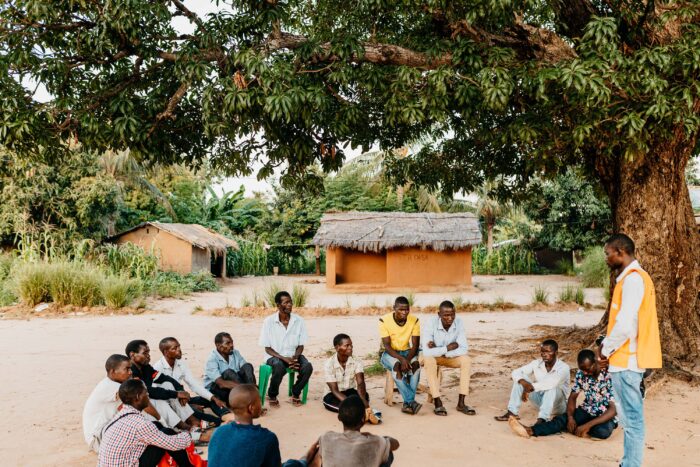

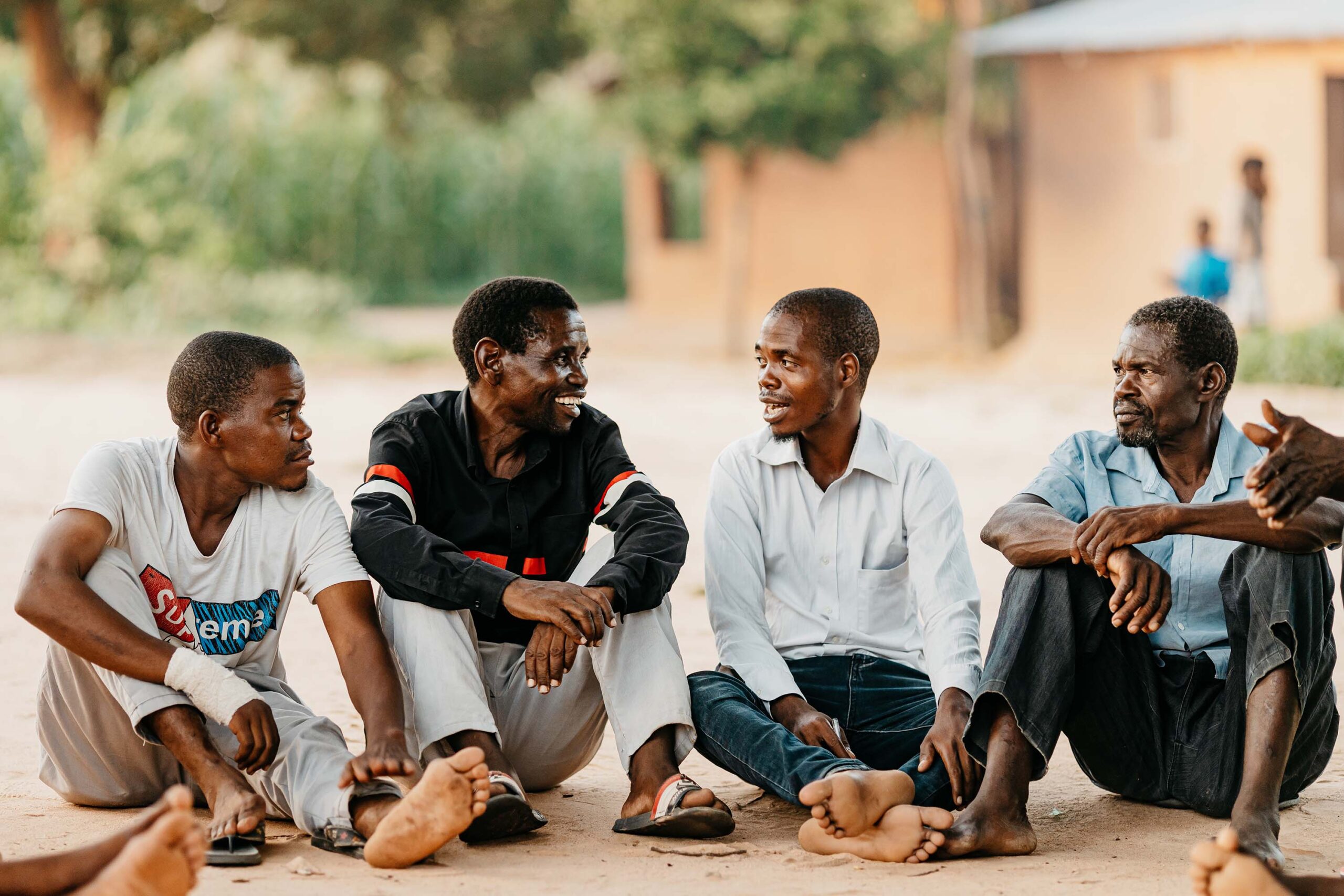
Community reflection sessions organized by Alcançar, which invite all members of a community, encompass a range of topics, including addressing power dynamics; being an involved father; improving maternal and child nutrition; and preventing sexual harassment, abuse and exploitation. The Alcançar project also organizes other engagement groups, including mixed groups with men and women as well as youth groups.
“In the men’s dialogue groups, I learned that I should participate in the life of my family, as well as in the health of the woman and the child,” says Luciano Xander, another participant. “Now, I take my wife for checkups during her pregnancy to see if the baby is well or not.”

Putting ideas into practice for the next generation
Assane and Manuel are passing on what they’ve learned through the Alcançar project to their four children, who range in age from 4 to 16 years old.
“They have the opportunity to learn by seeing,” says Assane, who says he educates his children every day by letting them see him put the project’s messages into practice.
“I tell them everything that I learn and have learned [through] the Alcançar project,” says Manuel. In particular, she tells her sons that when they get married, they should help their wives with household activities, accompany them to the hospital when they are sick and help them care for their children.
Now that Assane has started modeling these behaviors, “there is harmony and well-being in my home,” he says.

ABOUT THIS STORY
The Alcançar: Achieving Quality Health Services for Women and Children project is funded by USAID. Alcançar is implemented by a consortium of eight international and national partners, led by FHI 360. The consortium partners are Dimagi, Ehale, Institute for Healthcare Improvement (IHI), Viamo, Associaçăo de Jovens de Nacala (AJN), HOPEM and PRONTO International.
All photos are credited to Mbuto Machili for FHI 360. Video is credited to Alwin Sheriff/FHI 360.