


Effective teaching unlocks student potential. And when students can apply what they learn to real opportunities, they are better prepared for rewarding lives and livelihoods. Therefore, unlocking teaching potential is critically important — especially in resource-constrained settings.
FHI 360 and partners have developed a range of digital resources and training options to support teachers in expanding the minds and futures of young people. Our experiences in Nigeria and Madagascar have demonstrated that it’s also critical to pay close attention to the people at the center of teacher training: the teacher coaches themselves.
Nigeria: Building flexibility into school-based coaching
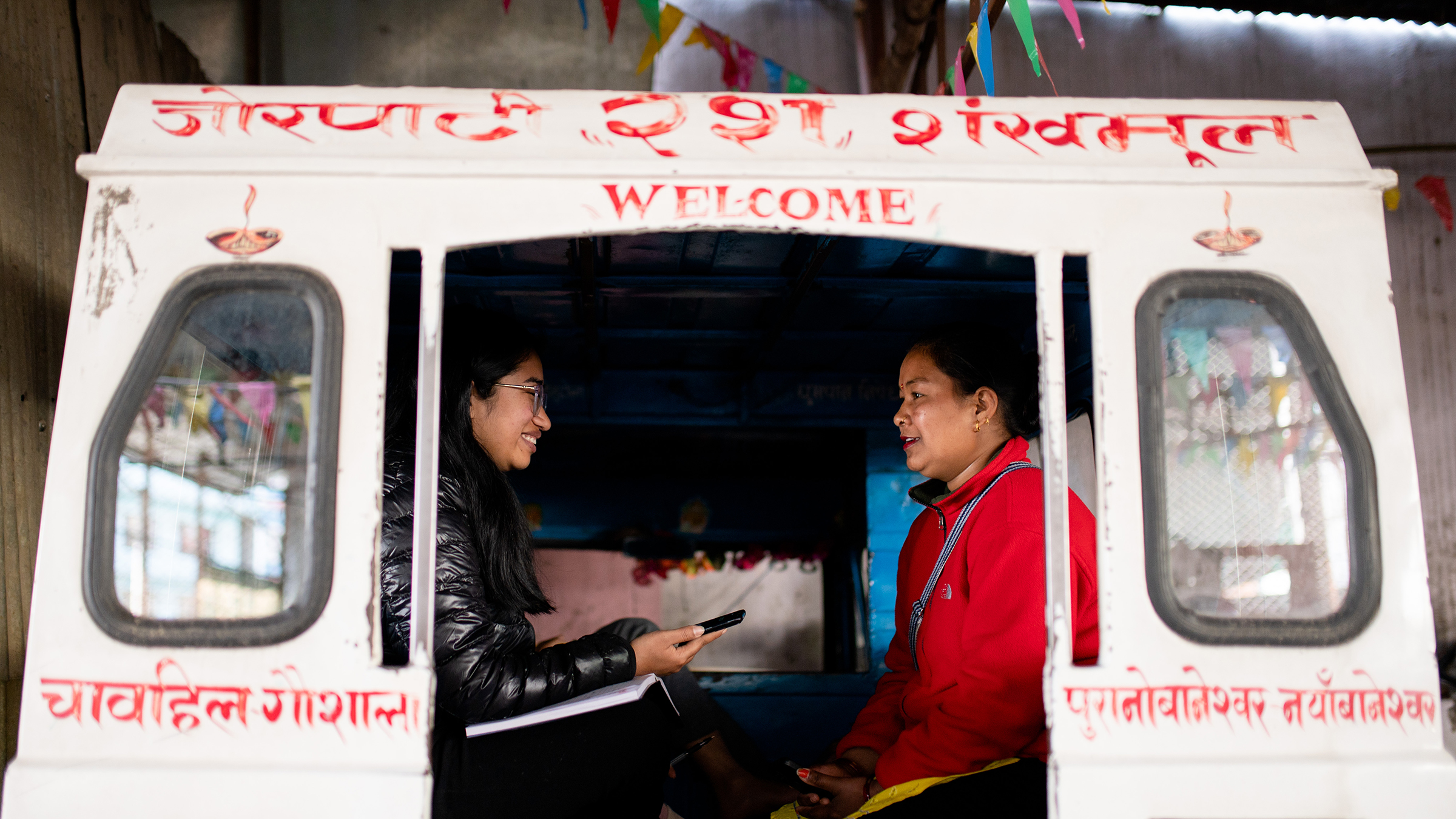
Through the Middle Tier research grant — supported by Brink and What Works Hub — FHI 360 in Nigeria is working directly with the state and local education officials who support and supervise schools to understand the contextual realities of teachers’ and coaches’ needs.
Now in the final stages of research, FHI 360 has developed a simple School-Based Coaching Toolkit that provides schools with flexible options and models. Schools can choose head teachers or peer teachers to coach; very small schools can choose a self-guided approach. They can also choose among three approaches: lesson observation, lesson preparation, or co-teaching. The Toolkit provides simple guidance for selecting and implementing a model, including concise instructions and a log for tracking coaching sessions.
Emerging feedback has been very positive. In phone surveys, teachers and head teachers overwhelmingly prefer the school-based model to their previous district-led model, citing both flexibility and trusting relationships. School Support Officers, who oversee school-based coaches, report that the model reduces unrealistic demands and enables them to focus on other school-support responsibilities that they see as priorities. State education leadership has expressed interest in scaling the model more broadly.
Madagascar: Distributing responsibility and simplifying support for teachers
FHI 360’s experience in Madagascar points to a similar lesson, while also showing that flexibility and simplicity can look different across contexts.
There, the challenge was to make coaching happen consistently despite severe capacity and logistical constraints. Educational zone leaders and pedagogical advisors were officially responsible for mentoring teachers, but competing priorities, large school-to-coach ratios, and the demands for successful curriculum reform made it unrealistic for them to provide regular coaching to every teacher.
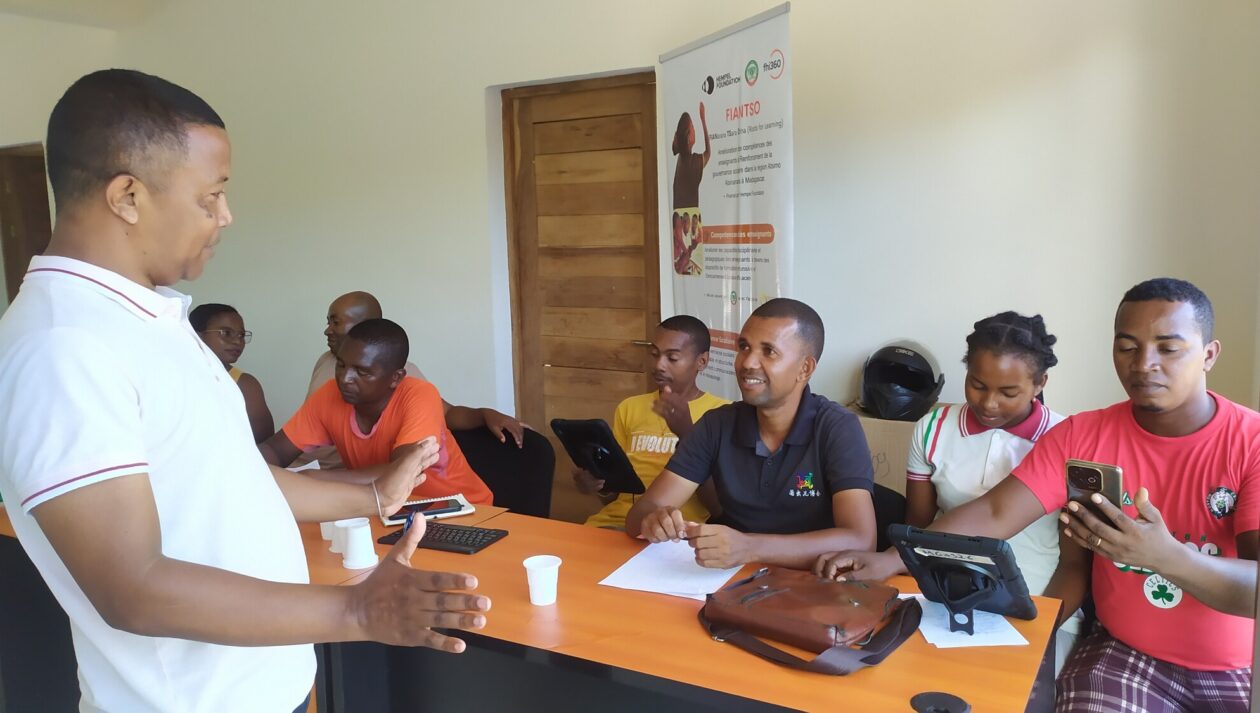
A new coaching scheme, co-developed by FHI 360 and Madagascar’s Ministry of Education with funding from the Hempel Foundation, distributed responsibility across the system. School directors and selected champion teachers facilitated regular school- and cluster-based pedagogical exchanges, while educational zone leaders and pedagogical advisors took on a broader role coordinating teacher support. They used information from schools and classroom observations to identify common challenges and target additional support where it was most needed.
This flexibility around who coaches and what that support looks like helped maintain regular support for teachers despite limited system capacity. It did not replace existing structures or remove accountability; instead, it gave different actors roles that were realistic given their responsibilities and proximity to teachers. Pedagogical advisors were also equipped with tablets and simple dashboards to collect classroom observation data and identify common teacher needs.
Making the structure more flexible, however, was only part of the challenge. School directors, master teachers, and other coaches needed practical support to take on these roles. Structured coaching handbooks, videos, audio materials, and other resources helped them plan and facilitate coaching sessions. But as these resources accumulated, finding the right guidance at the right time became increasingly difficult.
This led FHI 360 to develop an AI-enabled chatbot trained on Ministry-validated resources. Rather than adding another resource, the chatbot was designed to make existing ones easier to use: Coaches could ask questions in Malagasy and quickly find concise, relevant guidance. The experience points to a broader lesson about simplicity: Making coaching more flexible is not enough if the people taking on those roles cannot easily access and use the support they need.
Less really is more
There is no single formula for getting teacher coaching right. Our experiences in Nigeria and Madagascar suggest that sometimes making a system stronger means asking it to do less — not more. Keep the tools simple. Give people flexibility to decide what works in their context. Distribute responsibility so that coaching does not depend on a handful of already overstretched people. Once coaches are identified, make a plan to maintain accountability and quality.
Because good coaching leads to good teaching and student outcomes, FHI 360 is committed to supporting the pipeline with technical and human excellence at every step.
Frequently Asked Questions
How can education systems improve teacher coaching when supervisors are overstretched?
Education systems can improve teacher coaching by distributing responsibility across multiple levels of the system rather than relying solely on district or regional supervisors. In Nigeria, FHI 360 developed a simple School-Based Coaching Toolkit that provides schools with flexible options for coaches and coaching models. In Madagascar, we partnered with the Ministry of Education to develop a coaching scheme that distributed responsibility across the system. This flexibility around who coaches and what coaching looks like helps maintain regular support for teachers despite limited system capacity.
What makes teacher coaching effective in low-resource education settings?
FHI 360’s experiences in Nigeria and Madagascar show that coaching models work best when schools can adapt them to their context, select appropriate coaches, and use practical tools that are easy to implement. Rather than adding layers of complexity, successful coaching models provide clear guidance, realistic roles, and accessible resources that help coaches support teachers.