



Skip to content
FHI 360
  • Languages
  • Low bandwidth
  • High bandwidth
  • Search
  • Who we are
        • Who we are
          • About us
          • Leadership
          • Ethics and safeguarding
          • Impact and financial reports
          • Contact us
        • About us

          Impact and financial reports

  • What we do
        • What we do
          • Economic opportunity
          • Health


        • How we do it
          • Research in action
          • Humanitarian response
          • Digital innovation and AI
        • Explore our expertise
        • Economic opportunity

          Health

  • Where we work
        • Where we work
          • Asia Pacific
          • Central Africa
          • East Africa
          • West Africa
          • Southern Africa
          • Middle East and North Africa
          • Europe and Central Asia
          • Latin America and the Caribbean
          • United States
        • Around the world

          In the United States

  • Work with us
        • Work with us
          • Join our team
          • Local partners
          • Government and multilateral funders
          • Foundations and corporations
          • Academic and research partners
          • Small businesses and vendors
          • CEO position specification
        • Join our team

          Local partners

          Government and multilateral funders

          Foundations and corporations

          Academic and research partners

          Small businesses and vendors

  • News
        • News
          • Newsroom
        • Get the latest news
        • Newsroom

  • Stories
        • Stories & blog
          • Stories
          • Videos (YouTube)
          • Blog
        • Explore our storytelling
        • Our storytelling

          Blog

  • Resources
        • Resources
          • Resource library
        • Resource library

Home | Blog | Finding Common Ground: Menstrual Health and Contraception
May 27, 2020

Finding Common Ground: Menstrual Health and Contraception

–Kate H. Rademacher, Technical Advisor, Product Development and Introduction, FHI 360
–Amelia Mackenzie, Associate Scientist, Product Development and Introduction, FHI 360

Despite the COVID-19 pandemic, basic health needs are largely unchanged, including the need to manage menstruation hygienically, safely and with dignity. As advocates around the world point out, periods don’t stop for pandemics.

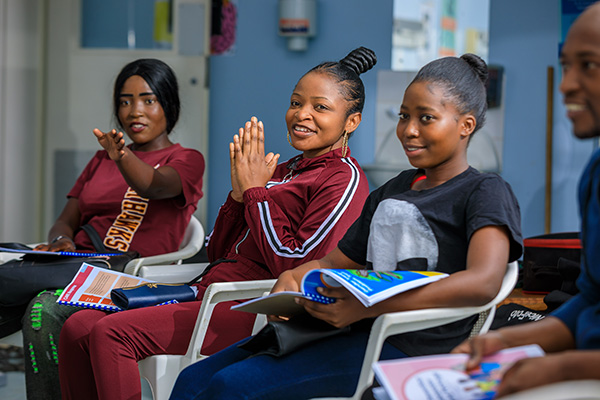
On Menstrual Hygiene Day, and every day, FHI 360 works around the world to ensure equitable access to quality menstrual products and appropriate sanitation facilities. We also engage government officials, teachers and community members to improve school-based education, raise community awareness and help fight period stigma. And, we must not forget an important group of people who menstruate: those who are using – or want to use – contraception.

Reliable access to high-quality, voluntary contraceptive services is critical at all times, including during a crisis such as a pandemic. Importantly, menstrual health and contraceptive use are interconnected. For example, many individuals using hormonal contraceptive methods or the copper intrauterine device (IUD) experience changes to their menstrual cycles. This includes potential changes in bleeding duration, volume, frequency and predictability, as well as menstrual cramps and period pain.

There are several steps we can take to address menstrual health for those who are using or want to use contraception:

  • Meet the unique menstrual health needs of contraceptive users. Globally, there are more than 400 million users of hormonal contraception and copper IUDs. Contraceptive-induced menstrual changes may mean that these users require different types and quantities of menstrual products, as well as access to sanitation facilities with adequate wash water at different times and frequencies. It is crucial that both menstrual health and family planning programs address menstrual health education and support access to products and sanitation.
  • Recognize the potential benefits of contraceptive-induced menstrual changes. Often contraceptive-induced menstrual changes are viewed as negative side effects, but they can have important health and lifestyle advantages for some people. Notably, some hormonal methods can alleviate menstrual disorders and symptoms, including endometriosis, menorrhagia (heavy menstrual periods) and dysmenorrhea (menstruation accompanied by pain). And, some hormonal methods may help prevent or reduce iron-deficiency anemia. Those individuals who experience reduced or paused menstrual bleeding when using contraception may enjoy lifestyle benefits, such as an increased ability to engage in school or work activities or financial savings from reduced need for menstrual products. Alleviating the burden of having to manage menstruation could also be particularly important during the pandemic if there is disrupted access to menstrual products or sanitation facilities or reduced household income to purchase supplies.
  • Normalize menstrual changes as part of self-care. Many family planning users are not given adequate information or counseling about contraceptive-induced menstrual changes. Health care providers and community educators should reassure users that these changes are normal, combat myths and misinformation, and discuss implications of menstrual changes when clients are selecting a method. This awareness and education can help facilitate self-care. Specifically, if people can self-reassure when they experience menstrual changes, it may translate into the need for fewer provider visits and improve satisfaction.

There are many untapped interconnections between menstruation and family planning. We must consider the menstrual health needs of all people who menstruate, including contraceptive users. Especially during the COVID-19 pandemic, when access to the services, products and facilities for managing menstruation and fertility may be threatened, it is vital to strengthen these connections.

Share blog
Back to top
FHI 360

We are a nonprofit organization that mobilizes research, resources and relationships so that people everywhere can access the opportunities they need to lead full, healthy lives.

  • Partner with us
  • Business opportunities
  • Contract mechanisms
  • Small business
  • Our FHI 360 network
  • Events
  • Employee access
  • Contact us
  • Press
  • Privacy notice
  • Ethics and safeguarding

FHI 360 Headquarters
359 Blackwell Street, Suite 200
Durham, NC 27701 USA
1.919.544.7040

Washington, D.C., Office
2101 L St NW, Suite 700
Washington, DC 20037 USA
1.202.884.8000

Anti-trafficking statement

Connect

Sign up for our mailing list and receive the latest updates from FHI 360 straight to your inbox!

  • LinkedIn
  • Facebook
  • X
  • Youtube
  • Instagram

FHI 360 is the registered trade name of Family Health International.

©2026 FHI 360

We are using cookies to give you the best experience on our website.

You can find out more about which cookies we are using or switch them off in .

FHI 360
Powered by  GDPR Cookie Compliance
Privacy overview

This website uses cookies so that we can provide you with the best user experience possible. Cookie information is stored in your browser and performs functions such as recognising you when you return to our website and helping our team to understand which sections of the website you find most interesting and useful.

Essential cookies

Essential cookies should be enabled at all times so that we can save your preferences for cookie settings. However, they can be enabled or disabled using the button below.

Non-essential cookies

This website uses Google Analytics to collect anonymous information such as the number of visitors to the site, and the most popular pages.

Keeping this cookie enabled helps us to improve our website.